Orange juice
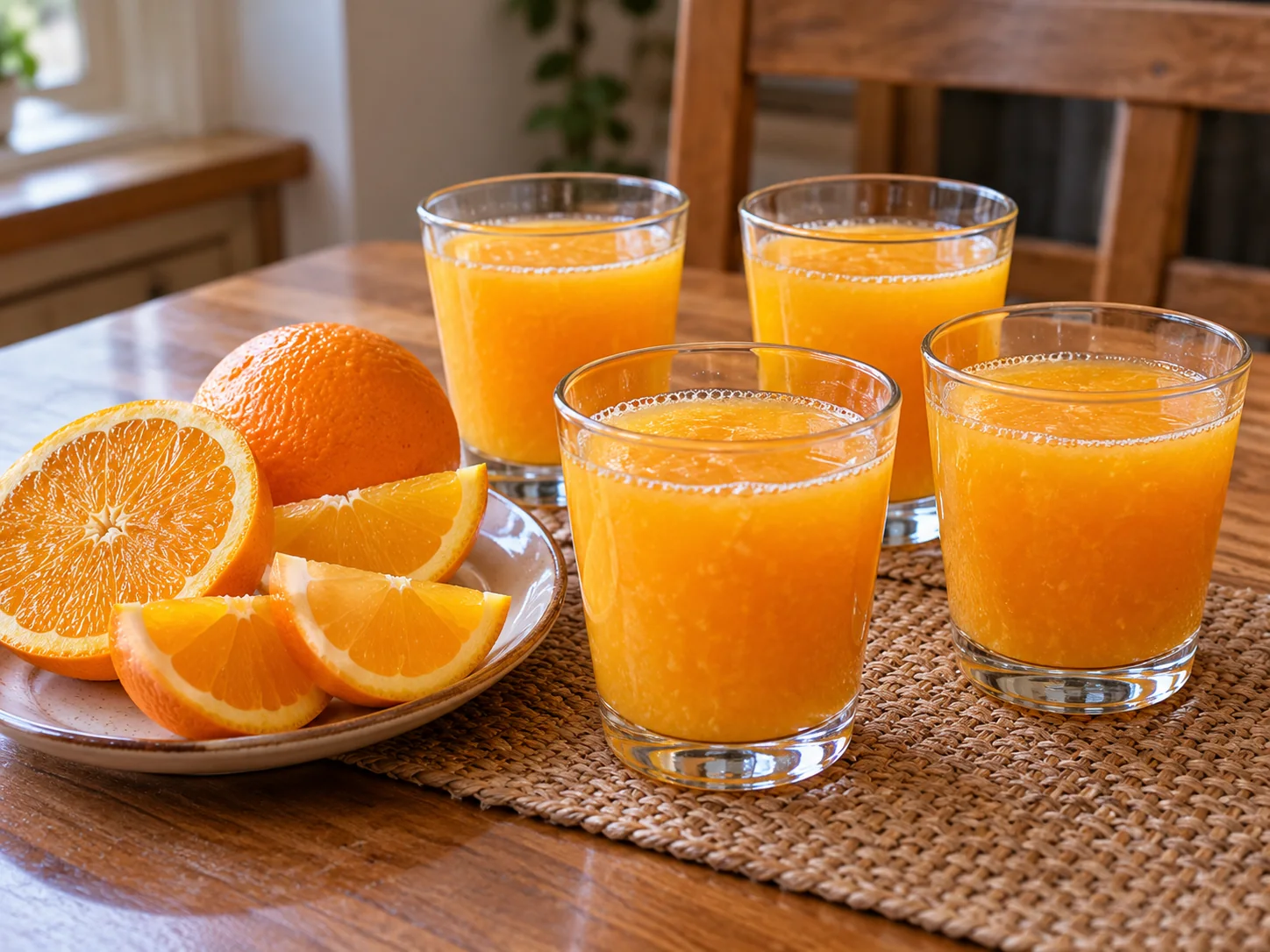
🍊 This orange juice is made by pressing, without added water or sugar. Wash fruit before cutting, then remove seeds from the juice; some pulp may be retained. The target is about 800 ml, or four small 200 ml glasses. Yield depends on the oranges: purchased fruit weight does not guarantee a particular volume. This contemporary home version is not presented as an exclusively Congolese speciality.
Ingredients
- Enough juicing oranges to obtain about 800 ml juice, generally 1.6 to 2 kg whole fruit, approximately 8 to 10 oranges depending on size and yield
Preparation
Sort and wash. Examine each orange and remove spoiled fruit. Wash and dry sound fruit before placing it on a clean board. Have the graduated jug ready to collect juice without unnecessary transfers.
Cut in the right direction. Halve oranges crossways, exposing their segments to the citrus press. Use a stable knife and dry hands, keeping fingers away from the blade.
Press steadily. Press each half with moderate pressure and short rotations. Stop when extraction weakens, without deeply scraping the skin or adding peel fragments to the juice. Remove seeds accumulating in the appliance’s filter as you go.
Measure yield. Pour into the jug and continue until about 800 ml is collected. If the first fruit yields little, use more oranges. Do not automatically top up with water to claim the planned volume: that would be a different, diluted drink.
Adjust pulp. Sieve the juice if seeds remain. To retain pulp, return only clean flesh pulp without seeds or peel fragments. Stir gently; prolonged whisking does not make juice sweeter and mainly adds foam.
Divide and serve. Measure four portions close to 200 ml if yield reaches 800 ml. If actual volume differs, share evenly and say so. Serve at once or close the container and refrigerate immediately. Never return the contents of used drinking glasses to the jug.
Introduction
Fruit selection changes the result more than lengthy blending. A juicing orange may have imperfect skin and still be sound, but should have neither mould nor clearly damaged areas. Choose fruit that feels heavy for its size and check each one. Deep skin colour alone cannot predict sweetness.
A manual citrus press suits this quantity. An electric appliance helps with larger volumes, provided its fruit-contact parts are cleaned. Pressing extracts juice without grinding the whole peel. Avoid pressing the skins so hard that they turn completely inside out: pith and peel can introduce unpleasant bitterness.
Prepare a clean graduated jug and four glasses. Graduations measure actual yield rather than inferring it from fruit count. Make the juice close to serving time; this is not a long-life bottling process.
Cultural context
🇨🇩 Radio Okapi published a drink called “Orange juice” on 2 May 2016. Its formula combined orange, lemon, water and sugar. It documents a drink proposed to its DR Congo audience, not exclusively Congolese origins for pressed orange juice.
This version is deliberately different: pressed juice only, without extra lemon, water or sugar. Its quantities and yield therefore belong to a contemporary editorial adaptation rather than a reproduction of the radio’s recipe.
📚 Repertoire reference: Radio Okapi, 2 May 2016.
Tips
To plan purchases, press a few fruit from a batch and measure their juice to estimate later yield. Two batches of identical weight may give different volumes. Recording fruit weight and juice volume helps more than counting oranges alone.
Repeated filtering does not make acidic juice less acidic: a sieve mainly removes particles. Mixing in sweeter fruit from the same batch may change perception; adding sugar changes the formulation without actually removing acidity.
If bitterness follows very forceful pressing, use less pressure for the next fruit. Avoid blending skins to gain yield. Bitter oranges substituted for sweet oranges will not produce the same juice.
Pulp and liquid may separate while standing. Separation alone does not indicate a preparation defect: stir gently before serving. However, separation alone also cannot establish whether stored juice remains suitable to drink.
For a cold drink without dilution, chill sound fruit or the jug beforehand rather than adding much ice. If ice is wanted, make it with drinking water and recognise that it gradually dilutes the drink. Ice does not replace cold storage.
Planning
Wash hands and clean the knife, board, citrus press, jug and glasses. Rinse oranges under drinking water while rubbing their skin, then dry with a clean cloth. This comes before cutting: the knife crosses the peel before touching the flesh. Do not use soap or detergent on fruit.
Discard mouldy or damaged oranges instead of trying to disguise their taste. Prepare a container for peels and a small sieve for seeds. Fruit is neither scalded nor cooked here. If juice must wait, first clear refrigerator space for a closed container.
Serving
Use clean glasses and distribute pulp evenly after gentle stirring. Do not promise four large glasses when less volume is available. The 200 ml is this recipe’s portion guide, not a requirement to drink that quantity.
Storage
Untreated pressed juice is intended for prompt consumption. If necessary, immediately store in a clean, closed container at 4 °C or below and drink within twenty-four hours. Do not leave for a long period on a warm table; refrigerate within two hours at the latest. Sugar or lemon alone does not extend its storage period. A clean container and knife do not amount to pasteurisation. Do not use this method for room-temperature storage.
Variations
A diluted version can be made by adding a measured quantity of drinking water, but should be described as such. Portions and figures per glass then change. An orange-lemon drink is another formula too: state each juice volume rather than leaving a substantial addition implicit.
Flavourings, syrup and sugar are not included in the base. Mixing in another fruit species changes flavour and yield and should not be called pure orange juice. This juice is not fermented, pasteurised or sterilised.
Accompaniments
A small glass may accompany a snack or breakfast. Offer water at the table too. Juice need not systematically be paired with another sweet drink; choose accompanying foods separately.
Nutrition notes
Juice contains the sugars naturally present in oranges even without added sugar. Pulp retention changes fibre content, which remains different from whole fruit. Vitamin C depends on the fruit and storage, among other factors; no precise amount is claimed here. Figures are estimates for 200 ml juice without additions, not analysis of the actual batch.