Smoked ham hock with vegetables
🥘 Pieces of smoked ham hock are combined with tomato, yellow pepper, leek, courgette and aubergine. This recipe exclusively uses a fully cooked ham hock, sold as ready to eat after checking its label. It makes four servings, excluding accompaniment. Gentle reheating brings the flavours together without turning the vegetables into a purée. Add salt only after tasting the sauce.
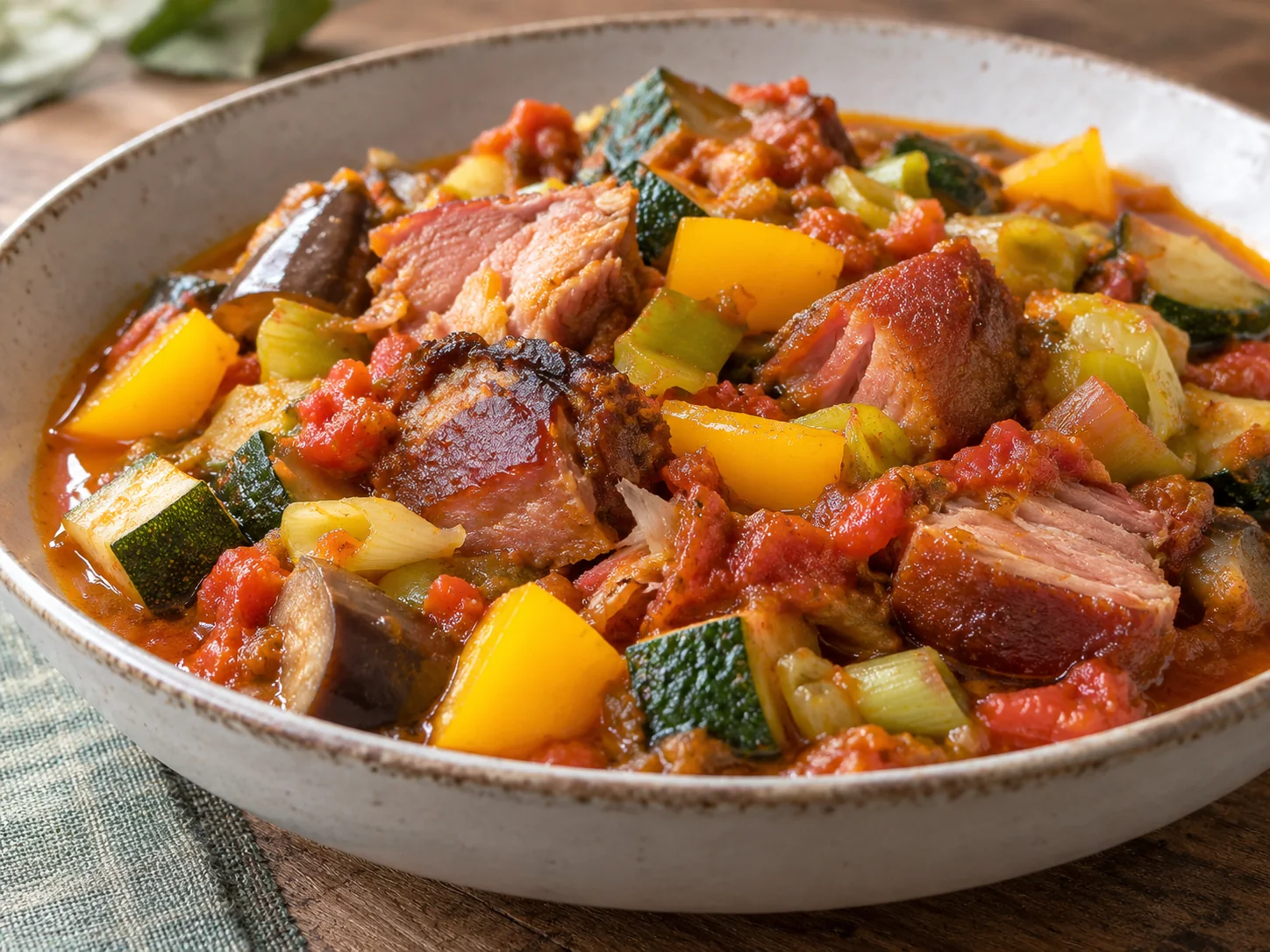
Ingredients
- 850 g fully cooked smoked ham hock, bone-in, ready to eat according to its label
- 150 g sliced onion
- 150 g yellow pepper, deseeded and diced
- 100 g white and tender green leek, thoroughly washed and sliced
- 250 g chopped ripe tomato
- 200 g courgette in evenly sized pieces
- 200 g aubergine in small cubes
- 8 g chopped garlic
- 20 ml olive oil or neutral vegetable oil
- 150 ml hot drinking water, added gradually as needed
- 1/4 teaspoon white pepper
- 1 pinch ground nutmeg
- 1 g additional salt at most, only after tasting
Preparation
Cut and brown for five minutes. Remove the meat from the fully cooked hock and cut into roughly three-centimetre pieces. Heat 20 ml oil in the sauté pan, lightly brown the pieces and transfer to a clean plate. Do not continue until the meat dries out.
Soften the aromatic vegetables for five minutes. Put onion, yellow pepper and leek into the same pan. Stir over medium heat. If the base sticks, add a small portion of the planned water rather than more oil.
Cook the tomato base for five minutes. Add tomato and garlic. Stir, loosening lightly browned juices without scraping any burnt patches. The tomato should begin breaking down and releasing liquid.
Soften courgette and aubergine for ten minutes. Add them with the remainder of the 150 ml water, pepper and nutmeg. Cover and maintain a gentle simmer. Stir once or twice, checking particularly that the aubergine is tender rather than spongy and raw.
Combine and reheat for ten minutes. Return hock pieces to the vegetables. Stir gently, partly cover and heat through to the centre. Also follow the manufacturer’s reheating directions. Add a little hot water if the base dries before the entire dish becomes thoroughly hot.
Adjust and serve. Taste sauce before adding salt; the hock may supply enough. Do not exceed the small additional amount specified. If sauce is very watery, briefly reduce uncovered. Share meat and vegetables between four plates and serve with a separately prepared accompaniment.
Introduction
Ham hock is a meaty portion around the shank. It is not a pig’s foot. Being smoked does not by itself guarantee that it is cooked: some smoked products remain raw or require full cooking. Establish the distinction before starting by reading the manufacturer’s instructions or asking the supplier. The stated time concerns a fully cooked product, never a raw shank that has merely been smoked.
Build the sauce in stages. Vegetables needing slightly longer cooking are softened first, then tomato provides moisture. Courgette and aubergine join the pan afterwards. Do not pour in a large volume of water at the start: the cooked pork and vegetables should not float in diluted broth.
Prepare a covered sauté pan, a sturdy knife and a clean board. Cut meat into pieces large enough to remain identifiable but regular enough to heat together. Once the meat has been cut, wash hands and prepare vegetables using clean equipment.
Cultural context
🇨🇩 Gisele Cooking publishes a preparation of smoked ham hock with vegetables including tomato, yellow pepper, young leek, courgette and aubergine. This practitioner’s reference documents a contemporary family repertoire. It does not support claiming that smoked ham hock is an ancient speciality or common to every region of DR Congo.
This adaptation fixes quantities and specifies the status of the meat product. It keeps the combination of smoke and vegetables while omitting stock cubes, whose salt would overlap with that already in the meat. The hock must already be tender before the recipe begins. The process described here reheats it while cooking the vegetables.
📚 Culinary reference: Gisele Cooking, 9 July 2022.
Tips
Smoking brings a strong flavour that spreads through the sauce. Choose a product whose flavour suits the meal rather than relying on large amounts of spice to disguise it. Removing some visible fat does not remove salt held in the meat.
Similar-sized vegetables cook more evenly. Courgette should remain recognisable and aubergine become tender. If aubergine cubes are larger, cook them longer before returning the meat, preventing the latter from drying out.
Leek can hold sand between its leaves. Wash after splitting and check the sliced pieces to avoid discovering grit in the finished sauce. Drain thoroughly to reduce splashing when it first meets the oil.
Excessive reduction concentrates both smoke and salt. Add a little water to restore a loose sauce, then reheat properly. Avoid automatically adding a stock cube, which would make the salt harder to control.
Do not leave a bone on a plate without warning. This recipe removes the bone before cooking to make division easier. Inspect meat near joints and remove every small hard fragment before mixing with vegetables.
Planning
Read the label before relying on a short cooking time. Smoked, salted or marinated descriptions do not replace confirmation that a product is fully cooked. If it still needs cooking, choose another fully cooked ham hock to follow this recipe. A long preliminary cooking stage would require a different sequence and duration, not included in the stated fifty-five minutes.
Remove the cooked meat from the bone, discarding hard fragments and excessively thick skin according to preference. The edible yield varies between hocks. Divide the meat fairly into four servings after cooking rather than promising an identical quantity from the bone-in weight. Wash the leek folds carefully to remove sand. Cut aubergine small enough to soften within the planned time.
Serving
Serve thoroughly hot, dividing meat and vegetables evenly. The sauce should remain loose enough to surround the pieces without becoming soup. Prepare the starch during the final simmer to minimise waiting time for the reheated meat.
Storage
Check the hock’s use-by date and storage instructions before opening. After preparation, cool leftovers rapidly in small containers and refrigerate within two hours. Keep at 4 °C or below and consume within forty-eight hours, without exceeding any shorter limit from the manufacturer. Reheat the required portion to at least 74 °C in the centre. Avoid repeated reheating and do not mix table leftovers with the unserved reserve.
Variations
A little chilli can be served separately. It is not essential to the recipe’s balance and does not alter the requirement to check that the hock is already cooked. Replace yellow pepper with the same weight of red pepper if desired; the sauce’s final colour will differ.
The preparation contains no cream, yoghurt or peanuts. Using another smoked cut would change edible yield, salt content and sometimes reheating time. Do not automatically apply these durations to raw meat, sausage or pigs’ feet.
Accompaniments
Plain rice, a portion of potatoes or chikwangue can accompany the dish. Choose one main starch to suit the whole meal. Vegetables are already present in the sauce; a thoroughly washed salad may complete the service if desired. Accompaniments are excluded from the nutritional estimates.
Nutrition notes
Ham hock supplies protein but also variable, sometimes high amounts of salt. Vegetables diversify the dish. Figures are estimates per serving based on an indicative amount of edible meat after removing the bone; they are not an analysis of the purchased product. Skin, removed fat and brand strongly affect the result. Consult the label for salt content and any allergens in the smoked product.