Pineapple upside-down cake
🍍 This family cake presents pineapple rings under a thin caramel layer over a soft butter sponge. Fruit goes in the bottom of the tin before baking and appears on top after turning out. The recipe makes eight slices in a twenty-two-centimetre round tin. It is a contemporary home-baking proposal, without claiming exclusively Congolese origins.
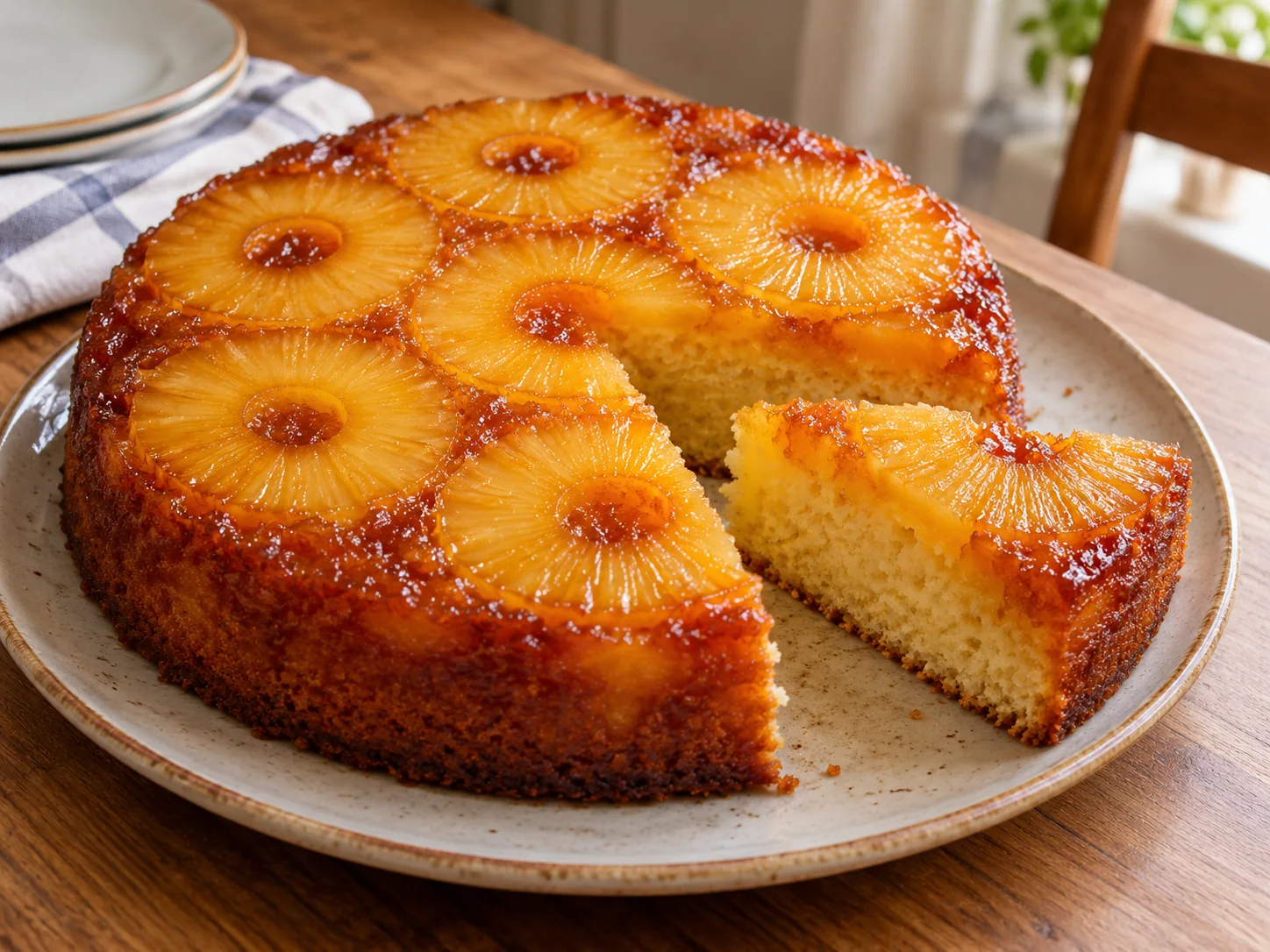
Ingredients
- 400 g pineapple rings canned in juice, drained weight
- 180 g wheat flour
- 6 g baking powder
- 2 g fine salt
- 120 g sugar for the batter
- 3 medium eggs, about 150 g without shells
- 80 g unsalted butter, melted and cooled to lukewarm, plus 5 g for the tin’s sides
- 80 ml pasteurised or UHT milk
- 60 g sugar for the caramel
- 30 ml water for the caramel
Preparation
Make the caramel. Put 60 g sugar and 30 ml water in a small clean pan. Heat without stirring with a spoon until light amber. If needed, very gently tilt the pan to even the colour. Never touch or taste hot caramel. Remove from the heat before it turns dark brown.
Arrange the base. Immediately pour caramel into the one-piece tin. Using dry oven gloves, carefully tilt to cover the base and set on a heatproof surface. Arrange the 400 g drained pineapple rings in one layer. The caramel may set while doing this; it melts again in the oven.
Whisk the base. Beat three eggs with the batter’s 120 g sugar for about two minutes until evenly mixed and slightly foamy. Add 80 ml milk and the lukewarm melted butter, mixing gently. Avoid cooking the eggs with excessively hot butter or leaving large lumps of sugar.
Add the dry ingredients. Fold in the flour-baking-powder-salt mixture in two additions, just until no dry flour remains, scraping the bowl’s base. Pour over the pineapple and smooth without displacing the rings. Do not beat extensively after adding flour, to keep the crumb soft.
Bake for about forty-five minutes at 170 °C. Avoid opening the oven for the first thirty minutes. Then check browning and lightly shield the top if necessary. At the end, a skewer inserted into the centre’s crumb should come out without raw batter. Moist traces of fruit are different from uncooked batter.
Rest and turn out. Remove the tin and wait fifteen minutes. Run a thin blade around the edge without scratching the tin, then cover with the serving plate. With two dry oven gloves and a firm grip, invert in one controlled movement. Lift the tin carefully. If a ring sticks, gently return it to place. Let the cake become warm before cutting.
Introduction
An upside-down cake succeeds when three things balance: caramel fluid enough to cover the base, drained fruit that will not soak the batter, and cooking that reaches the centre. Decoration need not multiply the ingredients. Pineapple rings are enough here; glacé cherries, alcohol and syrup poured on after baking are unnecessary.
Use a one-piece tin rather than a springform that might leak hot caramel. A twenty-two-centimetre diameter gives a suitable thickness for the quantities. A much wider tin makes a thinner cake that cooks faster; a narrow, deep one needs a different time. The forty-five minutes are therefore a guide to compare with signs of doneness.
Weigh the ingredients before starting the caramel. Prepare a serving plate wide enough to cover the tin and two dry oven gloves. Turn out after fifteen minutes’ rest: the cake is still hot and some caramel may remain liquid. Work on a stable surface with room around you.
Cultural context
🇨🇩 Pineapple upside-down cake appears in the published repertoire of Congolese cook Gisele Cooking. This documents contemporary baking shared by a Congolese practitioner; it does not establish that the cake originated in the Democratic Republic of the Congo or is traditional in every province.
This version uses baking-powder batter, simple caramel and drained pineapple canned in juice. Its quantities and procedure are an editorial home-kitchen adaptation. It differs from the source’s batter whisked over a water bath and must not be described as a reproduction of that recipe.
📚 Repertoire reference: Gisele Cooking, 6 January 2022.
Tips
Watch caramel continuously once it begins colouring: it continues darkening in the hot pan. Burnt caramel cannot be corrected with milk, butter or more sugar. Let it cool and start again rather than transferring bitterness to the whole cake.
Very wet pineapple makes the fruit layer less stable. Drain and pat dry patiently, and do not pour canning juice over the finished cake. The remaining juice can be used elsewhere but is not included in this formulation or nutritional estimate.
The batter already contains baking powder. Doubling it for extra height risks excessive rising, collapse and an unpleasant taste. If the cake seems low, check the tin’s diameter and baking powder freshness first.
Test the crumb rather than piercing a pineapple ring and assuming the cake is raw. Check two spots near the centre if unclear. If liquid batter appears, bake for five more minutes and test again.
Do not turn out straight from the oven: the cake is fragile and caramel very hot. Nor should it become completely cold, when the sugar layer may stick more firmly. Fifteen minutes is a practical guide, adjustable for a tin that retains heat particularly strongly.
Planning
Drain the pineapple in a sieve for at least ten minutes, then lay rings on a clean cloth or kitchen paper. The stated weight is after draining, not the whole contents of the can. Keep rings whole for the base; cut one if needed to fill small gaps without overlapping layers.
Melt 80 g butter and let it cool to lukewarm; do not pour hot butter into eggs. Lightly butter the tin’s sides with the additional 5 g. Mix flour, baking powder and salt separately. Preheat a conventional oven to 170 °C with a rack in the middle.
Serving
Turn onto a plate that can hold any trickle of caramel. Wait until warm before cutting to protect the crumb and prevent burns. A thin knife cuts cleanly through the rings; wipe the blade between slices if caramel sticks.
Storage
Let the cake become warm, then refrigerate covered leftovers within two hours of baking. Moist fruit, eggs and milk call for cold storage; eat within forty-eight hours. Remove only the portions needed. Serve cool or gently reheated, without repeatedly warming the whole cake. To freeze, wrap cooled slices individually, date them and thaw in the refrigerator. The caramel surface may become less glossy.
Variations
Ripe fresh pineapple may replace canned fruit at the same flesh weight after carefully removing skin, eyes and a fibrous core. Pat slices dry and keep their thickness similar to canned rings. Their water and sugar content may change the result slightly, without requiring every quantity to be altered at once.
A little vanilla may flavour the batter if desired, but is not included in the basic ingredients. Rum is not planned. Dairy-free, egg-free or gluten-free versions require separate structural adjustments; changing one ingredient alone does not guarantee an equivalent texture.
Accompaniments
Serve a slice with tea, coffee or water. Caramel and fruit provide enough sweetness; extra sweet cream or syrup is unnecessary. After a full meal, cut eight even portions rather than very variable slices.
Nutrition notes
This dessert supplies mainly carbohydrate from flour, added sugars and fruit, with fat from butter. Pineapple does not turn cake into the equivalent of an unsweetened whole-fruit portion. Figures are estimates per eighth without drink or toppings. Canned-product brands, draining and caramel losses affect actual values. Main allergens are wheat, egg and milk.