Crêpes
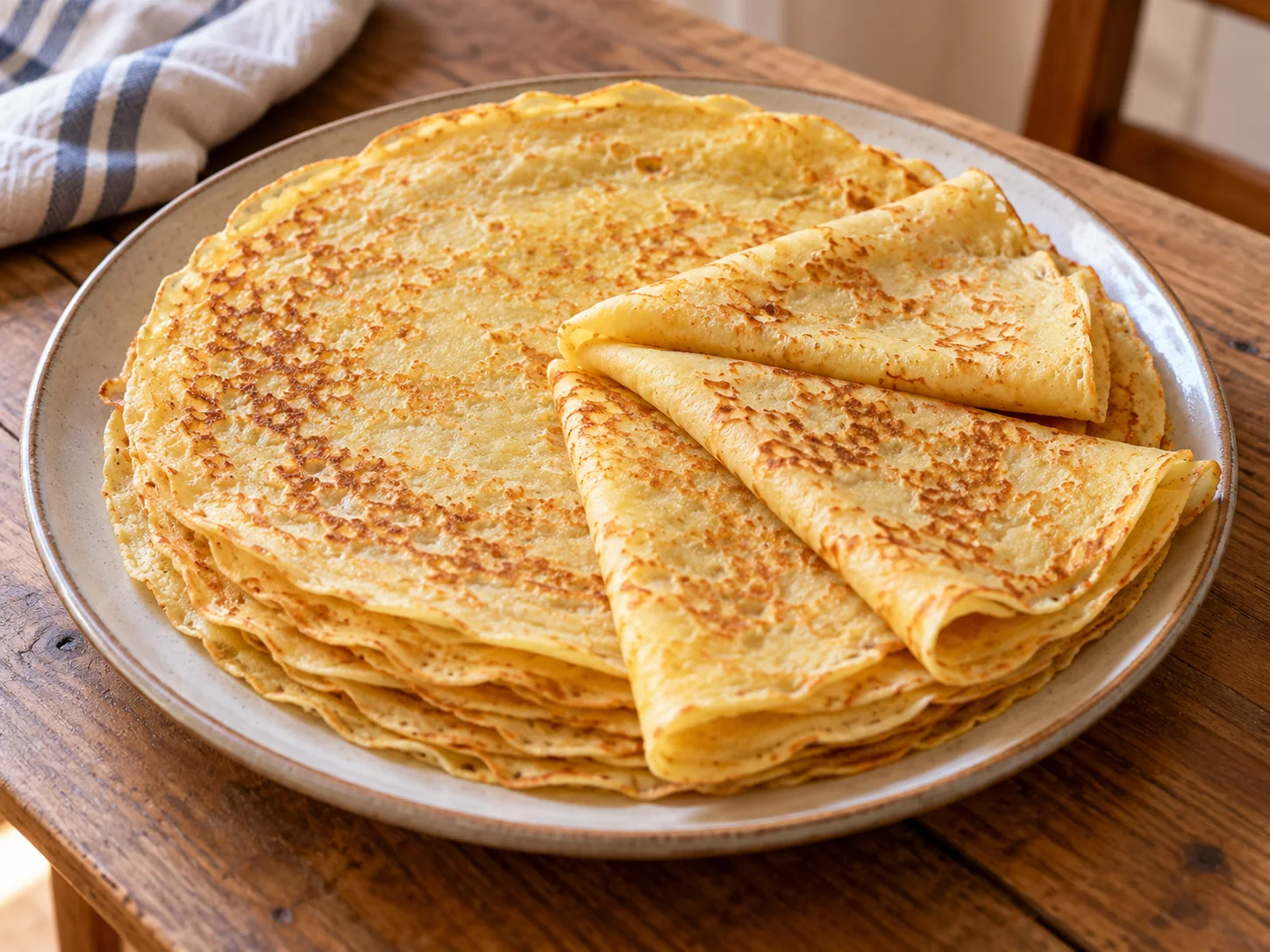
🥞 These thin wheat-flour, egg and milk crêpes are lightly sweetened and served plain or with a separately prepared filling. The batter rests for thirty minutes before pan-cooking. Quantities make about twelve crêpes measuring twenty-two to twenty-four centimetres, or two per person. This belongs to a contemporary family repertoire published in DR Congo, without presenting crêpes as Congolese in origin.
Ingredients
- 250 g wheat flour
- 20 g caster sugar
- 2 g fine salt
- 3 medium eggs, about 150 g without shells
- 500 ml pasteurised or UHT milk, plus up to 30 ml after resting if needed
- 20 ml sunflower oil for the batter
- Up to 10 ml sunflower oil for greasing the pan
Preparation
Make a smooth base. Make a well in the flour-sugar-salt mixture. Add the eggs and about 150 ml taken from the measured 500 ml milk. Whisk from the centre, gradually drawing in flour to obtain a thick, smooth mixture without pockets of dry powder.
Dilute gradually. Add the remainder of the 500 ml milk in several additions while whisking. Mix in the batter’s 20 ml oil, scraping the bowl’s sides and base. If lumps remain, pass through a fine sieve rather than leaving them in every crêpe.
Rest for thirty minutes. Cover and refrigerate for thirty minutes. Stir gently afterwards. If batter coats the ladle too thickly and spreads poorly, add reserve milk in small amounts, using no more than 30 ml.
Prepare the pan. Heat over medium heat and lightly grease with part of the 10 ml oil reserved for cooking. Spread a thin film using a suitable utensil that keeps fingers away. The pan should not smoke. Keep remaining oil for later crêpes if needed.
Cook the first side. Pour about one small ladle of batter and immediately tilt the pan to cover its base thinly. Allow about one minute, until the top is no longer liquid, small areas turn golden and the edge releases. Adjust the heat using this first crêpe as a guide.
Turn and finish. Slide the spatula underneath, turn and cook the second side for about twenty to thirty seconds. Transfer to the plate. Stir the batter occasionally and continue until used up, greasing only if needed. Share the batch into six portions and serve without a long wait.
Introduction
Smooth batter, adequate resting and consistent pan heat matter most. Very dark browning does not improve softness and can dry the crêpe. Spread a thin layer, wait until it releases, then briefly finish the other side.
Add milk gradually to avoid lumps. The thirty-minute rest hydrates the flour; it is neither fermentation nor rising. Slight thickening afterwards is normal. Loosen with milk by spoonfuls rather than pouring in a large uncontrolled quantity.
Prepare a bowl, whisk, ladle and twenty-two- to twenty-four-centimetre frying pan. A thin spatula helps turning. Use a pan in good condition without flaking coating. Have a plate ready before cooking so there is no need to interrupt each crêpe to find equipment.
Cultural context
🇨🇩 Radio Okapi published crêpes in its “Recipe of the day” section on 29 December 2015. That documents a culinary repertoire offered to a DR Congo audience without crediting the country with inventing a preparation shared widely around the world.
This version retains thin milk-and-egg batter with precise oil measurements, moderate sugar and no alcohol. Fillings are excluded from the ingredients and nutritional estimate. Timings and cooking guidance are an editorial adaptation for a family kitchen.
📚 Repertoire source: Radio Okapi, 29 December 2015.
Tips
Too much batter makes a thick crêpe requiring different cooking. Use the same ladle and observe the first piece’s volume. Actual yield depends on diameter and thickness; divide the batch by weight or share different sizes rather than promising twelve identical pieces.
If a crêpe tears when turning, wait a few seconds longer before lifting the next one. A wet, sticky side is not ready. Ensure the spatula passes far enough underneath instead of pulling only at the edge.
If the pan smokes or batter colours almost immediately, reduce the heat and let it stabilise. More oil will not lower temperature appropriately. Slower, even colouring is easier to control than fierce cooking.
Large holes can mean batter spread too thinly or an uneven mixture. Stir gently before changing the recipe. Avoid adding dry flour directly to liquid batter; first mix it into a small separate portion if a correction is indispensable.
Stacking keeps crêpes soft, but do not leave them on a room-temperature plate for a long time. For a large gathering, cook smaller batches and organise fillings separately. Do not fill one crêpe while the next burns in the pan.
Planning
Measure 500 ml milk and keep the possible reserve separate. Mix flour, sugar and salt. Lightly beat eggs in a separate bowl to check their condition and remove shell fragments. Batter oil and pan oil serve different purposes: do not pour the full amount into the bowl.
Very cold milk does not need heating; simply rest the batter in the refrigerator. Never leave raw milk-and-egg mixture on the worktop for hours. Wash hands and clean the whisk and surfaces touched by raw egg before serving cooked crêpes.
Serving
Present folded in half or quarters without overloading. Folding does not change the recipe or justify a separate recipe entry. For six people, share the actual batch fairly, allowing for thicker first crêpes.
Storage
Keep raw batter covered in the refrigerator and use within twenty-four hours. Cool cooked crêpes promptly, cover and refrigerate within two hours; eat within forty-eight hours. Reheat only the portion needed in a pan or oven until thoroughly hot, avoiding repeated cycles. Freeze cooled crêpes with separators between layers; thaw in the refrigerator before reheating. Store fresh fillings separately.
Variations
A little vanilla or citrus zest may flavour the batter; these options are not included in the base or required. For savoury use, choose a separately defined sugar-free formulation with clear quantities and fillings.
Plant drink may replace milk at a similar volume, but wheat and egg remain. This therefore makes the crêpe neither gluten-free nor vegan. Egg-free or wheat-free batter requires a distinct recipe rather than an improvised substitution during cooking.
Accompaniments
Offer washed, cut fresh fruit, a little jam or simply plain crêpes. Accompaniments are optional and excluded from nutritional figures. Tea, coffee or water suit serving; an extra sweet drink is unnecessary to enjoy the batter.
Nutrition notes
Flour mainly provides carbohydrate; eggs and milk contribute protein. Actual oil consumed depends on what remains in the pan. Figures are estimates per sixth of the batch, about two crêpes, without filling or drink. They vary with milk type and thickness. Main allergens are wheat, milk and egg.