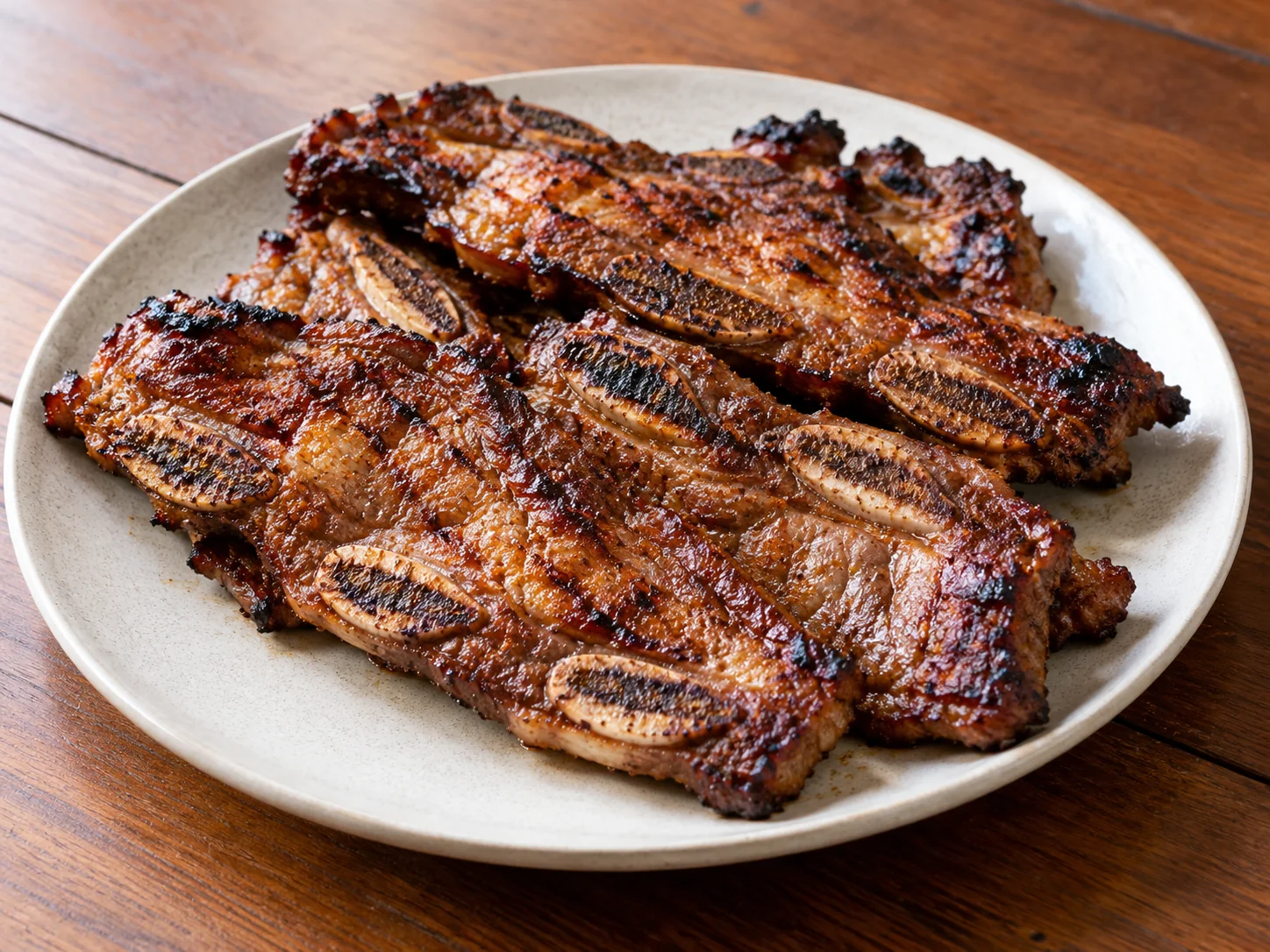
Beef ribs grilled over charcoal
🔥 Thinly cross-cut beef ribs are marinated with garlic, ginger and paprika, then grilled over charcoal. This version of cotis au makala relies on a precise cut and careful cooking, followed by three minutes of resting. It makes four portions. Vegetables, chips and plantain are separate accompaniments and are not included in the recipe or nutrition estimates.
Ingredients
- 1.2 kg food-grade beef ribs, butcher-cut across the bones into strips about 1 cm thick
- 12 g finely chopped garlic
- 20 g peeled fresh ginger, finely grated
- 30 ml neutral vegetable oil
- 2 level teaspoons sweet paprika
- 1 teaspoon dried herbes de Provence
- 1/2 teaspoon white pepper
- 4 g fine salt
- Food-grade charcoal for cooking, not eaten
Preparation
Prepare the marinade. Mix garlic, ginger, 30 ml oil, paprika, herbs, pepper and 4 g salt in a clean container. Spread over every side of the beef strips. Rub gently with clean hands or tongs and cover. Wash hands and surfaces that touched raw meat.
Marinate for 1 hour in the refrigerator. Turn the strips halfway through with tongs reserved for raw meat. Meanwhile organise accompaniments and a clean serving plate. Do not use marinating time to leave meat at room temperature for a long period; remove only the quantity about to be grilled.
Prepare two heat zones. Light charcoal in a suitable barbecue used exclusively outdoors. Wait until lighting flames and thick smoke have gone, then arrange the embers over half the firebox. Keep the other half cooler to finish cooking or move a strip away when dripping fat causes a flare-up.
Grill the first sides. Remove hanging clumps of marinade without wiping away all the flavour. Put the meat on a clean, hot grate over moderate embers. Cook for about 4–5 minutes, then turn. Brown the other side for a similar time, watching flames and fatty areas.
Finish cooking and check. Move pieces to the cooler zone if the outside browns too quickly. Continue according to thickness, rather than overcooking simply to reach a fixed twenty minutes. Insert the probe sideways into a fleshy part without touching bone. For these whole beef pieces, reach at least 63 °C at the centre before a three-minute rest. Check several strips.
Rest for 3 minutes and serve. Place cooked meat on the clean plate without pouring raw marinade over it. Cover very loosely if needed, without trapping abundant steam. Wait the full three minutes and share the strips among four people. Small bones remain: point them out and adapt serving for anyone who needs help removing the meat.
Introduction
The word cotis alone does not identify a suitable cut: thickness and cutting direction completely change the cooking. Ask for beef ribs sliced across several bones into strips about one centimetre thick. This recipe is not for a large block of short ribs that needs lengthy braising to become tender. Explaining this to the butcher avoids trying to grill an overly thick piece quickly.
Choose whole meat that has not been minced or mechanically tenderised. Ginger adds lively flavour, but an hour of marinating will not make every cut tender. Have a thin-probe food thermometer, long tongs and two separate plates, one for raw meat and one for cooked meat. Use food-grade charcoal with no treated wood or lighting product still burning when the meat reaches the grill.
Twenty minutes is an indicative cooking time for the stated cut. Measured temperature and the actual size of the strips take priority. The hour of refrigerated marinating and three-minute rest are included in the total time. Make the accompaniments during marinating and light the charcoal early enough to avoid leaving raw meat waiting outdoors.
Cultural context
🇨🇩 Radio Okapi presented beef cotis au makala on 1 December 2022. This documents a grilled dish published in DR Congo.
This version specifies the cut, quantities and cooking checks for home preparation. It claims neither an exclusive national origin nor an identical composition in every restaurant. The accompaniments in the source presentation remain suggestions to prepare separately; merely changing a garnish does not create a new cotis recipe.
📚 Reference: Radio Okapi, 1 December 2022.
Tips
The one-centimetre cut is a technical choice, not an aesthetic detail. If only thick pieces are available, use a different slow-cooking recipe instead of indefinitely extending grilling until the outside burns.
Charcoal should glow without continuous flames under the meat. When fat causes a flare-up, move the strip with tongs to the cooler zone. Do not put your face over the grate or pour a large quantity of water that could throw ash onto the food.
Crust colour does not measure interior cooking. Paprika darkens quickly and meat can look grilled while still insufficiently hot near the bone. Use the probe and required rest rather than relying only on the colour of the juices.
Cook in small batches if the grate is narrow. Crowding makes turning difficult and prevents isolating a burning piece. Keep uncooked strips refrigerated until needed and keep cooked strips away from the marinade utensils.
There is no honey or sugar in this recipe. Neither is needed for colour: protein and paprika make an appealing surface. A sugary glaze would need different heat management to prevent the outside charring.
Planning
Check the cut and remove only visible small bone fragments left by the butcher’s saw. Do not cut through bones with a kitchen knife. Pat the surface with single-use paper if needed; do not rinse the meat under a jet that could splash the kitchen. Keep it refrigerated in a suitable marinating container.
Crush the garlic and grate the ginger finely enough to make a light coating. Large pieces fall onto the charcoal and burn easily. Measure salt, paprika and oil before mixing. The aim is to coat the surface rather than fill the bottom of the container with oil.
Serving
Provide manageable strips rather than a huge piece per person. Share meat and bones fairly: a very bony strip does not provide the same edible portion as another. For children, detach meat using clean equipment and check carefully for small bone fragments before serving.
Storage
Refrigerate leftovers promptly within two hours, in shallow portions. Store at 4 °C or below and eat within 48 hours. Reheat the required portion until hot throughout, aiming for 74 °C at the centre for leftovers. Reheating may dry the meat further; a little water in a covered dish can help. Never serve the marinade that held raw beef as an uncooked table sauce.
Variations
Without a barbecue, use a grill pan with suitable ventilation, cooking strips in batches and checking temperature in the same way. The flavour will differ from charcoal cooking. Simple dried herbs can replace herbes de Provence in the same quantity; choose a known mixture instead of combining several salty seasonings. Separately prepared chilli sauce lets everyone choose the heat.
Accompaniments
Serve with plantain, potatoes or vegetables, choosing one main garnish. Fresh tomato and sliced onion provide contrast; prepare them on a clean board separate from raw beef. Chips are optional. Present sauces separately to preserve the flavour of the grilled crust.
Nutrition notes
Beef provides protein and contributes iron and vitamin B12. Ribs contain variable amounts of fat and bone, so edible portions depend on the cut. Estimates are per person for the ribs alone without garnish and also depend on how much marinade remains on the meat. They are not an analysis of the finished dish.