Pork chops with amaranth leaves
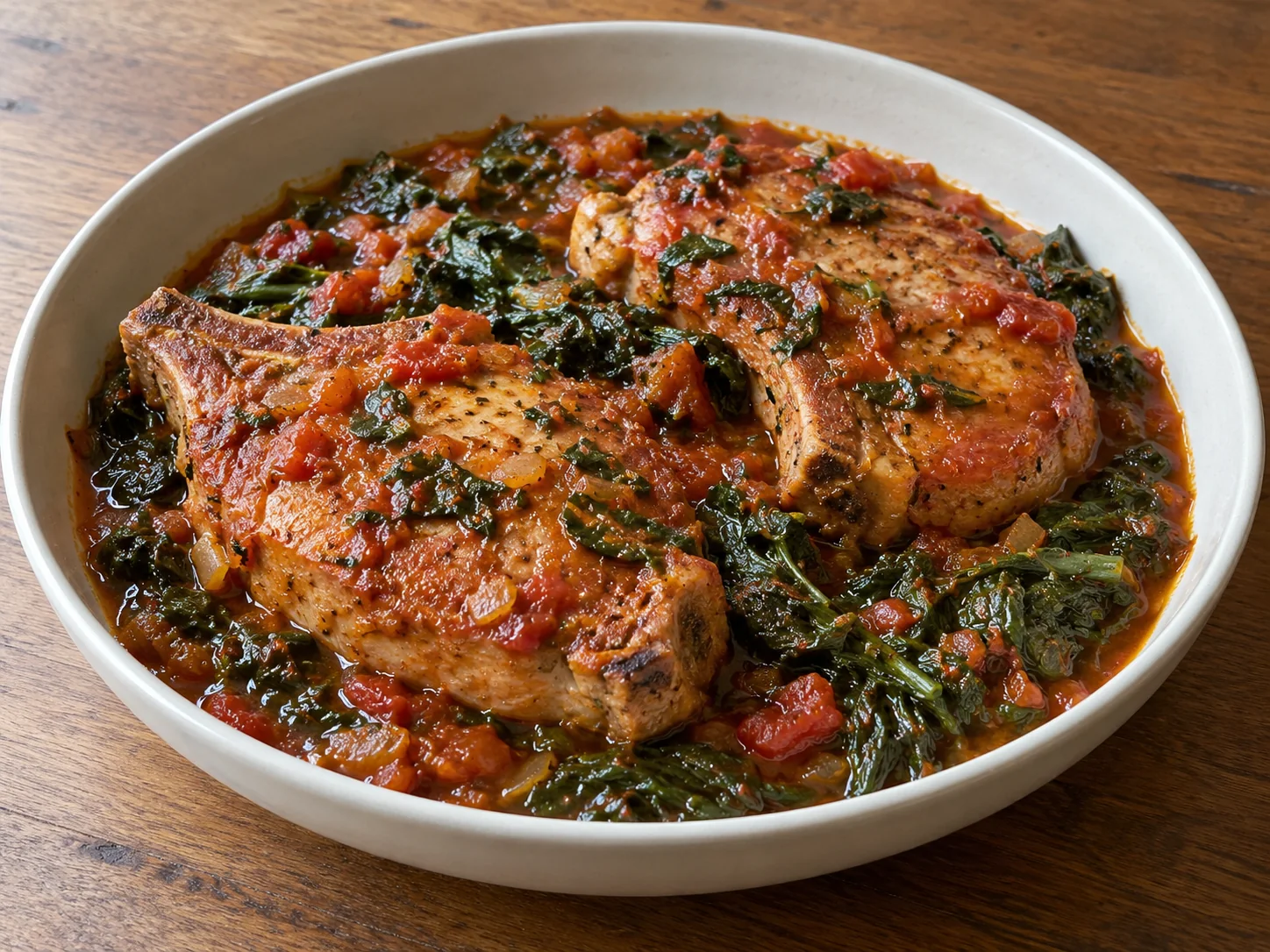
🍲 Four bone-in pork chops simmer in tomato sauce before joining previously blanched, drained amaranth leaves. The dish combines tender meat, well-cooked greens and juices fluid enough for a starchy accompaniment. This adaptation uses measured oil without bicarbonate or final frying.
Ingredients
- 1 kg bone-in pork chops suited to simmering: 4 pieces of about 250 g, close to 2.5 cm thick
- 500 g identified edible cultivated amaranth leaves without thick stalks
- 400 g chopped peeled tomatoes without added salt
- 150 g sliced onion
- 40 g finely sliced celery stalk
- 8 g chopped garlic
- 25 ml neutral vegetable oil
- 300 ml drinking water for sauce, plus up to 150 ml if needed
- 1.5 litres drinking water for blanching leaves, discarded afterwards
- 1 bay leaf
- 1 small pinch ground nutmeg
- 1/2 teaspoon white pepper
- Up to 4 g added salt, adjusted
Preparation
Brown chops for about 8 minutes. Heat 25 ml oil in the casserole over medium-high heat. Brown both sides in two batches if needed, without stacking, and transfer to a plate. Do not seek a very dark crust; simmering completes cooking.
Build the base for 12 minutes. Reduce to medium and soften onion with celery for about 7 minutes. Add garlic for a minute, then tomatoes, pepper, nutmeg and bay. Cook another 4 minutes, stirring. Loosen unburnt cooking juices with some measured water.
Simmer pork for about 45 minutes. Return chops and juices, add the remainder of 300 ml water and about half the planned salt. Cover and keep a gentle simmer. Turn once and check liquid halfway. Add some reserve only if the bottom risks drying. Test tenderness; extend before adding greens if chops remain distinctly resistant.
Blanch greens while meat simmers. Bring 1.5 litres water to the boil separately. Add washed leaves and cook 5 minutes from the return of a simmer, keeping submerged. Drain, discard this water and leave greens in the colander. Press gently with a spoon to remove excess water without making a completely dry mass.
Combine for about 10 minutes. Once chops are tender, add blanched greens around them and mix sauce carefully without breaking bones or chops. Simmer gently until greens and sauce are hot throughout and combined. Remove bay and adjust salt after tasting.
Check and serve. Whole-cut pork has a minimum guide of 63°C at the centre with 3 minutes resting; this simmer normally reaches a higher temperature, but check the thick part without touching bone. Rest off heat for 3 minutes, then allocate one chop and a quarter of greens to each person. Remove visible bone fragments before serving.
Introduction
Choose bone-in pork chops of roughly 250 g each, one kilogram in total. Prefer cuts suited to simmering, such as shoulder or neck-end chops of similar thickness, around two-and-a-half centimetres. Very lean or thin chops may dry before this programme ends; their timing should not be assumed identical.
The greens are identified edible cultivated amaranth leaves bought from a food supplier. The 500 g means usable leaves without tough thick stalks. This recipe does not identify wild plants or describe cooking every green leaf with a similar name. Wash thoroughly to remove soil and blanch separately before adding to the sauce.
Have a casserole wide enough for four chops and a saucepan for greens. Blanching can happen while meat simmers. Tomatoes, onion, celery and garlic build the sauce; a small pinch of nutmeg complements without dominating. No stock cube is planned, leaving control over salt until the end.
Cultural context
🇨🇩 Radio Okapi published pork chops with vegetables including amaranth on 11 June 2016. This documents a household recipe circulated in DR Congo without proving exclusivity or identical preparation in every region.
This version specifies weights, selects chops suited to simmering and blanches greens in plain water. It adopts neither bicarbonate nor the reference’s oil quantity. It is an explicitly described home adaptation rather than a claim to the only possible traditional method. Leaves must always be sold and identified as food.
📚 Reference: Radio Okapi, 11 June 2016.
Tips
Shoulder or neck-end chops tolerate this simmer better than very lean thin chops. Ask the butcher for the cut rather than relying on the word “chop”. Thickness and connective tissue change the time needed for pleasant texture.
Drain greens carefully. Retained blanching water would dilute tomatoes and require lengthy reduction after adding already cooked pork. Press lightly rather than squeezing leaves dry.
Bicarbonate is unnecessary here. Do not add it to force a green colour: the aim is cooked, supple leaves rather than vivid green achieved with excessively broken texture.
Check liquid under the lid. A gentle simmer suffices; violent bubbling can reduce sauce too fast and damage chops. Use the 150 ml reserve only if actual evaporation requires it.
Lift very tender chops with a wide spatula. Strongly squeezing tongs can detach meat around the bone. Share greens by gently lifting meat rather than vigorously stirring the whole casserole.
Planning
Prepare vegetables on a clean board before meat. Discard damaged leaves, wash others in several changes of water if needed and remove coarse stalks. Cut into broad strips. Separately measure 300 ml sauce water and one-and-a-half litres blanching water; they will not be combined.
Inspect chops and remove any visible small bone fragment with clean paper if needed, without rinsing meat under the tap. Pat the surface dry for browning. After raw pork, clean hands, knife and board. Celery is included: consider this for someone allergic and do not hide it in an imprecise spice list.
Serving
Present in a deep dish with chops visible above some greens and tomato sauce. Diners should be able to identify bones; do not describe this as boneless. For someone needing assistance, detach cooked meat and carefully inspect for fragments before serving their portion.
Storage
Refrigerate leftovers within two hours in shallow containers. Store at 4°C or below and eat within 48 hours. Reheat only the required portion, covered with a little water if needed, to 74°C at the centre for leftovers. Do not let the entire casserole cool for hours at room temperature.
Variations
Another cultivated amaranth variety sold for its leaves may work, but firmer leaves may need slightly longer blanching. Follow supplier instructions and check texture. Do not apply this method to cassava or taro leaves. Boneless braising pork changes presentation, edible weight and sometimes time; four bone-in chops remain the quantified version here.
Accompaniments
Serve with a separately prepared portion of rice, fufu, chikwangue or cooked plantain. Choose one starch to enjoy greens and tomato without multiplying preparations. Accompaniment quantities and energy are excluded. Fresh water is enough alongside the meal.
Nutrition notes
Pork supplies most protein, while greens and tomato contribute fibre and various micronutrients. Bone weight and the fat actually eaten make figures variable. Proposed values estimate one serving without starch and are not laboratory analysis. Vitamins and minerals are not quantified because blanching and leaf variety also affect them.