Congolese-style edible caterpillars
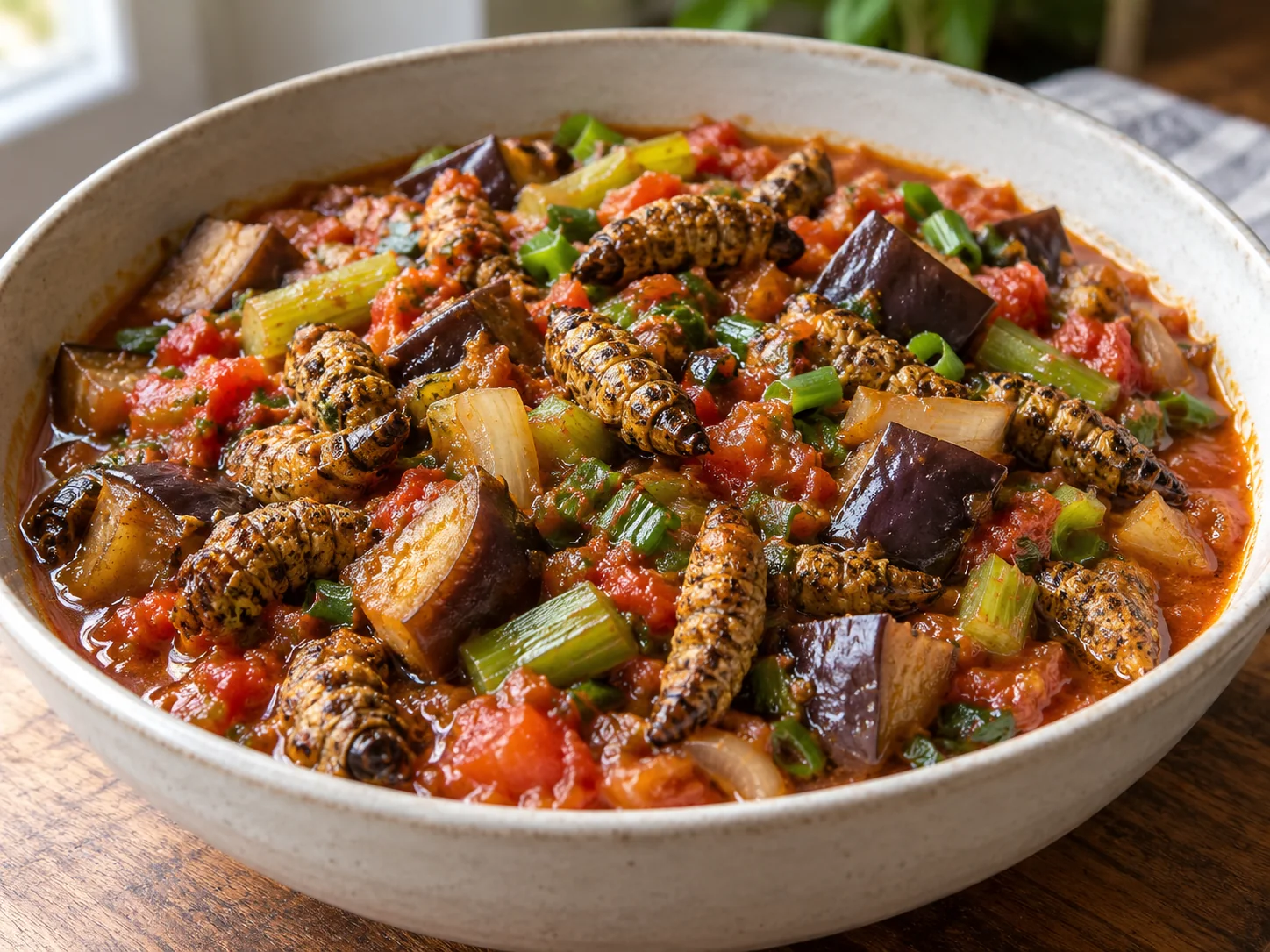
🍆 Edible mbinzo caterpillars accompany aubergines and tomatoes in a short onion-and-celery sauce. This adaptation exclusively uses an identified commercial food product, already fully cooked and rehydrated, ready for reheating. The 400 g is drained weight, never 400 g dried caterpillars. No fish, peanuts or shrimp powder are added.
Ingredients
- 400 g identified commercial food-grade mbinzo caterpillars, already fully cooked and rehydrated, ready to reheat, drained weight — not dried or raw caterpillars
- 500 g trimmed purple edible aubergines, skin-on 2 cm cubes
- 500 g chopped ripe tomatoes
- 150 g sliced onion
- 60 g washed finely sliced celery stalk
- 20 g washed sliced spring onion
- 30 ml neutral vegetable oil, divided into 20 ml and 10 ml
- 200 ml drinking water, plus up to 100 ml hot water as needed
- 1/4 teaspoon white pepper
- Up to 3 g salt, depending on commercial product
- Optional fresh chilli, served separately
Preparation
Heat 20 ml oil over moderate heat. Soften onion and celery for 5 minutes, stirring to prevent sticking, without strong browning. Reserve the remaining 10 ml rather than adding oil by eye.
Add aubergine cubes and the remaining 10 ml oil. Fold gently and cook about 5 minutes, turning to coat. Initial oil absorption is normal; do not automatically add more. Slight colour is enough, not crisp deep-frying.
Add tomatoes, 200 ml water and pepper. Partially cover and simmer gently about 15 minutes, stirring carefully occasionally. A knife should enter several cubes easily. If firm inside, continue with a little hot water before adding caterpillars.
Fold in the already fully cooked, rehydrated and drained caterpillars. Simmer gently about 15 minutes, partly covered. This is reheating, not preparing raw or dried insects. Follow any stricter supplier instructions. Add some extra 100 ml hot water only if the sauce becomes too dry.
Check at least 74 °C in the centre of several areas, placing the probe among caterpillars and vegetables without touching the pan bottom. Continue gently if needed. Sauce should coat ingredients and aubergine be tender; actual temperature and condition override the forty-minute guide.
Add spring onion and taste with a clean spoon before salting, up to 3 g for the whole dish. A seasoned commercial product may need less. Divide caterpillars, aubergine and sauce among four plates and serve immediately with chilli and a separately prepared accompaniment.
Introduction
Caterpillars cannot be selected from a photograph or common name alone. Buy a food product from a traceable supplier able to identify it and explain preparation. Here it must already be fully cooked, rehydrated and ready to reheat, with clear storage instructions. Do not use unidentified wild caterpillars, personal harvests or unknown processing.
This specific choice simplifies preparation without implying that every dried caterpillar is ready to eat. Dried products need preparation suited to species and processing; improvised soaking does not replace that information. If the supplier cannot provide the fully cooked product, do not apply forty minutes to raw or dried insects. Drained weight is measured after commercial preparation, not before home rehydration.
Edible insects can cause allergic reactions, including in some people allergic to crustaceans or dust mites. Cooking must not be represented as solving this risk. Celery is another allergen. Read the complete label and announce insects clearly: no added shrimp powder does not make this universally suitable for crustacean allergy.
Cultural context
🇨🇩 Radio Okapi publishes caterpillars with aubergines and tomatoes. This adaptation retains the pairing but uses an already fully cooked, rehydrated product. Culinary, insect and reheating references: Radio Okapi. EFSA. FoodSafety.gov.
Tips
Dried and rehydrated caterpillars are not interchangeable at equal weight. The stated amount is solely the commercially fully prepared drained product; do not invent a conversion.
Do not substitute a similar-looking wild insect. Mbinzo is a common name, not a substitute for reliable food identification and suitable preparation instructions.
If aubergine seems dry initially, wait for tomatoes and water rather than adding repeated spoonfuls of oil. Partial covering then helps tenderness.
Stir by sliding a broad spatula underneath and lifting. Prolonged vigorous boiling breaks cubes and dries sauce before proper reheating.
Announce insects before the meal, even when mixed with vegetables. A small tasting is not an allergy test; provide a different dish for affected diners.
Planning
Maintain refrigeration and follow the cooked product’s directions. If frozen and thawing is required, thaw in the refrigerator, not for a long time on the worktop. Drain as labelled and inspect for foreign debris. Mouldy, badly stored or uncertain-origin products cannot be rescued by extra cooking. Origin and processing matter as well as time in the pan.
Wash aubergines and retain skin to keep cubes recognisable. Remove stalks and damaged parts before weighing five hundred usable grams. Even two-centimetre cubes soften more evenly. Prepare tomato, onion, celery and spring onion first. Use a wide lidded sauté pan and food thermometer.
Serving
Keep caterpillars visible alongside tender aubergine and short tomato sauce. Distribute ingredients fairly rather than mostly sauce on some plates. Use a clean serving spoon and identify the full dish and main ingredients. Do not hide a food diners have not agreed to eat.
Storage
Promptly place leftovers in shallow containers and refrigerate within two hours at 4 °C or below. Use within 48 hours unless the supplier gives a shorter limit. Freeze sealed dated portions only if packaging permits. Thaw in the refrigerator and gently reheat the required portion to 74 °C at the centre, with a little water if needed. Avoid repeated cooling and reheating.
Variations
This recipe deliberately omits shrimp powder and fish. Adding them changes allergens and the dish and must be announced. Potential insect cross-reactions remain relevant without added crustaceans.
Another food-grade aubergine colour can replace purple at equal weight, with slight timing adjustments for skin and texture. Never substitute wild or non-food plants. For an insect-free meal choose another recipe: mushrooms would no longer make caterpillars Congolese-style.
Accompaniments
Serve with separately prepared chikwangue, plantain or potatoes. Choose one for clear portions; none is included in nutrition figures. Offer water and separate chilli for individual seasoning.
Nutrition notes
Edible insects can contribute protein, but composition varies with species, drying and preparation. Applying dried-caterpillar analysis directly to rehydrated product would mislead. Figures are estimates for the prepared product described, without accompaniment; actual label takes priority. Vegetables diversify the dish; finished micronutrients were not measured.