Lemon loaf cake
🍋 This lemon loaf combines a tender butter crumb with fragrant zest and a measured amount of juice. Baked in a twenty-four-centimetre loaf tin, it makes eight slices. No icing or syrup is needed. It belongs to a contemporary family repertoire shared in DR Congo, without attributing the origin of this widely shared cake to the country.
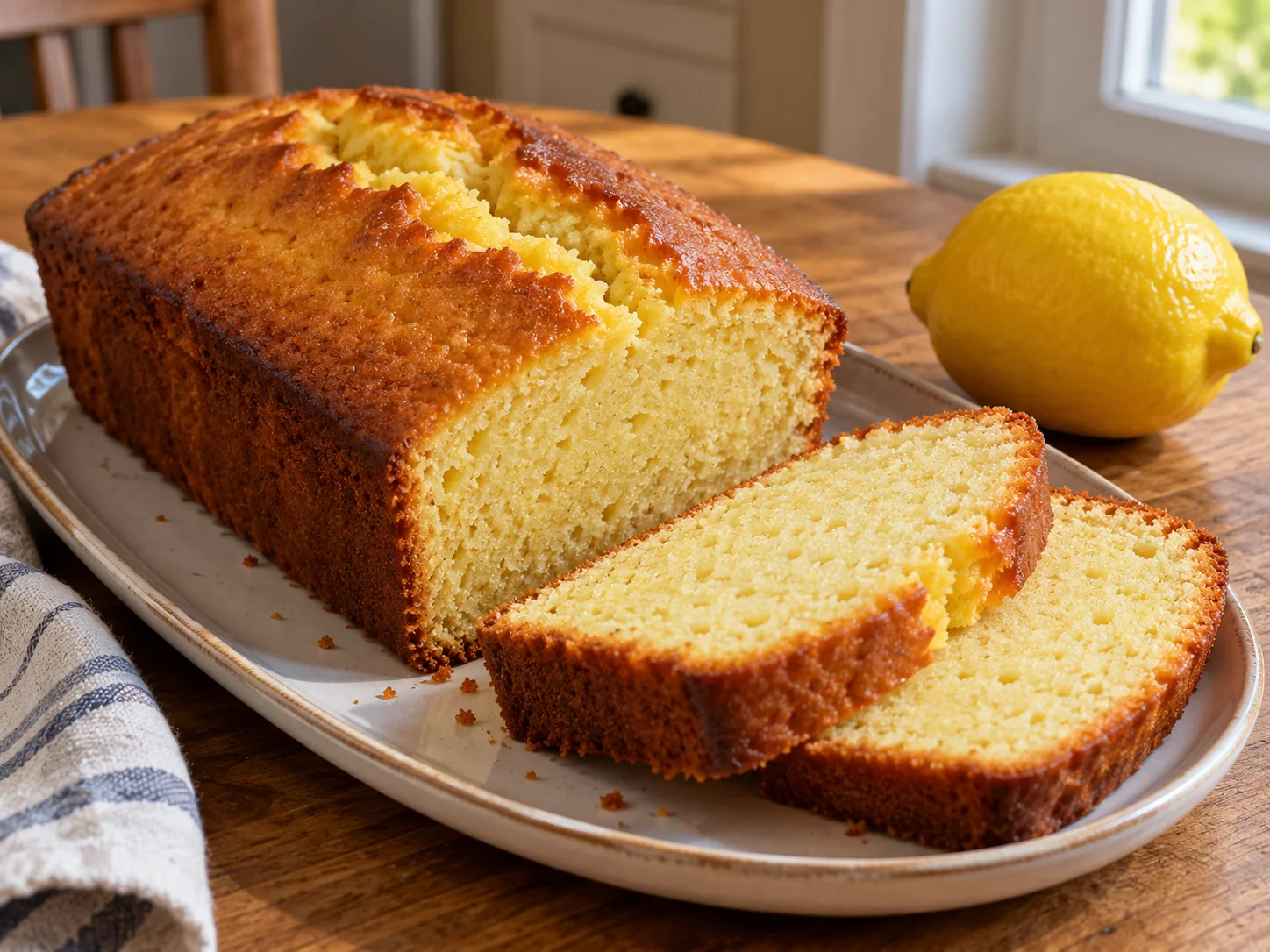
Ingredients
- 200 g wheat flour
- 6 g baking powder
- 1 g fine salt
- 120 g caster sugar
- 3 medium eggs, about 150 g without shells
- 100 g unsalted butter, melted and cooled to lukewarm, plus 5 g for the tin
- 50 ml pasteurised or UHT milk
- 2 g finely grated lemon zest
- 40 ml strained fresh lemon juice
Preparation
Prepare the components. Weigh everything, melt 100 g butter and let it become lukewarm. Prepare zest, strain juice and line the tin. This organisation allows the batter to go into the oven as soon as wet and dry ingredients are combined.
Mix eggs and sugar. Whisk three eggs with 120 g sugar for about two minutes until smooth and slightly foamy. Add 2 g zest, gently clearing the grater if necessary to recover any zest still attached.
Add liquids. Pour in 50 ml milk, 40 ml juice and lukewarm melted butter. Mix gently to distribute the fat. If small irregularities appear when lemon is added, continue mixing rather than immediately adding flour to disguise them.
Fold in the dry ingredients. Add flour, baking powder and salt in two additions. Lift and fold with a spatula, scraping the bowl’s base until no dry flour remains. Pour into the tin and smooth without prolonged pressing or vigorous beating.
Bake at 170 °C for about forty-five minutes. Do not open the oven for the first thirty minutes. Then check browning and lightly protect the top if needed. A skewer inserted in the centre should come out without liquid batter; a few moist crumbs are acceptable.
Rest for fifteen minutes in the tin. Gently release the sides, lift with the paper and place on a rack. Remove paper carefully. Wait until warm before cutting eight slices: a very hot cake is more fragile and may tear under the knife.
Introduction
Zest provides much of the aroma, while juice contributes a more direct acidity. Taking only the thin coloured outer layer avoids too much bitter white pith. Prepare the lemon before mixing the batter, using a fine grater and clean citrus press.
The melted butter should be lukewarm: if still very hot, it may start cooking the eggs; if cooled until solid, it mixes less easily. The batter does not need prolonged beating after flour is added. A few folds with a spatula incorporate the dry ingredients while keeping the crumb soft.
Prepare a one-piece twenty-four-centimetre loaf tin, baking paper and cooling rack. Forty-five minutes is a guide for this size. A smaller tin or deeper batter should not automatically be cooked for the same time.
Cultural context
🇨🇩 Radio Okapi published a lemon loaf cake in its “Recipe of the day” section on 26 January 2017. This reference records a baking proposal for its audience in the Democratic Republic of the Congo; it establishes neither Congolese origins nor an identical tradition in every family.
This adaptation specifies zest and juice quantities, uses a shorter tin and moderate temperature, adds a little milk and adjusts the other ratios. It is therefore an editorial home version rather than an exact reproduction of the radio’s published formula.
📚 Repertoire reference: Radio Okapi, 26 January 2017.
Tips
Do not grate deeply into the lemon. The coloured zest is enough to flavour the batter; adding white pith does not pleasantly intensify the aroma. A fine grater distributes it evenly without large pieces of peel in the crumb.
Juice cannot freely replace milk. Much more lemon changes acidity and hydration and may make the crumb heavy. To increase the aroma in a later attempt, modestly adjust zest rather than adding unmeasured juice.
Avoid doubling the baking powder for more height. Excessive rising may be followed by collapse. Check tin size, ingredient weights and the powder’s condition before altering the formula.
If the top colours while the centre remains raw, shield loosely and continue baking in five-minute intervals. A golden crust alone does not prove the middle is cooked.
A rack prevents steam collecting beneath the loaf. Cooling it completely in a closed box would make the surface damp. Wait before wrapping, while respecting the maximum unrefrigerated time stated for leftovers.
Planning
Wash the lemon under drinking water and dry before grating. Prefer fruit whose peel is intended for culinary use. Take 2 g zest before cutting, then squeeze, remove seeds and measure 40 ml juice. Large and small lemons yield different amounts: measuring avoids adding excessive liquid.
Preheat a conventional oven to 170 °C. Grease the tin with the stated 5 g butter and line its base with a strip of baking paper long enough to lift the loaf. Mix flour, baking powder and salt separately to distribute the raising agent evenly.
Serving
Cut eight similarly sized slices using a thin-bladed knife. Wipe it if crumbs accumulate. Serve warm or cool according to preference, without keeping the cake close to a heat source for a long time.
Storage
Let the loaf become warm on the rack, then cover and refrigerate leftovers within two hours of baking. Eat within forty-eight hours. Remove only the portion wanted; reheat briefly if necessary. To freeze, wrap cooled slices separately, date them and thaw in the refrigerator. Do not enclose a hot cake in a box, where condensation would soften the surface.
Variations
A little vanilla can complement the lemon without being necessary. Poppy seeds or added fruit require other quantities and are not included here. The cake already contains sugar: icing is a separate addition to disclose and count separately.
An egg-free, dairy-free or gluten-free loaf needs an adapted formulation. Simply replacing flour or removing eggs does not ensure comparable structure. Keeping the base quantities for a first result makes it possible to change one parameter at a time later.
Accompaniments
Serve a slice with tea, coffee or water. A small portion of washed fresh fruit may accompany a snack. Avoid multiplying sweet sauces: they are unnecessary for appreciating lemon aroma and excluded from the nutritional estimate.
Nutrition notes
Flour and sugar mainly provide carbohydrate, butter supplies fat, and eggs contribute some protein. Lemon flavours a cake: it does not turn a slice into a whole-fruit portion or therapeutic food. Figures are estimates per eighth without drink or icing. Main allergens are wheat, milk and egg.