Soy-marinated chicken skewers
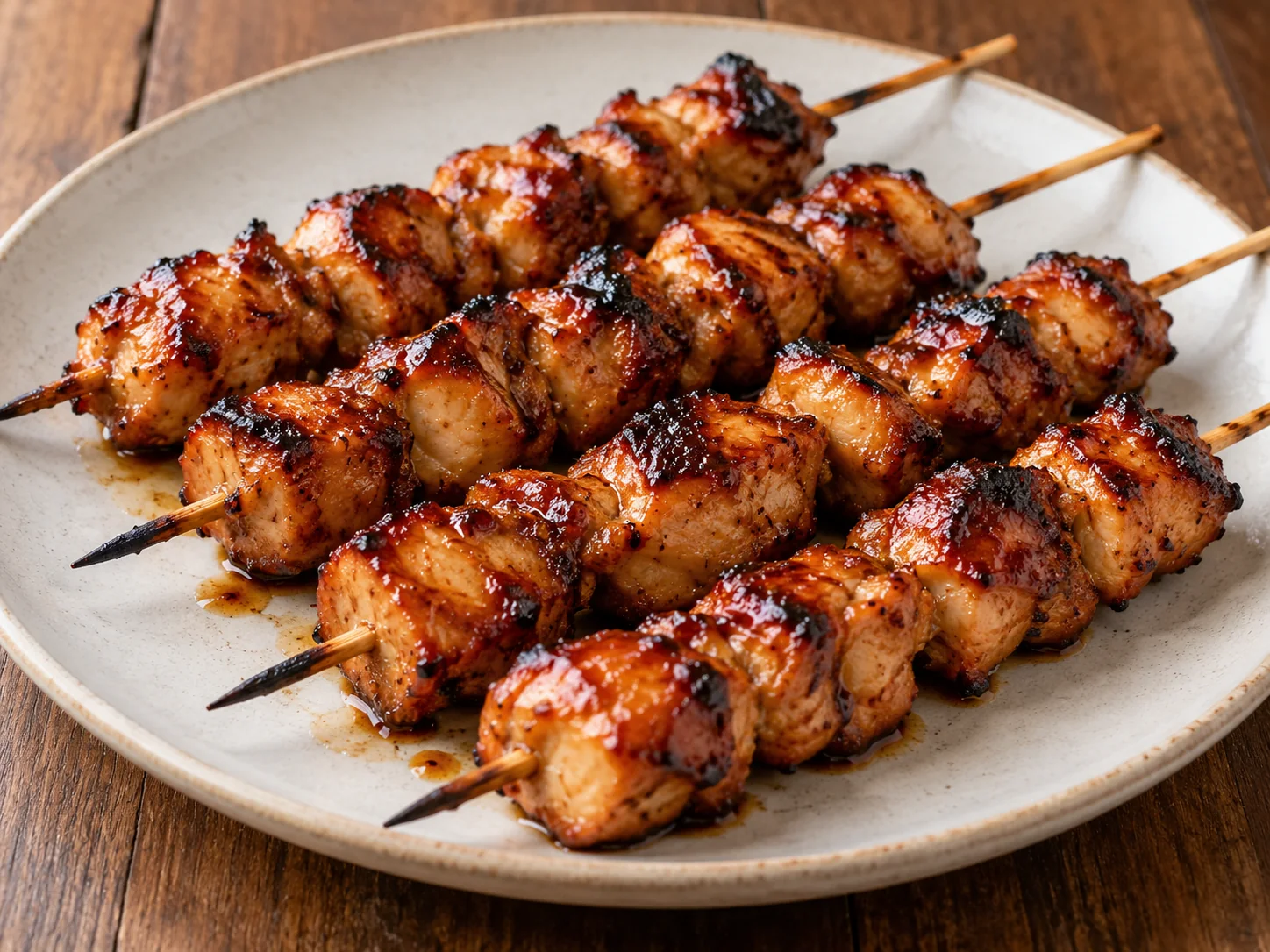
🍢 Eight small chicken skewers gain a salty, sweet and lightly tangy flavour from soy sauce, honey, lemon and garlic marinade. Pan cooking controls browning without a barbecue. Their surface becomes glossy and golden while the centre is checked with a thermometer. Two skewers per person constitute the meat portion here, without accompaniments included.
Ingredients
- 700 g boneless, skinless chicken, in roughly 2.5 cm cubes
- 30 ml soy sauce, preferably reduced-salt if available
- 20 g runny honey
- 20 ml strained lemon juice
- 15 ml neutral vegetable oil: 10 ml for marinade and 5 ml for the pan
- 8 g peeled, finely chopped garlic
- 8 small metal skewers that fit the pan, non-edible equipment
Preparation
Mix the marinade. In a sufficiently large food container, combine 30 ml soy sauce, 20 g honey, 20 ml lemon juice, 10 ml oil and 8 g garlic. Stir to distribute honey. Reserve the remaining 5 ml oil for cooking rather than automatically pouring it into the bowl.
Cut and marinate for 30 minutes refrigerated. Cut chicken into similar 2.5 cm cubes, add to the mixture and coat thoroughly. Cover and refrigerate immediately. Stir once with a utensil reserved for raw meat if needed. This thirty-minute wait is additional to twenty minutes of active preparation.
Assemble eight skewers. Take the bowl out when ready to cook. Drain each piece over the bowl without squeezing or trying to dry it completely. Thread without tightly compressing cubes, sharing weight evenly. Discard marinade that touched raw chicken; it will serve neither as sauce nor final glaze.
Brown gradually for about 12 minutes. Heat a wide non-stick frying pan over medium heat with the reserved 5 ml oil. Place skewers in one layer. Turn a quarter-turn every 2–3 minutes to expose different sides. Honey should brown without forming a black crust. Reduce heat if colour develops far ahead of cooking.
Check and finish for about 3 minutes if necessary. Insert the probe into the side of a large cube without touching metal skewer or pan. Chicken must reach at least 74°C at the centre. Check several skewers, particularly those in a cooler area. Gently continue cooking only pieces not ready; times remain approximate.
Serve immediately on a clean plate. Allocate two skewers per person with separately prepared accompaniments. Do not pour raw marinade over cooked meat or use the raw-meat bowl for serving. Warn that skewers are hot; remove meat from its support for someone needing assistance at the table.
Introduction
Honey is the delicate point: it encourages attractive browning but burns faster than chicken cooks through if the heat is too high. Cubes should therefore be reasonably even, excess marinade drained and heat moderate. A blackened skewer does not guarantee cooked poultry; internal temperature must be checked separately.
Use 700 g boneless, skinless chicken in roughly two-and-a-half-centimetre cubes. Divide among eight small skewers that lie flat in the pan. Short metal skewers simplify handling; check their length before starting. If they project far beyond the pan or prevent meat touching the base, choose a different size rather than forcing the arrangement.
Marinate for thirty minutes refrigerated in a covered container. Marinade does not preserve the meat or make it safe without cooking. Soy sauce already supplies a significant part of the seasoning, so no extra salt is planned. Prepare accompaniments during this wait and reserve a clean plate for cooked skewers.
Cultural context
🇨🇩 Radio Okapi published “Asian-inspired” chicken skewers on 1 December 2022. This documents a contemporary recipe circulated in DR Congo without making it an exclusively Congolese speciality.
This version specifies meat weight, eight small skewers and home pan cooking. Its title highlights soy sauce rather than an assumed geographical origin. Influences and ingredients circulate through urban kitchens; this recipe invents neither an ancient history nor an identical place in every household in the country.
📚 Reference: Radio Okapi, 1 December 2022.
Tips
Even cubes matter more than an exact number of pieces per skewer. Divide total weight across eight skewers without adding tiny scraps that would burn before large cubes.
Draining excess marinade avoids a puddle that would boil then suddenly caramelise. Surfaces stay coated, but skewers should not sit in raw liquid during cooking.
Start over medium rather than very high heat. Slow browning can be corrected quickly; burnt honey will not disappear with longer cooking. If needed, carefully wipe away burnt residue between batches.
If all eight skewers cannot fit without overlap, cook in two batches. Divide the 5 ml oil between them and hold the cooked first batch briefly covered on a clean plate, without a prolonged lukewarm wait.
Reduced-salt soy sauce can lower salty seasoning, but composition varies by brand. Do not add salt before tasting a completely cooked skewer. Remaining marinade is discarded and must not be tasted.
Planning
Read the soy sauce label: it contains soy and may contain wheat. For a dietary restriction, check the exact product, including any gluten-free version. Honey, lemon and garlic do not replace that check. No added salt is necessary in the basic list.
Prepare marinade before cutting chicken, using clean hands and a clean bowl. Do not rinse raw poultry under the tap; pat only if necessary with disposable paper. Clean knife, board and hands after cutting. Keep the marinade container refrigerated for thirty minutes and use clean tongs to remove cooked skewers later.
Serving
Present golden, glossy skewers with their light pan browning visible. They should not be entirely black or covered with a thick sauce invented after cooking. Keep skewers away from young children and offer detached meat if needed. Allocate two similar-weight skewers to each person for fair portions.
Storage
Refrigerate leftovers within two hours, removing skewers to ease storage in small shallow containers. Store at 4°C or below and eat within 48 hours. Reheat the required portion, covered with a spoonful of water if needed, to 74°C at the centre. Never return cooked poultry to saved raw-meat marinade; that marinade should have been discarded during assembly.
Variations
Skinless, boneless thigh pieces may replace breast at the same weight; texture and time can change, with the same 74°C check. Tamari explicitly labelled gluten-free may suit certain requirements but generally still contains soy. Not every dark sauce is an equivalent replacement. Grilling would require reconsidering heat intensity and watching honey; it is not the method detailed here.
Accompaniments
Serve with plain rice and separately cooked vegetables such as carrots or green beans. Rice absorbs the few juices without needing a second sweet sauce. Rice and vegetable amounts are excluded from this recipe. If a dipping sauce is wanted, prepare it in another bowl with ingredients that never touched raw chicken.
Nutrition notes
Chicken mainly supplies protein; honey and soy sauce contribute carbohydrates and seasoning. Actual marinade absorption is hard to measure because excess is discarded. Figures are therefore estimates per person for two skewers without rice or vegetables. Sodium strongly depends on the chosen sauce and is not given with artificial precision.