Pork trotters with potatoes
🍲 An orange-red broth combines pork trotters, potatoes and aromatic vegetables. This adaptation exclusively uses commercially fully cooked, tender trotters ready for reheating. The stated fifty-minute cooking time applies to this precooked product and the vegetables, never to raw trotters. Bone-in pieces remain visible when served.
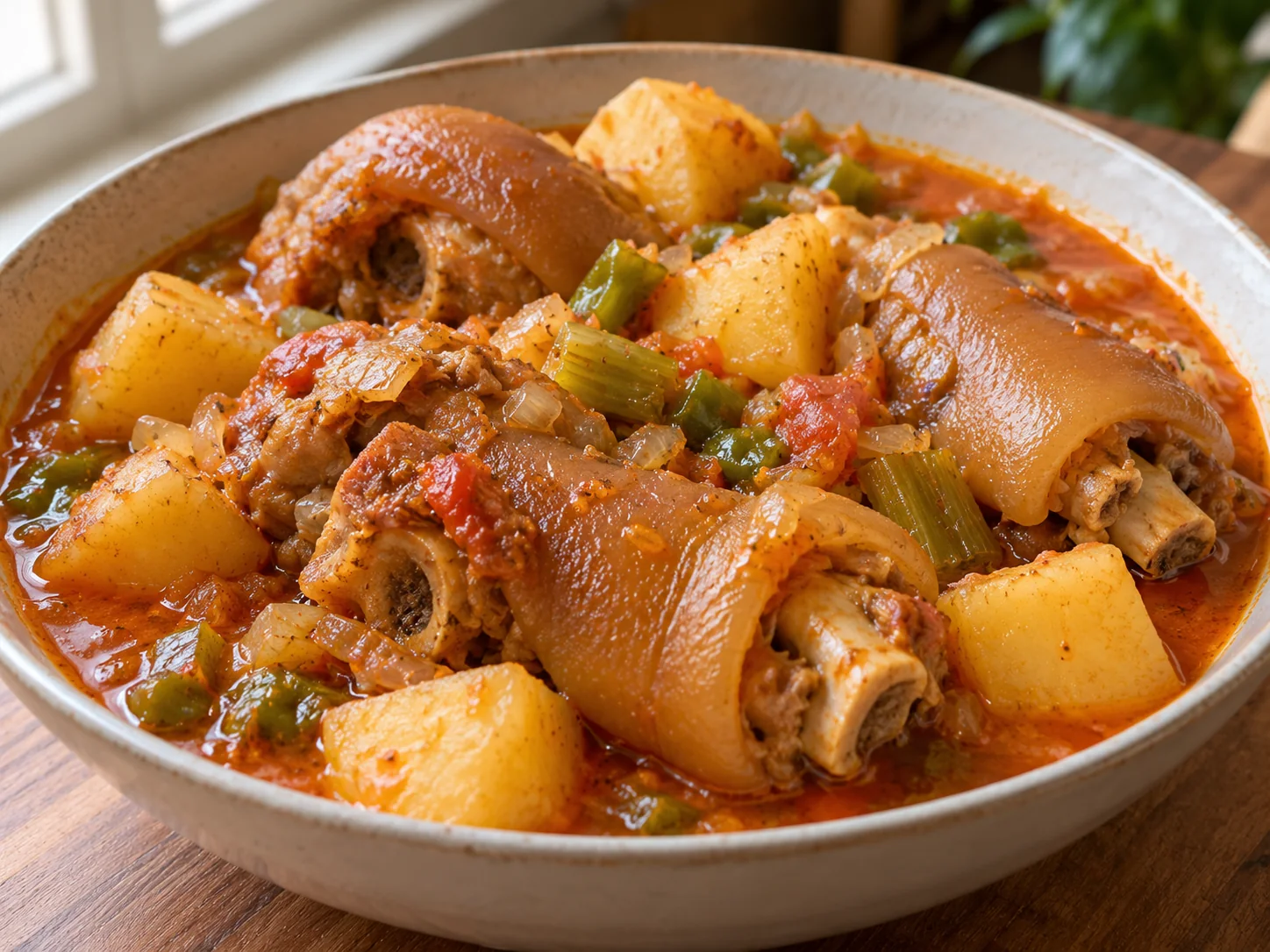
Ingredients
- 1 kg commercially fully cooked, tender pork trotters ready for reheating, bone-in, professionally cut, drained weight
- 600 g peeled potatoes, in 3 cm cubes
- 400 g chopped ripe tomatoes
- 150 g sliced onion
- 120 g trimmed green bell pepper, finely diced
- 60 g washed and sliced celery stalk
- 20 g washed and sliced spring onion
- 8 g chopped garlic
- 10 ml neutral vegetable oil
- 1 litre drinking water, plus up to 300 ml hot water as needed
- 2 culinary bay leaves, to be removed
- 1/4 teaspoon ground nutmeg
- 1/4 teaspoon white pepper
- Up to 3 g salt, depending on the precooked product
- Optional fresh chilli, served separately
Preparation
Heat the 10 ml oil over moderate heat. Soften onion, pepper and celery for 5 minutes, stirring without strong browning. Add garlic near the end. The cooked trotters will contribute fat, so do not add extra oil by eye.
Add tomatoes and cook another 5 minutes, stirring the bottom. Crush lightly with the spoon to bind the base without making a perfectly smooth puree. Pour in the litre of water, add both bay leaves, nutmeg and pepper, and bring to a simmer.
Place the already fully cooked trotters in the hot liquid. Cover and simmer about 15 minutes to begin reheating and flavour the broth. Turn gently with tongs if necessary without crushing joints. Avoid vigorous boiling, which may loosen small bones.
Add drained potatoes, distributing them through the broth. Cover and simmer gently about 25 minutes. Check from 20 minutes: a knife should enter the centre easily. Gradually add some of the extra 300 ml hot water if the level falls; this should remain a substantial broth, not a dry pan dish.
Measure the centre of the thick edible part of several pork pieces without touching bone: reach at least 74 °C when reheating. Also follow product directions. Continue gently if this temperature or potato tenderness has not been reached. Fifty minutes is guidance for precooked trotters, never a cooking time for raw ones.
Remove both bay leaves and look for detached small bones. Add spring onion and taste the broth with a clean spoon before adding salt, up to 3 g for the whole pot. The commercial product may already be salted. Divide pork, potatoes and broth between four warm bowls; serve chilli separately.
Introduction
Buy one kilogram of commercially fully cooked pork trotters, ready for reheating, from a professional or in clearly labelled packaging. They must already be tender. Cleaned, blanched, salted or smoked trotters are not automatically this product. Ask the supplier if their cooking status is unclear and choose an explicitly ready-to-reheat product. This recipe does not allow raw trotters to become tender in fifty minutes.
The kilogram includes bones. Nutrition estimates assume approximately five hundred grams of edible meat and skin altogether; actual yield varies widely. Have the supplier cut the pieces cleanly rather than attempting to chop bones with an unsuitable kitchen knife. Check for loose bone splinters when opening, then follow the manufacturer’s storage and reheating directions.
The six hundred grams of peeled potatoes provide four moderate portions alongside the pork and vegetables. Cut even three-centimetre cubes so they soften together. Celery is an allergen. Read the precooked product’s ingredients too: its marinade or commercial broth may contain other allergens and added salt.
Cultural context
🇨🇩 Radio Okapi publishes pork-trotter broth with potatoes using a long initial cooking stage. Here that stage is explicitly replaced by commercially fully cooked trotters. Recipe and reheating references: Radio Okapi. FoodSafety.gov.
Tips
Choose by actual cooking status rather than colour. White, smoked or browned appearance does not prove full cooking. Supplier confirmation and an already tender texture are essential for this shortcut.
Fairly firm potatoes retain their cubes better. Even so, avoid vigorous stirring after adding them. Gently move the pot or use a large spoon to redistribute liquid.
Some products make a fattier broth. Skim some floating fat after cooking if preferred, without claiming an exact resulting fat value. Surface fat is different from the gelatinous texture of the skin.
Insert the probe into thick flesh or skin at the centre, without touching bone or the hot pan. Check several pieces and clean the probe before and after. Broth temperature alone is insufficient.
Warn diners about bones and provide a small plate for them. Carefully debone a portion for anyone unable to manage bones. Never blend the dish with its bones to make soup.
Planning
Prepare a wide casserole, lid, slotted spoon and food thermometer. Keep the cooked pork refrigerated until needed rather than leaving it on the worktop while preparing vegetables. This method starts after the trotters have been fully cooked; it is not a raw-trotter procedure. Follow any longer or specific reheating directions from the manufacturer and adjust the sequence.
Weigh potatoes after peeling and remove green or damaged patches; discard very green or deteriorated tubers. Hold briefly in cold water, then drain before adding. Dice pepper and celery finely enough to cook in the stated time. Keep track of both bay leaves for removal.
Serving
Give each bowl a similar amount of edible pork, then distribute potatoes and broth. Bone-in weight is not a reliable measure of meat in each portion. Serve hot with a spoon and fork. Clearly state that this is pork and contains bones; gelatinous pieces must not be described as boneless meat.
Storage
Quickly divide leftovers into shallow containers and refrigerate within two hours at 4 °C or below. Use within 48 hours or freeze sealed, dated portions. Broth may set into jelly when cold; that does not establish safety or extend storage. Thaw in the refrigerator and reheat only the needed portion to 74 °C at the centre of the pieces, gently stirring the liquid.
Variations
Raw trotters require a different schedule, a long initial cooking stage and appropriate controls; simply following this recipe’s fifty minutes will not achieve that. Keep this accessible version to the fully cooked product described, not merely blanched trotters.
Red pepper may replace green at equal weight. A whole chilli can simmer in the broth if everyone agrees, then be removed. Avoid adding stock cubes out of habit: they often increase salt in an already seasoned commercial product. Changing potato quantity also changes consistency and nutrition estimates.
Accompaniments
Potatoes already supply the meal’s starch. A separately prepared small salad can add crunch without multiplying heavy accompaniments. Offer drinking water and a separate small chilli dish. Any bread is excluded from the stated nutrition values.
Nutrition notes
The dish supplies protein, potatoes and vegetables with a gelatinous-skin texture. Do not attribute therapeutic joint benefits or medical collagen effects to it. Values are approximate for four portions assuming about 500 g edible meat and skin from the bone-in kilogram, without bread. Yield, skimmed fat and commercial salt can materially alter the result.