Beef with sorrel and aubergines
🍲 Braising beef cubes become tender in a tomato sauce before soft aubergines and tangy garden sorrel join them. The three main ingredients do not enter the pot together: meat needs time, while vegetables should retain a pleasant texture. This household adaptation uses a measured amount of oil and a single cooking pot.
Ingredients
- 800 g boneless braising beef, such as chuck, cut into 3 cm cubes
- 200 g identified edible garden sorrel, usable weight without thick stalks
- 400 g firm aubergines, cut into 2 cm cubes
- 400 g ripe chopped tomatoes, fresh or canned without added salt
- 150 g sliced onion
- 150 g green pepper, deseeded and finely diced
- 40 g sliced celery stalk
- 8 g chopped garlic
- 20 g tomato paste
- 25 ml neutral vegetable oil
- 700 ml drinking water, plus 150–250 ml only if needed during braising
- 1 bay leaf
- 1/2 teaspoon white pepper
- Up to 4 g added salt, adjusted at the end
Preparation
Brown the beef for about 12 minutes in total. Heat 25 ml oil in the casserole over medium-high heat. Add half the cubes in one layer, let several faces colour and transfer to a plate. Repeat with the rest. Brown the surface without burning the bottom. This does not cook the meat through or replace braising.
Soften the aromatics for 8 minutes. Reduce to medium heat and add onion, celery and green pepper to the same pot. Stir regularly to soften and loosen unburnt cooking juices. If the bottom catches, add a spoonful from the measured 700 ml water rather than more oil. Add garlic during the last minute.
Build the sauce for 5 minutes. Stir in tomato paste and chopped tomatoes, distributing the paste and allowing the mixture to soften gently. Return beef and plate juices; add the remainder of the 700 ml water, bay, pepper and about half the planned salt. Bring to a simmer and cover.
Braise for about 90 minutes before judging tenderness. Keep a steady gentle simmer without violent bubbling. Stir gently every 25–30 minutes and check that the bottom stays moist. Add only part of the reserved water if needed. Test a cube with a fork: if distinctly firm, continue in 20–30-minute stages before the next step.
Cook aubergines for about 25 minutes. Once the beef is already tender, add aubergine cubes and push them into the sauce. Partially cover and cook gently until soft, carefully stirring once or twice. A knife tip should slide easily into the flesh; if still spongy and resistant, continue for a few minutes.
Finish with sorrel for 10 minutes. Stir in the drained, roughly chopped leaves and allow them to collapse in the sauce. Their darker colour is expected. Remove the bay leaf, taste and adjust salt within the specified limit. If too thin, reduce uncovered briefly while watching the bottom; if too thick, add a small spoonful of hot water. Divide meat and vegetables among four people.
Introduction
The cut of beef determines the pace of the recipe. Ask for 800 g of boneless braising beef, such as chuck, then cut into roughly three-centimetre cubes. A quick-cooking cut would not behave the same way after two hours in sauce. Braising meat contains tissues that need time and moist heat to soften.
Choose firm, undamaged aubergines and edible garden sorrel from a food supplier who can identify it. Its acidity brightens the dish without requiring lemon or vinegar. Keeping the leaves bright green is not the aim: sorrel naturally turns brown during cooking, particularly in an acidic environment. That colour alone therefore does not establish the freshness of the leaves.
Use a covered casserole wide enough to brown the meat in two batches. The lid limits evaporation during braising but does not replace checking: periodically inspect the liquid level and the gentle simmer. The suggested times suit a realistic home schedule; if the meat still resists a fork, extend its cooking before adding the aubergines.
Cultural context
🇨🇩 Radio Okapi published beef with sorrel and aubergines on 31 January 2016. This documents a household preparation in culinary material circulated in DR Congo, without proving exclusive origin or uniform nationwide consumption.
This recipe develops its own casserole method, specifying a braising cut, vegetable weights and an adjusted oil quantity. The sorrel is edible garden sorrel sold as such. Its name must not be used to identify a wild leaf by assumption or equate every plant with a similar local name. This version makes no claim of a universal botanical identity for leaves called ngai-ngai.
📚 Reference: Radio Okapi, 31 January 2016.
Tips
The crucial checkpoint is tender beef before aubergines enter. Adding vegetables to tough meat leaves a choice between resistant beef and overbroken vegetables. Allow extra time rather than turning the heat up sharply.
Similar-sized cubes cook more evenly. Do not cut everything tiny to hurry the process: small pieces can dry on the surface during browning and break apart in sauce. Three centimetres is a useful guide, without requiring perfect cutting.
Aubergines readily absorb fat when fried. Here they cook in an already liquid sauce, leaving the 25 ml oil for browning and aromatics. Do not add an uncounted separate frying step.
Sorrel contributes its own acidity. Taste after its ten-minute cook before adding an acidic condiment at the table. Sharp tomatoes and particularly tangy sorrel can make a stronger result; a plain starch accompaniment balances the meal without changing the recipe.
Sauce reduced too early may stick while beef is still firm. Keep the lid on and enough liquid during tenderising, then adjust consistency at the end. The 150–250 ml reserve compensates for actual evaporation rather than turning the dish into soup.
Planning
Take out the vegetables, wash them and prepare a clean board before handling the meat. Wash the sorrel in several changes of water if soil remains, then drain and remove thick stalks. Roughly chop without puréeing. Cut aubergines shortly before adding, or refrigerate them in a covered container during the first braise.
Do not rinse raw beef under the tap: splashes can spread juices across the worktop. Pat cubes dry with disposable paper to encourage browning. Clean the knife, board and hands after raw meat, before returning to vegetables or serving utensils. Measure 700 ml water and keep the small adjustment reserve separate: it should not be added automatically.
Serving
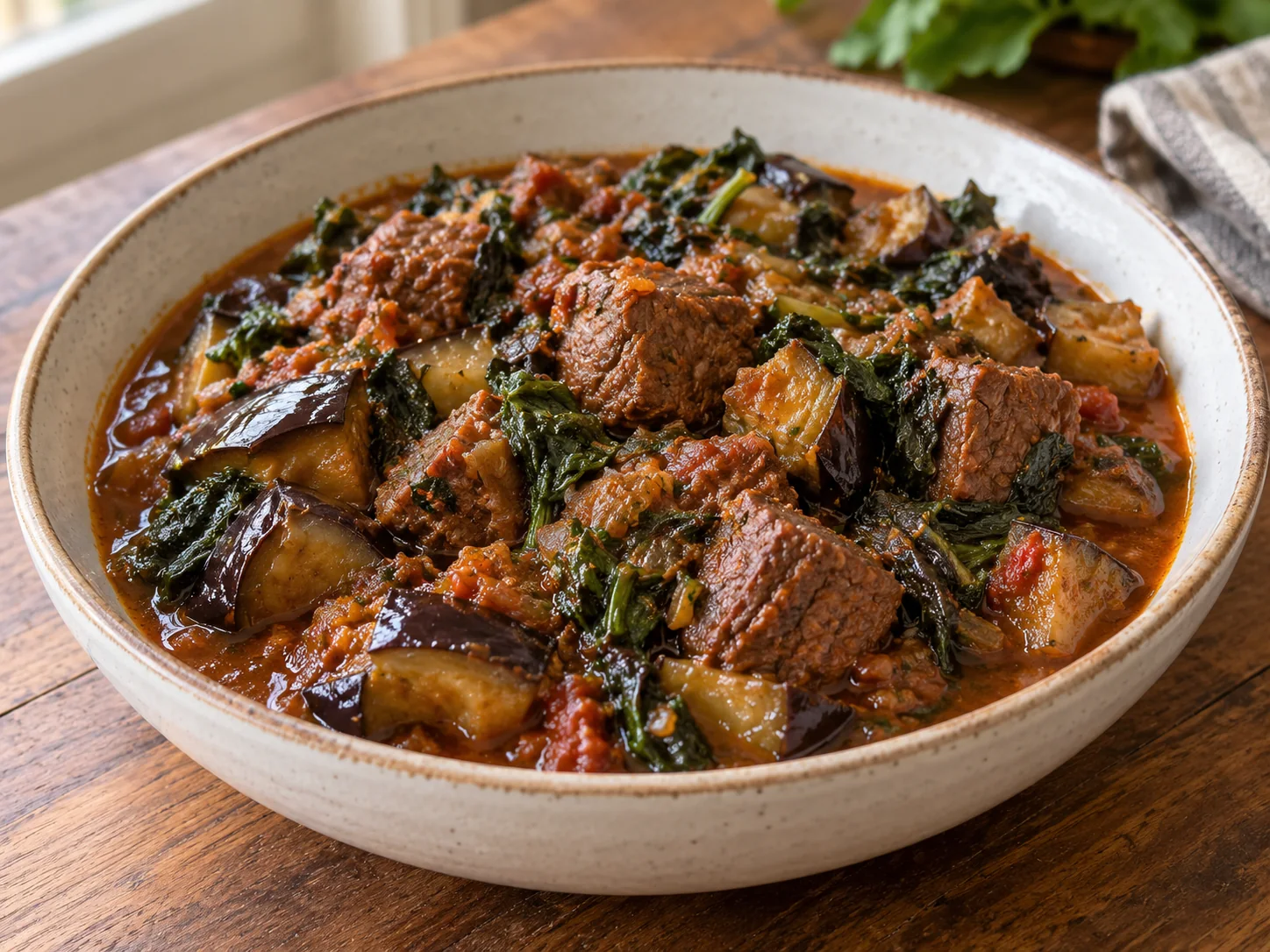
Use a deep serving dish or four deep plates. Divide beef cubes first, then aubergines, leaves and sauce, so one portion does not receive mostly liquid. Expect tender ingredients in a brown-red tomato sauce with darkened leaves. Remove the bay leaf before taking the dish to the table.
Storage
Cool leftovers quickly in shallow containers and refrigerate within two hours. Store at 4°C or below and eat within 48 hours. Reheat only the required amount, stirring carefully, to 74°C at the centre for leftovers. A spoonful of water can help if the sauce thickened when cold. Do not leave the entire casserole cooling for hours on the switched-off stove.
Variations
Another braising cut can replace chuck at the same weight, but its tenderising time may change. Canned chopped tomatoes without added salt work when fresh ones are unripe. Do not replace sorrel with gathered or insufficiently identified leaves. A preparation without sorrel is a different stew with different acidity: state this clearly instead of presenting the two results as identical.
Accompaniments
Serve with a portion of fufu, chikwangue or cooked plantain prepared separately. One accompaniment is enough for enjoying the sauce. The quantities here cover only the stew and its vegetable mixture, excluding flour for fufu or plantain weight. Prepare the accompaniment during the final part of cooking.
Nutrition notes
Beef supplies most of the protein; aubergines, sorrel and other vegetables contribute fibre. Fat depends strongly on the beef cut and trimming, even with measured added oil. The figures below are estimates per serving without a starchy accompaniment, not laboratory results. Vitamins and minerals are not quantified because vegetable composition and cooking losses vary.