Aubergines with mushrooms
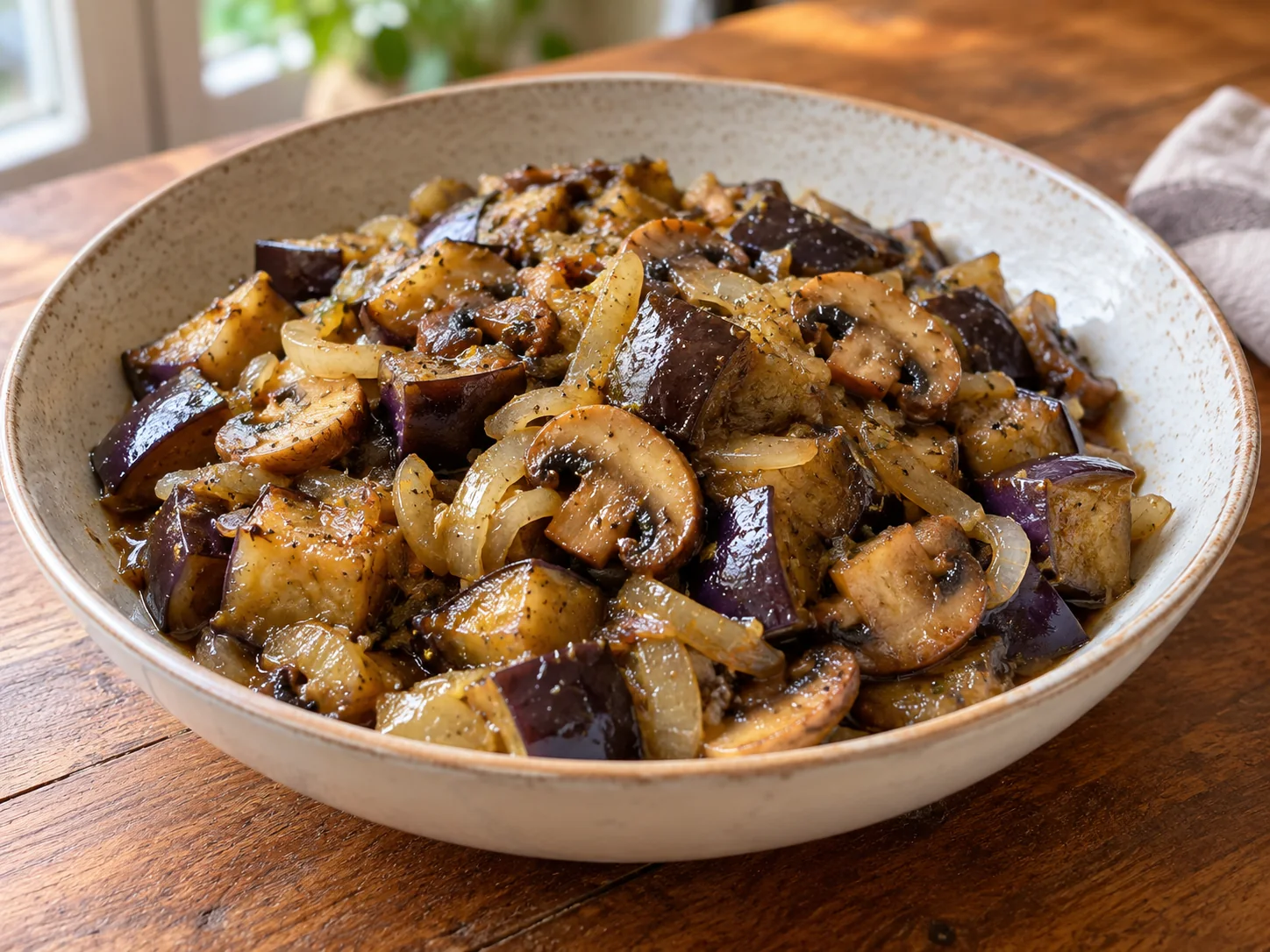
🍆 Tender aubergines and golden mushrooms meet at the end of cooking to preserve their textures. This measured family adaptation uses fresh mushrooms, without wine or shrimp powder. It makes four plant-based side portions; serve with a base or protein prepared separately.
Ingredients
- 600 g trimmed purple aubergines, cut into approximately 2 cm cubes
- 400 g cultivated button mushrooms, cleaned and sliced
- 120 g sliced onion
- 6 g chopped garlic
- 30 ml neutral vegetable oil, divided into two 15 ml portions
- 80 ml drinking water, plus up to 50 ml hot water as needed
- 15 ml lemon juice
- Up to 3 g salt, adjusted to taste
- 1/4 teaspoon black pepper
- 5 g washed chopped parsley, optional
Preparation
Heat a large frying pan over medium-high heat with 15 ml oil. Spread in the mushrooms and initially let them contact the base before stirring. Cook for about 8–10 minutes until their water evaporates and golden patches appear. Transfer to a clean plate. If the pan is too small, work in two batches without adding another oil portion each time.
Lower to medium heat and add the remaining 15 ml oil to the same pan. Cook onion for 4 minutes, stirring, then garlic during the next minute. Keep mushroom cooking juices, but remove any genuinely burnt patches first. The onion should soften rather than turn dark brown.
Mix in aubergine cubes. Add 80 ml water, cover and cook over medium-low heat for about 12 minutes. Stir once or twice to distribute heat. Steam complements the oil here; do not add extra fat merely because the cubes have absorbed what is already present.
Test a cube: it should squash easily with the edge of a spoon while retaining its shape. If firm, cook a little longer with one or two spoonfuls of hot water. Remove the lid and briefly evaporate excess liquid. Do not dry the pan so completely that vegetables stick.
Return the mushrooms and gently mix for 2–3 minutes until all vegetables are hot. Add pepper and some salt, then taste. Keep the vegetables recognisable: vigorous stirring turns soft aubergine into purée and loses the point of cooking them separately.
Turn off the heat, add 15 ml lemon juice and parsley if using. Stir once more, adjust salt within the indicative 3 g limit and serve hot. Thirty minutes is a guide for total cooking in a large pan; batches and firmer aubergines may take longer.
Introduction
The challenge is cooking two vegetables that behave differently. Mushrooms release plenty of water and brown only when their surface can dry. Aubergines rapidly absorb oil before becoming tender through heat and moisture. Cooking them separately controls both processes instead of producing a pale mixture with some pieces still firm.
Choose firm, glossy purple aubergines without soft spots. Keep thin skins, removing damaged areas only. Use cultivated button mushrooms purchased as food. This recipe provides no way to identify wild mushrooms. Weigh the vegetables after removing unusable ends, then cut evenly so they cook at the same rate.
A wide frying pan is preferable to a small saucepan because its surface allows mushroom liquid to evaporate. If the slices cannot fit without being piled up, work in two batches. Prepare a clean plate for reserving them, a lid for softening the aubergines and a little hot water. Measure the oil at the start to avoid repeated, hard-to-track additions.
Cultural context
🇨🇩 Radio Okapi published an aubergine-and-mushroom preparation in its cooking section. This is a home adaptation, without claiming an exclusively Congolese origin. Reference: Radio Okapi, 5 January 2016.
Tips
Mushrooms need room to brown. Piled slices boil in their own water instead. Sharply increasing the heat cannot replace an appropriately sized pan and may burn pieces touching the base.
Cut aubergines evenly. A hard large piece beside collapsed small cubes mainly indicates uneven cutting. Test one of the largest cubes before combining the vegetables.
Do not judge oil needs only by the early appearance: aubergine may seem dry after absorbing it. Covered cooking with measured water softens it without requiring another splash of oil at every stir.
If reserved mushrooms release liquid on their plate, add it during a short reduction with the aubergines rather than at the final moment. This retains flavour without immediately soaking the finished sauté.
Adjust lemon at serving. If very sharp, start with part of the 15 ml, taste and add gradually. Do not automatically correct acidity with sugar, which is not included in this vegetable preparation.
Planning
Clean the mushrooms with a soft brush or a quick rinse, then dry thoroughly. Remove earthy stem ends and cut into fairly thick slices, about five millimetres. Prolonged soaking does not help browning. Wash and dry the aubergines before removing the stalks and cutting cubes.
Slice the onion and prepare garlic. Measure the oil separately: the first portion is for mushrooms and the second for aubergines and aromatics. Reserve lemon for finishing; adding it too soon loses the freshness of its final aroma. Parsley is optional, but should be clean and freshly chopped if used.
Serving
Divide both vegetables evenly between four plates. Serve promptly after adding lemon to retain freshness. If waiting, do not leave over high heat: moisture would evaporate and the tender cubes would stick. Warm gently with just a spoonful of water if required.
Storage
Put leftovers in a shallow container and refrigerate within two hours of cooking. Keep at 4 °C or below and eat within 48 hours. Reheat the portion needed until thoroughly hot, stirring gently. Freezing is possible, but aubergines become softer after thawing in the refrigerator; expect that texture change.
Variations
To move closer to the preparation published by Radio Okapi, use thoroughly drained canned mushrooms. Their texture and browning differ: dry well and adjust pan time rather than treating them exactly like fresh mushrooms. Do not add salty canning liquid.
Replace neutral oil with the same amount of olive oil if preferred. Shrimp powder is not included: adding it introduces crustaceans and changes the plant-based character. White wine is also omitted; lemon added at the end provides acidity without changing the cooking liquid.
Accompaniments
Serve with separately prepared rice, steamed potatoes or plantain. To build a complete main meal, add cooked pulses, fish or meat according to preference. This vegetable side is not by itself counted as a protein portion. A rich sauce is not necessary to enjoy its soft vegetables.
Nutrition notes
This dish mainly provides vegetables, fibre and measured fat. Values are estimates per serving without accompaniment or extra protein. They vary with the actual vegetables and oil. No vitamin or mineral amount has been measured in the finished dish.