Cultured milk and herb sauce
Cultured milk and herb sauce — Contemporary cold sauce using bought pasteurised cultured milk, not a protocol for making omaere.
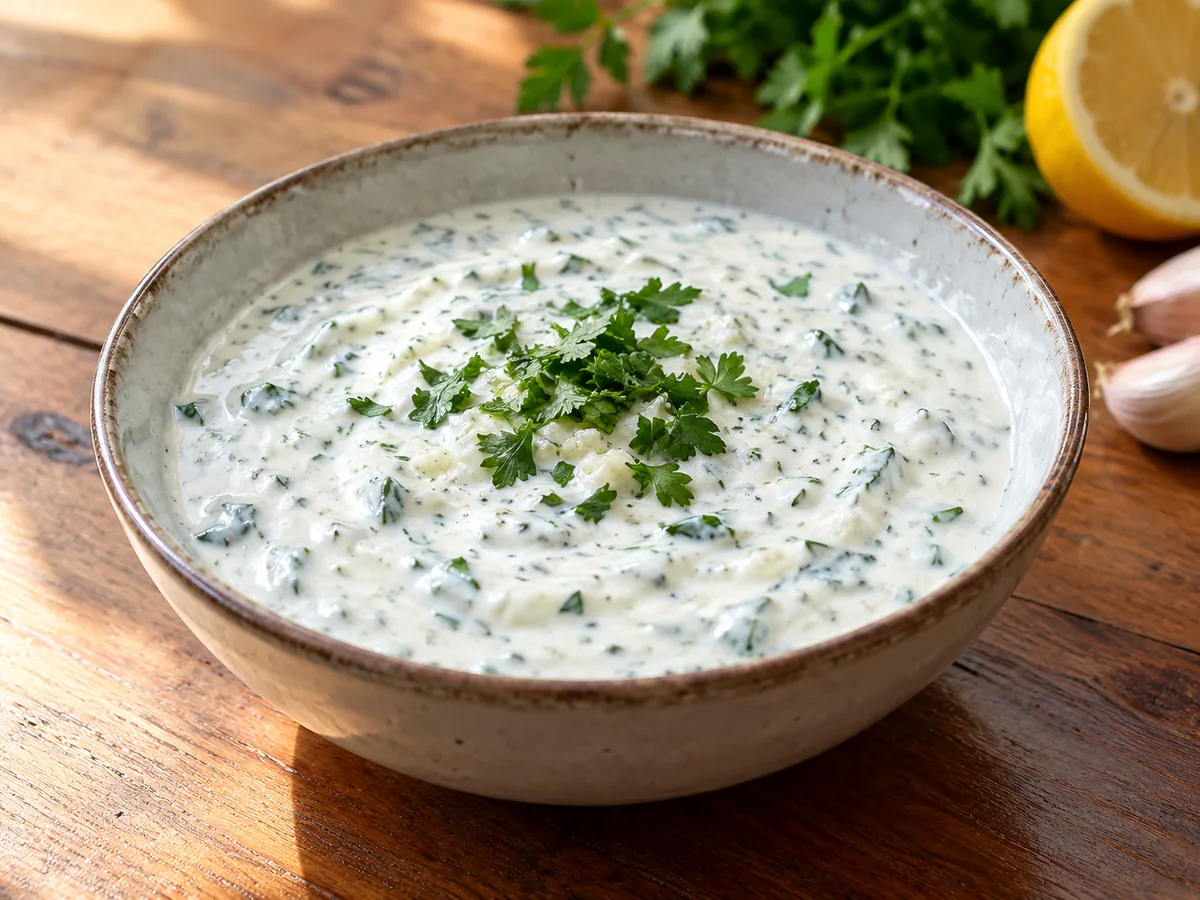
Ingredients
- 400 ml plain pasteurised cultured milk or plain yoghurt
- 25 ml lemon juice
- 20 g chopped fresh parsley
- 4 g minced garlic
- 10 g sunflower oil
- 2 g fine salt
Preparation
Use only chilled pasteurised cultured milk or plain yoghurt.
Wash, dry and finely chop parsley.
Peel garlic and crush finely.
Mix cultured milk, lemon, oil and salt in a clean bowl and fold in garlic and parsley.
Cover and refrigerate 20 minutes for flavours to mingle.
Taste before adding anything: cultured milk already provides acidity.
Serve cold on the side.
Keep away from coals and never return sauce to storage after contact with raw meat.
Use refrigerated within 24 hours.
Introduction
Pasteurised fermented milk mixes with prepared parsley, garlic, lemon and oil. Rest refrigerated and serve cold separately, preventing contact with raw-meat utensils.
Cultural context
This recipe belongs to the Namibia culinary collection. This combination is a contemporary home adaptation exploring ingredients in the Namibian selection, not the name of an ancestral dish. Proportions and procedure are an editorial proposal by RecettesAfricaines.com. Substitutions and adaptations for domestic equipment are explicitly stated. This is neither an official formula nor a description of every family practice in the country. References provide context; they do not certify each quantity or variation. Context reference: https://www.untourism.int/africa/african-gastronomy/namibia
Tips
Technique — Washing and draining matter as much as seasoning. Wet vegetables dilute dressing; crushed ones lose crunch. Use clean equipment separate from raw meat. Slice onion finely; if too strong, briefly rinse with drinking water and drain. Mix dressing separately and taste first. Use enough to coat rather than automatically drown ingredients. Add chopped herbs late. For outdoor meals keep main container cold and bring small amounts to table, replenishing as needed. Cultured milk must remain chilled: acidity does not turn sauce into a shelf-stable preserve.
Serving — Serve an amount suited to appetite and the role of this preparation in the meal. The 8 servings are a calculation reference, not an instruction to consume everything. Count extra sauce, bread, garnish or sugar separately. Offer optional additions on the side so everyone can adjust their plate or glass. Serving temperature should preserve the intended texture. Set the table before the method ends to avoid unnecessary waiting.
Storage — Refrigerate promptly at 4 °C or below in a clean covered container and use within 24 hours. Do not leave milk, cut fruit or dressed vegetable preparations on the table for hours; serve small quantities and keep the remainder cold.
Accompaniments
Serve a portion suited to its role in the meal; count additional accompaniments separately.
Nutrition notes
Values are estimates per serving, calculated from listed quantities and average food compositions. They are not laboratory measurements and vary with brands, preparation losses and final yield. Cooking that concentrates a food changes its weight, not simply the total energy provided by ingredients. Frying oil absorption is approximate; the entire oil bath is not consumed. Vitamins and minerals are qualitative guidance without daily-intake percentages or therapeutic claims. Count extra accompaniments separately.