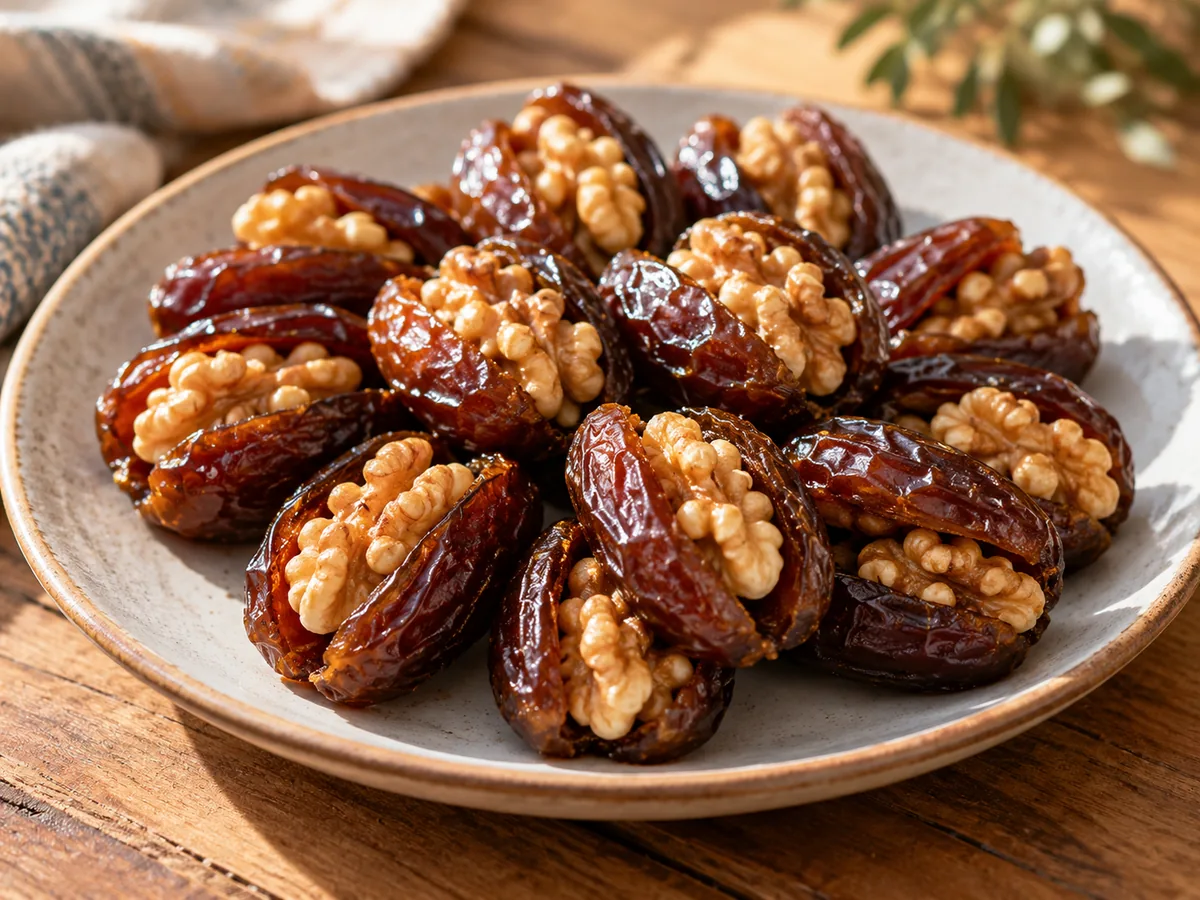
Walnut-stuffed dates
Walnut-stuffed dates — Uncooked fruit-and-nut assembly. Weigh dates after removing stones.
Ingredients
- 240 g pitted dates
- 80 g walnut kernels
Preparation
Inspect dates and discard mouldy or abnormal-smelling fruit.
Check each for stones and hard fragments.
Slit lengthwise without fully separating halves.
Check walnut kernels and break to suitable size.
Divide evenly among dates and arrange on a clean plate.
This version has no syrup, added sugar or cooking.
Cover and keep cool, serve small portions and disclose walnuts.
Do not serve large nut pieces to young children.
Introduction
Checked pitted dates receive walnut pieces without syrup, added sugar or cooking. Portion evenly, keep cool and clearly identify the walnuts when serving.
Cultural context
This recipe belongs to the Namibia culinary collection. This combination is a contemporary home adaptation exploring ingredients in the Namibian selection, not the name of an ancestral dish. Proportions and procedure are an editorial proposal by RecettesAfricaines.com. Substitutions and adaptations for domestic equipment are explicitly stated. This is neither an official formula nor a description of every family practice in the country. References provide context; they do not certify each quantity or variation. Context reference: https://www.untourism.int/africa/african-gastronomy/namibia
Tips
Technique — Buy food-grade shelled seeds or nuts stored properly; cosmetic products are not culinary substitutes. Check appearance and smell and discard rancid, damp or mouldy batches rather than attempting to rescue by roasting. Heat does not automatically make spoiled food safe. Roast in one layer, move edges towards centre when stirring and watch the quick final stage. Cool completely before sealing to avoid softening condensation. For uncooked preparations use clean hands and equipment and check shell or stone fragments. Seeds and dried fruits are concentrated; small portions give crunch or sweetness without overwhelming a plate.
Serving — Serve an amount suited to appetite and the role of this preparation in the meal. The 8 servings are a calculation reference, not an instruction to consume everything. Count extra sauce, bread, garnish or sugar separately. Offer optional additions on the side so everyone can adjust their plate or glass. Serving temperature should preserve the intended texture. Set the table before the method ends to avoid unnecessary waiting.
Storage — Refrigerate promptly at 4 °C or below in a clean covered container and use within 24 hours. Do not leave milk, cut fruit or dressed vegetable preparations on the table for hours; serve small quantities and keep the remainder cold.
Accompaniments
Serve a portion suited to its role in the meal; count additional accompaniments separately.
Nutrition notes
Values are estimates per serving, calculated from listed quantities and average food compositions. They are not laboratory measurements and vary with brands, preparation losses and final yield. Cooking that concentrates a food changes its weight, not simply the total energy provided by ingredients. Frying oil absorption is approximate; the entire oil bath is not consumed. Vitamins and minerals are qualitative guidance without daily-intake percentages or therapeutic claims. Count extra accompaniments separately.