Potbrood pot bread
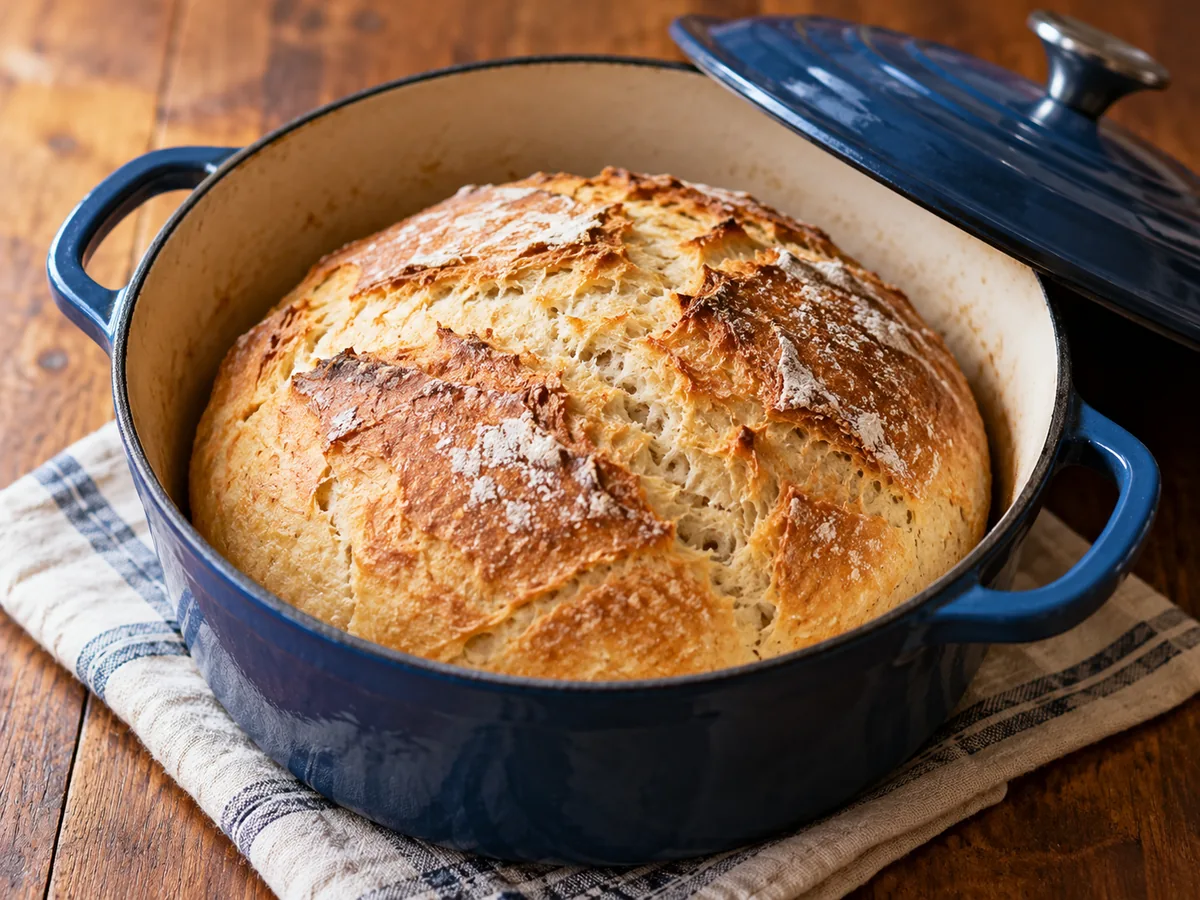
Potbrood pot bread — Leavened bread baked covered in an oven casserole, a home adaptation of southern African pot bread.
Ingredients
- 500 g wheat flour
- 320 ml drinking water
- 7 g dried baker’s yeast
- 20 g sunflower oil
- 7 g fine salt
Preparation
Mix flour, dry yeast and salt.
Add lukewarm water then oil and knead 8–10 minutes into soft dough.
Cover and rise 60–90 minutes until doubled.
Gently deflate and form a ball.
Place on oven-safe parchment in a 22–24 cm casserole and rise 35–45 minutes.
Preheat oven to 220 °C.
Cover with oven-safe lid and bake 30 minutes, then uncover for 10–15 minutes.
Bread should be golden, risen and cooked inside.
Remove with oven gloves and cool on a rack at least 45 minutes before slicing.
Introduction
Yeast bread rises twice before covered-pot baking, then finishes uncovered. Use oven-compatible equipment and count the cooling time separately before slicing.
Cultural context
This recipe belongs to the Namibia culinary collection. This version specifies ingredient choices and technique without claiming exclusive origin or an identical formula across all families. Proportions and procedure are an editorial proposal by RecettesAfricaines.com. Substitutions and adaptations for domestic equipment are explicitly stated. This is neither an official formula nor a description of every family practice in the country. References provide context; they do not certify each quantity or variation. Context reference: https://www.untourism.int/africa/african-gastronomy/namibia
Tips
Technique — Baker's yeast and baking powder have different roles. Yeasted dough must rise before cooking. Check yeast date and use lukewarm, never scalding liquid. Rising speed depends on room temperature; judge dough volume and allow longer in a cool kitchen. Initially sticky dough often improves with kneading and rest. Immediate excess flour dries the crumb. For fried bread, size and thickness determine centre cooking; test one piece first. Overhot oil browns before the centre cooks, while cool oil increases absorption. Drain on a rack and do not cover very hot breads or the crust softens.
Serving — Serve an amount suited to appetite and the role of this preparation in the meal. The 10 servings are a calculation reference, not an instruction to consume everything. Count extra sauce, bread, garnish or sugar separately. Offer optional additions on the side so everyone can adjust their plate or glass. Serving temperature should preserve the intended texture. Set the table before the method ends to avoid unnecessary waiting.
Storage — Cool completely before storing in a clean dry sealed container away from heat and moisture. Use biscuits within five days, bread within two days and toasted seeds within one week. Bread can be frozen once cold. Discard mouldy, rancid or damp products.
Accompaniments
Serve a portion suited to its role in the meal; count additional accompaniments separately.
Nutrition notes
Values are estimates per serving, calculated from listed quantities and average food compositions. They are not laboratory measurements and vary with brands, preparation losses and final yield. Cooking that concentrates a food changes its weight, not simply the total energy provided by ingredients. Frying oil absorption is approximate; the entire oil bath is not consumed. Vitamins and minerals are qualitative guidance without daily-intake percentages or therapeutic claims. Count extra accompaniments separately.