Oven-baked lemon hake
Oven-baked lemon hake — Oven-baked on softened onions rather than grilled. Adjust cooking to fillet thickness.
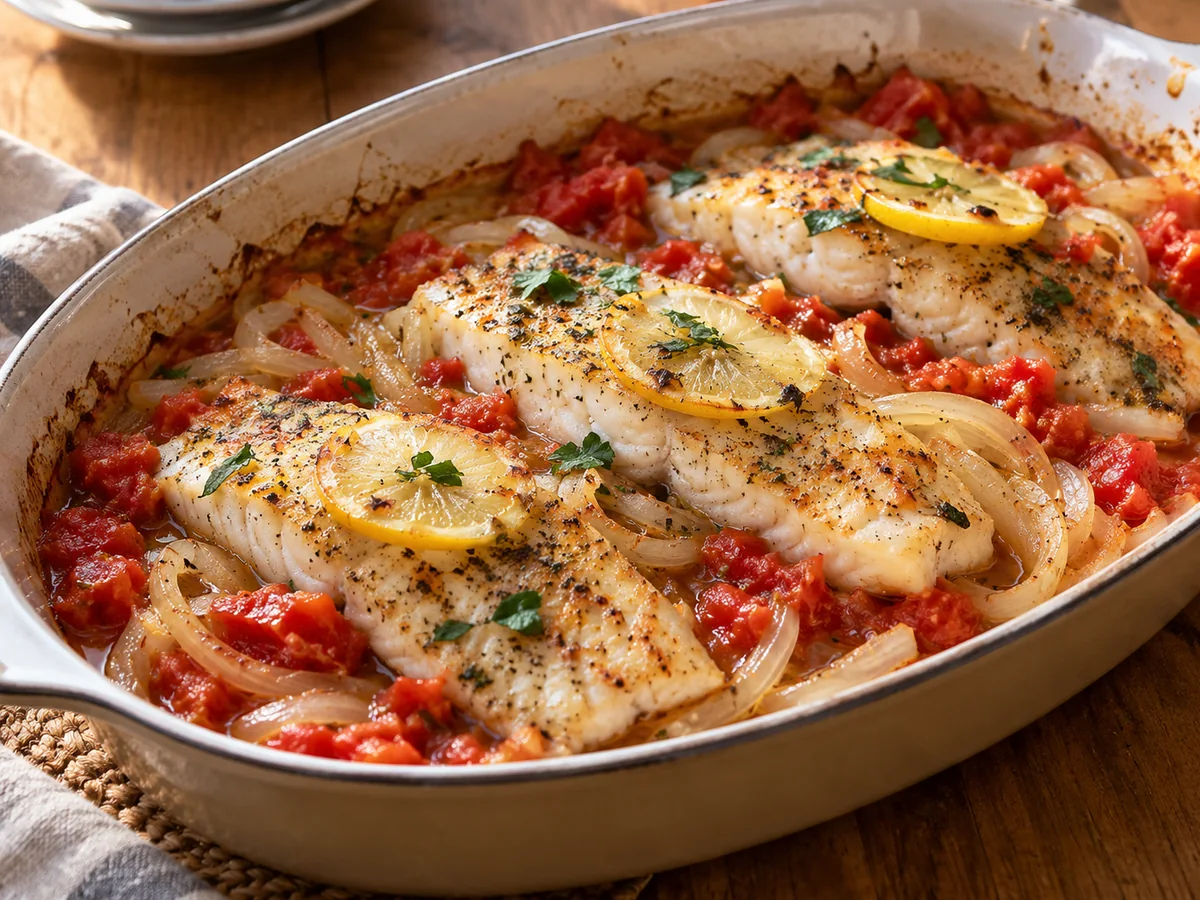
Ingredients
- 750 g boneless hake fillets
- 300 g chopped tomatoes
- 150 g sliced onion
- 25 g sunflower oil
- 60 ml lemon juice
- 15 g chopped fresh parsley
- 4 g fine salt
Preparation
Preheat oven to 190 °C.
Slice onion and soften in half the oil for 8 minutes.
Spread in a baking dish with chopped tomatoes and salt.
Check hake for bones, dry and lay on vegetables.
Add remaining oil and lemon.
Bake 15–25 minutes depending on thickness to 63 °C inside or opaque flesh that flakes easily.
If tomatoes release too much water, remove cooked fish and reduce juices separately rather than overcooking it.
Add parsley at serving.
Introduction
Hake bakes over onion and tomato with lemon. If the sauce needs further reduction, remove cooked fish first; finish with parsley at serving.
Cultural context
This recipe belongs to the Namibia culinary collection. This combination is a contemporary home adaptation exploring ingredients in the Namibian selection, not the name of an ancestral dish. Proportions and procedure are an editorial proposal by RecettesAfricaines.com. Substitutions and adaptations for domestic equipment are explicitly stated. This is neither an official formula nor a description of every family practice in the country. References provide context; they do not certify each quantity or variation. Context reference: https://www.untourism.int/africa/african-gastronomy/namibia
Tips
Technique — Preheat until the oven actually reaches the stated temperature. A wide tin gives a thinner bake that cooks faster; a narrow one increases depth and time. Keep the specified size for the first attempt and place centrally away from heating elements. Weigh powders instead of rough volume substitutions. Unless making kneaded bread, mix wheat batters only until combined; excess mixing toughens them. Check centre and crumb, not colour alone. Egg- or milk-rich fillings remain perishable after baking. Let steam escape before covering and promptly cool leftovers requiring refrigeration.
Storage — Do not leave perishable food waiting on the table. Cool leftovers rapidly in clean shallow containers, cover, and refrigerate at 4 °C or below within two hours. Label the date and preferably use within 24–48 hours, taking the most perishable ingredient into account. A normal smell does not establish that poorly stored food is safe. Foods intended to be eaten cold stay cold; dishes served hot should be reheated completely once, until steaming throughout. Never return portions already served to the container kept for later.
Accompaniments
Serve a portion suited to its role in the meal; count additional accompaniments separately.
Nutrition notes
Values are estimates per serving, calculated from listed quantities and average food compositions. They are not laboratory measurements and vary with brands, preparation losses and final yield. Cooking that concentrates a food changes its weight, not simply the total energy provided by ingredients. Frying oil absorption is approximate; the entire oil bath is not consumed. Vitamins and minerals are qualitative guidance without daily-intake percentages or therapeutic claims. Count extra accompaniments separately.