Ostrich skewers
Ostrich skewers — Lean meat from an authorised food supplier, cut evenly; avoid undocumented hunting sources.
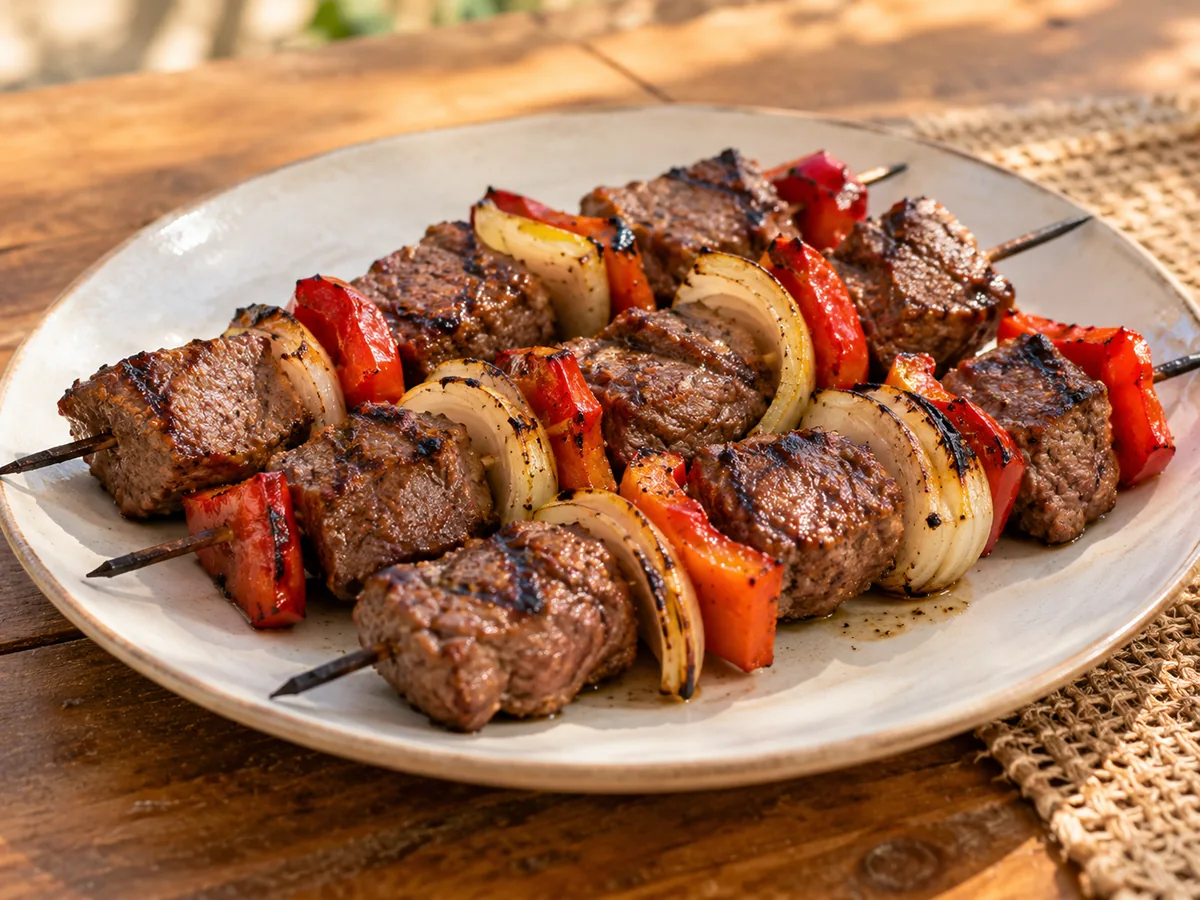
Ingredients
- 700 g ostrich steaks from an authorised food supplier
- 250 g sliced onion
- 250 g diced deseeded red pepper
- 25 g sunflower oil
- 40 ml lemon juice
- 8 g minced garlic
- 4 g fine salt
Preparation
Prepare steady coals without tall flames, or heat a griddle.
Pat meat dry, coat with oil, lemon and garlic and refrigerate 30 minutes.
Cut ostrich into 3 cm cubes and thread with onion and pepper.
Salt and grill over medium heat, turning regularly, for 12–20 minutes depending on thickness.
Measure several ostrich cubes at the centre and check 74°C; extend if needed.
Never reuse raw marinade as sauce.
Serve on a clean plate.
Introduction
Ostrich cubes alternate with onion and pepper after a short refrigerated marinade. Follow the ostrich cooking check, not lamb-chop instructions, and serve on a clean dish.
Cultural context
This recipe belongs to the Namibia culinary collection. This combination is a contemporary home adaptation exploring ingredients in the Namibian selection, not the name of an ancestral dish. Proportions and procedure are an editorial proposal by RecettesAfricaines.com. Substitutions and adaptations for domestic equipment are explicitly stated. This is neither an official formula nor a description of every family practice in the country. References provide context; they do not certify each quantity or variation. Context reference: https://www.untourism.int/africa/african-gastronomy/namibia
Tips
Technique — A deeply browned surface does not prove the centre is cooked. Heat travels inward and depends on thickness, starting temperature and distance from coals. Keep a cooler zone to move food if browning too fast. Tall flames blacken and turn food bitter before the centre is ready. Use a clean thermometer for specified core temperatures and avoid touching bone. Reserve a clean plate and tongs for cooked food; wash those used for raw food. Used raw marinade is not serving sauce. Vegetable or corn sides need their own timing and should not wait over intense heat.
Storage — Do not leave perishable food waiting on the table. Cool leftovers rapidly in clean shallow containers, cover, and refrigerate at 4 °C or below within two hours. Label the date and preferably use within 24–48 hours, taking the most perishable ingredient into account. A normal smell does not establish that poorly stored food is safe. Foods intended to be eaten cold stay cold; dishes served hot should be reheated completely once, until steaming throughout. Never return portions already served to the container kept for later.
Accompaniments
Serve a portion suited to its role in the meal; count additional accompaniments separately.
Nutrition notes
Values are estimates per serving, calculated from listed quantities and average food compositions. They are not laboratory measurements and vary with brands, preparation losses and final yield. Cooking that concentrates a food changes its weight, not simply the total energy provided by ingredients. Frying oil absorption is approximate; the entire oil bath is not consumed. Vitamins and minerals are qualitative guidance without daily-intake percentages or therapeutic claims. Count extra accompaniments separately.