Pan-fried mopane caterpillars
Pan-fried mopane caterpillars — Pan-fried after rehydration and boiling, distinct from a saucy stew. Cross-allergy with crustaceans is possible.
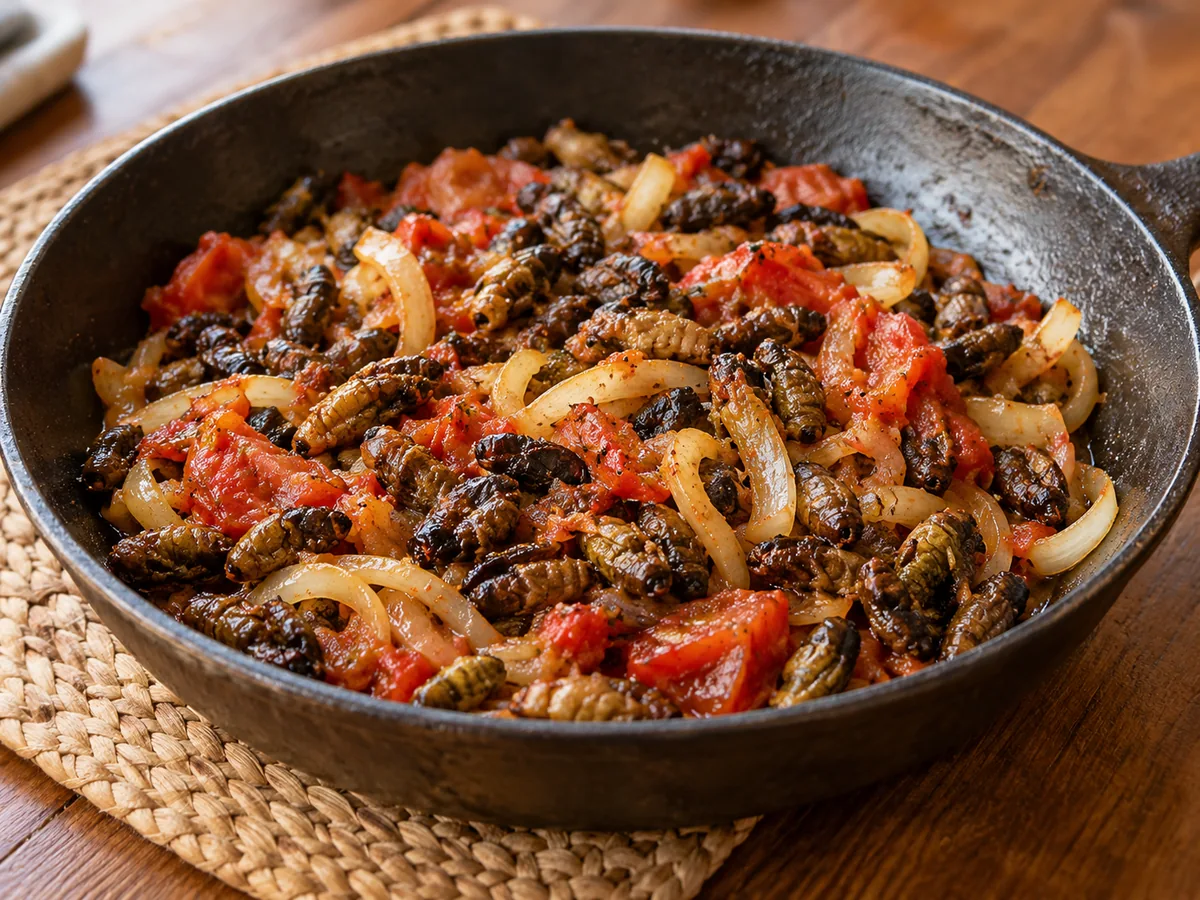
Ingredients
- 160 g dried food-grade mopane caterpillars
- 180 g sliced onion
- 300 g chopped tomatoes
- 25 g sunflower oil
- 500 ml drinking water
- 2 g fine salt
Preparation
Follow food supplier's cleaning and preparation instructions first.
Rinse caterpillars and cover with extra hot drinking water for 20 minutes.
Drain, discard soaking water and boil in the listed 500 ml water for 15 minutes or longer as the product directs.
Drain well.
Soften onion in oil for 6 minutes; add caterpillars and stir-fry 5 minutes.
Add tomatoes and salt and cook another 8–10 minutes until juices reduce.
Serve hot; unprepared dried insects are not an equivalent ready-to-eat substitute.
Introduction
Prepare food-supplier omagungu according to their label, discarding soaking water before boiling and sautéing with onion and tomato. Do not substitute unprepared dry insects.
Cultural context
This recipe belongs to the Namibia culinary collection. This version specifies ingredient choices and technique without claiming exclusive origin or an identical formula across all families. Proportions and procedure are an editorial proposal by RecettesAfricaines.com. Substitutions and adaptations for domestic equipment are explicitly stated. This is neither an official formula nor a description of every family practice in the country. References provide context; they do not certify each quantity or variation. Context reference: https://www.untourism.int/africa/african-gastronomy/namibia
Tips
Technique — Choose a pan large enough to avoid crowding. Overfilling traps steam and food stews instead of browning; cook two batches rather than continually raising heat. Dry washed ingredients before adding to hot fat to limit splashes. Allow the first side to set before moving, and avoid blackened patches. Finely chopped herbs and garlic burn faster than larger pieces; add when directed. Check several pieces for tenderness. For wild mushrooms, colour, smell, recipes or photographs never replace qualified identification. Declare any substitution with cultivated mushrooms.
Storage — Do not leave perishable food waiting on the table. Cool leftovers rapidly in clean shallow containers, cover, and refrigerate at 4 °C or below within two hours. Label the date and preferably use within 24–48 hours, taking the most perishable ingredient into account. A normal smell does not establish that poorly stored food is safe. Foods intended to be eaten cold stay cold; dishes served hot should be reheated completely once, until steaming throughout. Never return portions already served to the container kept for later.
Accompaniments
Serve a portion suited to its role in the meal; count additional accompaniments separately.
Nutrition notes
Values are estimates per serving, calculated from listed quantities and average food compositions. They are not laboratory measurements and vary with brands, preparation losses and final yield. Cooking that concentrates a food changes its weight, not simply the total energy provided by ingredients. Frying oil absorption is approximate; the entire oil bath is not consumed. Vitamins and minerals are qualitative guidance without daily-intake percentages or therapeutic claims. Count extra accompaniments separately.