Oshikundenona sorghum and beans
Oshikundenona sorghum and beans — Sorghum and black-eyed peas are cooked separately to respect their different cooking times.
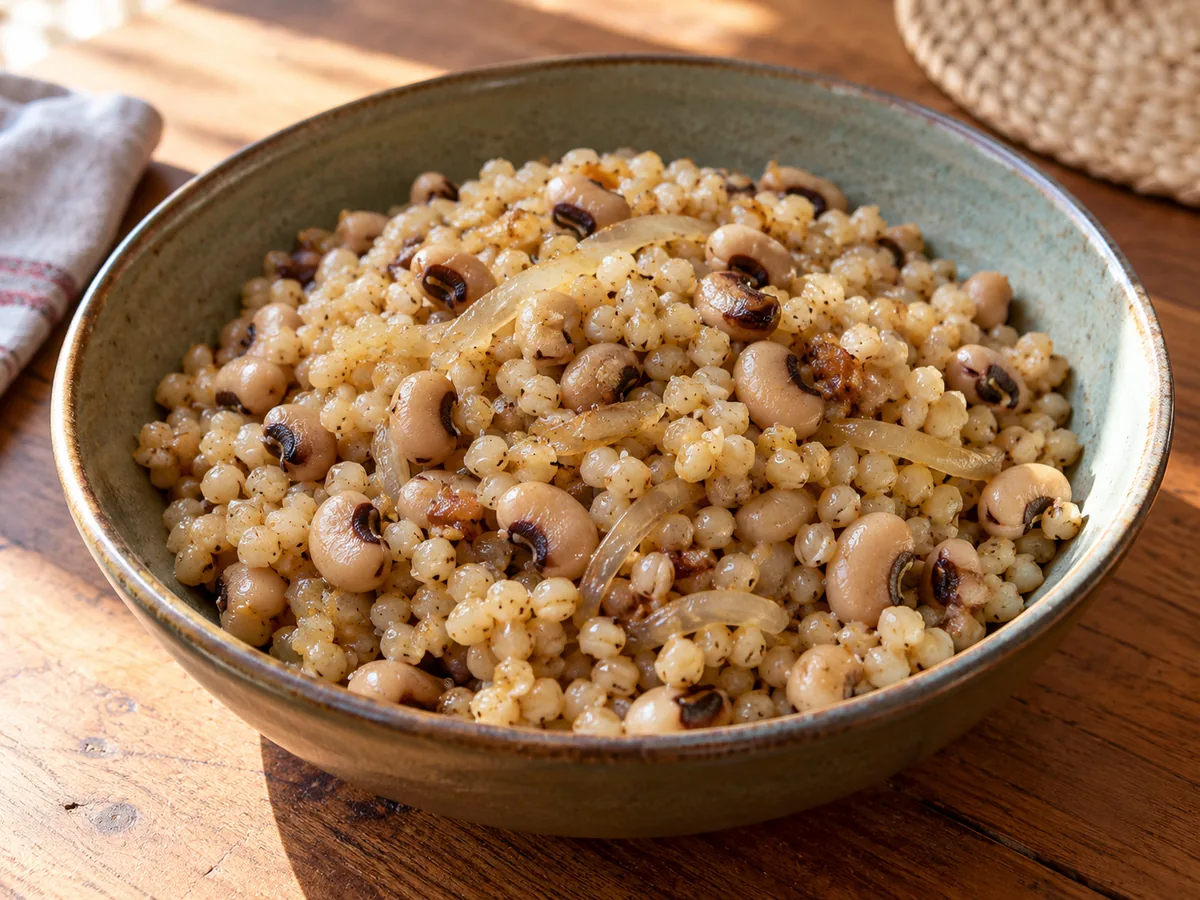
Ingredients
- 180 g hulled sorghum grains
- 200 g dried black-eyed peas
- 120 g sliced onion
- 20 g sunflower oil
- 1400 ml drinking water
- 4 g fine salt
Preparation
Sort and rinse peas and sorghum.
Soak separately for 8 hours in the refrigerator in plenty of extra water; drain and discard soaking water.
Divide measured cooking water between two pans and cook separately, first bringing to a full boil, then simmering 45–75 minutes until completely tender, topping up hot water as needed.
Soften onion in oil in a third pan for 6 minutes.
Add drained grains and peas, salt and about 150 ml of their cooking liquid.
Heat together gently for 10 minutes, leaving a little liquid and keeping grains intact.
Introduction
Sorghum and cowpeas soak and cook separately before joining softened onion and a little cooking liquid. Combine only once both are tender, without mashing all the grains.
Cultural context
This recipe belongs to the Namibia culinary collection. This version specifies ingredient choices and technique without claiming exclusive origin or an identical formula across all families. Proportions and procedure are an editorial proposal by RecettesAfricaines.com. Substitutions and adaptations for domestic equipment are explicitly stated. This is neither an official formula nor a description of every family practice in the country. References provide context; they do not certify each quantity or variation. Context reference: https://cdn.wfp.org/2025/namibianfoodprint/index.html
Tips
Technique — Whole grain, flour and meal are not interchangeable in equal quantities. Grains must soften to the centre whereas flour thickens rapidly in hot liquid. Check the purchased product; millet or mahangu alone does not specify milling. Taste several grains for hard centres. For thick porridge, stir into pan corners to prevent burning. Cereals keep absorbing liquid while resting. Keep hot water available and add gradually. Drain salad grains well to avoid diluting dressing, spread thinly and chill promptly. For patties, drain cooked grains sufficiently so binding works without excessive extra flour.
Storage — Do not leave perishable food waiting on the table. Cool leftovers rapidly in clean shallow containers, cover, and refrigerate at 4 °C or below within two hours. Label the date and preferably use within 24–48 hours, taking the most perishable ingredient into account. A normal smell does not establish that poorly stored food is safe. Foods intended to be eaten cold stay cold; dishes served hot should be reheated completely once, until steaming throughout. Never return portions already served to the container kept for later.
Accompaniments
Serve a portion suited to its role in the meal; count additional accompaniments separately.
Nutrition notes
Values are estimates per serving, calculated from listed quantities and average food compositions. They are not laboratory measurements and vary with brands, preparation losses and final yield. Cooking that concentrates a food changes its weight, not simply the total energy provided by ingredients. Frying oil absorption is approximate; the entire oil bath is not consumed. Vitamins and minerals are qualitative guidance without daily-intake percentages or therapeutic claims. Count extra accompaniments separately.