Sagoo with raisins
This version uses tapioca pearls to give the sagoo its characteristic texture. The dessert thickens as it cools, so leave it loose at the end of cooking.
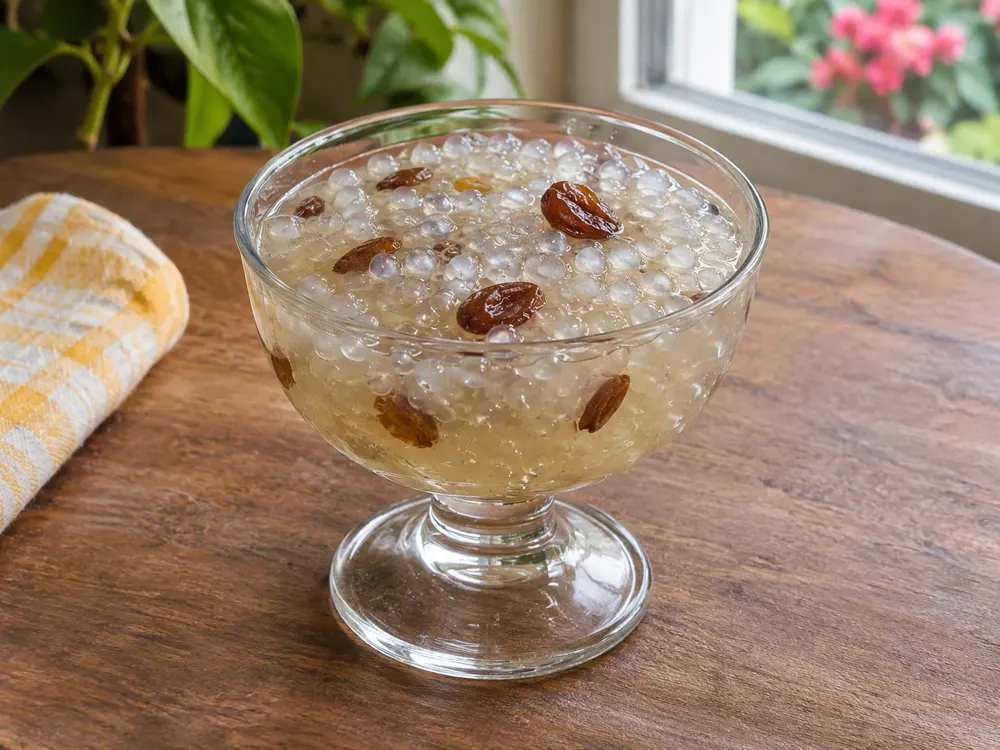
Ingredients
- 75 g small tapioca pearls
- 650 ml water
- 45 g sugar
- 25 g raisins and a pinch of salt
Preparation
Bring water and salt to the boil, then stir in the pearls.
Simmer gently, scraping the bottom frequently, until almost all pearls are translucent.
Add sugar and raisins at the end and rest for 5 minutes, covered.
Thin with a splash of hot water if needed.
Divide among cups and serve warm or chilled.
Introduction
Choosing the pearls
Use small tapioca pearls of an even size and check the packet. Larger pearls often take longer to turn translucent, and pearls sold for drinks may cook differently. Weigh 75 g dry and start with 650 ml water. Keep some hot water in reserve. A tall saucepan gives the liquid room when it comes back to the boil.
Separate any raisins that are stuck together. Adding them towards the end lets them soften while remaining distinct in the cup. Keep the sugar measured beside the pan. It is easier to judge the pearls while the cooking liquid is still plain and clear. Choose a long-handled spoon or spatula that reaches the corners, where pearls can catch if left undisturbed.
Keeping the pearls moving
Bring the water and salt to the boil. Sprinkle in the pearls slowly while stirring so they separate before their surfaces become sticky. When the liquid returns to the boil, reduce to a gentle simmer. A hard boil thickens the base quickly and makes sticking more likely. Sweep the spatula across the bottom at short intervals and draw pearls away from the sides.
After about fifteen minutes, lift a spoonful onto a saucer. The pearls begin white, then their edges turn translucent. A pale centre can remain for several minutes. Taste a cooled pearl to see whether its centre still feels hard. If the liquid runs low first, add a little hot water and continue at moderate heat. Nearly translucent pearls can finish softening during the rest. Avoid thickening the entire pan just to remove the last pale spot.
Sweetening and serving
Add the sugar and raisins when the pearls are almost ready. Stir until the sugar dissolves, cover and rest off the heat for five minutes. Lift a spoonful. The pearls should stay separate and the liquid should fall slowly. If it drops in a lump, loosen with a splash of hot water and stir gently. If it seems too thin, cool a test portion in a cup before adjusting the rest.
Stir gently before filling four cups so the raisins are distributed evenly. Serve warm for a fluid syrup, or chill the cups after cooling for a thicker texture. Leave some space for stirring if the pearls and liquid settle separately. Clear cups show the contrast between the pearls and raisins. Serve smaller portions after a substantial meal.
Correcting a batch
If the base catches, pour the loose portion into a clean pan. Scrape only if the deposit is still pale and has no burnt taste. Continue on low heat with hot water if needed. Next time, reduce the heat earlier and check that the spatula reaches the entire bottom. For eight portions, a wider pan makes stirring easier but may evaporate faster. Keep hot water ready and start checking the pearls at the same times as for a small batch.
To work ahead, fill the cups before the mixture gets very thick. Taste a chilled portion. The raisins may have absorbed water and the liquid may be thicker than expected. Stir gently if needed. For a warm serving, reheat only what you need with a little water and pour it back into the cups. Comparing the two serving temperatures helps you choose the right cooking point.
Adjusting for a new packet
Keep a few dry pearls from an unfamiliar packet so you can compare their size with the cooked ones. If they swell considerably, choose larger cups and fill them after the rest. When the packet gives a much shorter cooking time, begin tasting earlier. If the pearls stay hard, cook longer before adding sugar and note how much extra water was needed. Those observations are more useful for the next batch than the colour at the beginning.
Cultural context
This version uses tapioca pearls to give the sagoo its characteristic texture. The dessert thickens as it cools, so leave it loose at the end of cooking.
Source https://restaurants.mu/fr/recettes-maurice/sagoo