Octopus salad
Ourite is the local name for octopus. This dressed salad complements the curries, rougailles and vindayes in the catalogue. For a quicker version use about 500 g of cooked octopus.
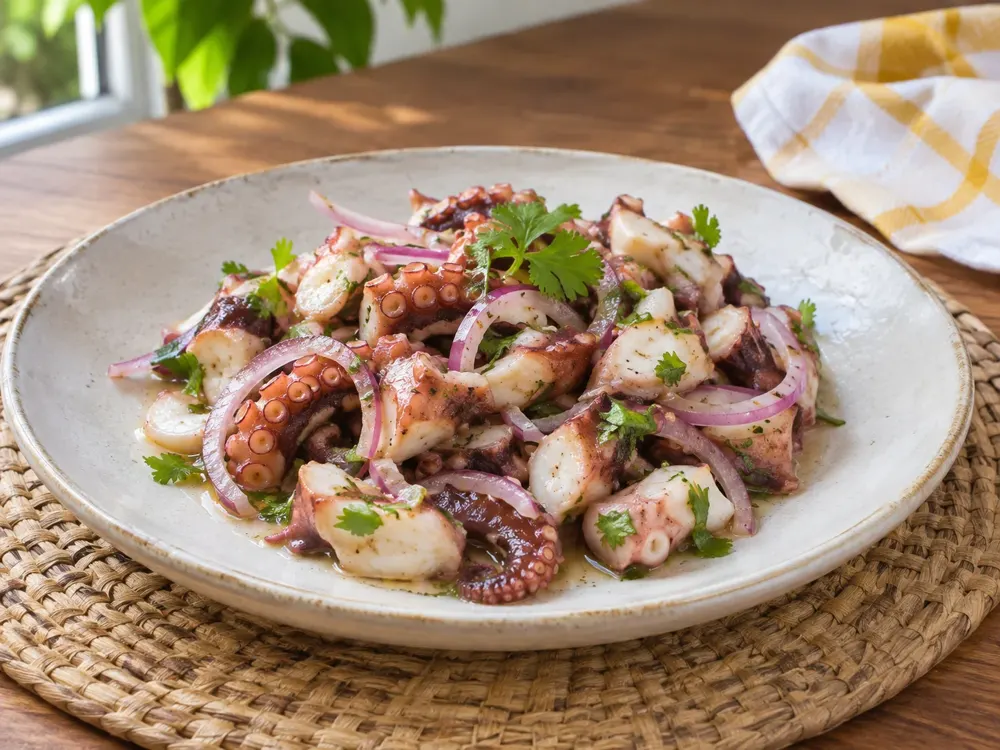
Ingredients
- 800 g cleaned octopus
- 1 red onion
- 1 lime
- 1 tbsp vinegar
- 2 tbsp neutral oil
- ½ bunch coriander
- ½ tsp mustard
- chilli and salt to taste
Preparation
Simmer the octopus in water until a knife easily pierces the thick part of a tentacle.
Drain, cool slightly and cut into pieces.
Soak the thinly sliced onion in the lime juice and vinegar for 10 minutes.
Add mustard, oil and salt, toss with the octopus and finish with coriander and chilli.
Serve chilled or warm.
Introduction
Buying and preparing the octopus
Ask for a cleaned octopus and weigh it before cooking. The 800 g listed is the raw, cleaned weight. If using pre-cooked octopus, allow about 500 g after draining. The yield depends on the cut and how much liquid it gives off. Thaw frozen octopus in the refrigerator, drain and inspect the tentacles. Pieces of similar thickness cook more evenly. With large tentacles, judge the thick section, as the tips soften first.
Use a pan wide enough to hold the octopus without crowding it. Add enough water to cover it and bring it to a simmer. If the water boils hard after coming back up to temperature, turn down the heat. Have a slotted spoon, board and colander ready so you do not have to hold the octopus above the hot water for long. For average-size tentacles, first check after about forty minutes. A small piece taken from the tip will tell you little about the centre.
Checking tenderness
Push the tip of a knife into the thickest part. It should go through easily, but the tentacle should hold together when lifted. If the knife catches, simmer a little longer and test again. Note the actual cooking time if you plan to buy the same size next time. The 40–55 minute range is a guide. A larger octopus may take longer. Drain when tender and let the steam subside before transferring to the board.
Cut the octopus into fork-size pieces. Leave the fine tips a little longer and cut the thick sections shorter. If you enjoy the texture of the suckers, avoid rubbing them off after cooking. For a warm salad, dress the pieces once they stop steaming. For a chilled salad, let them cool, refrigerate them and keep the dressing separate until needed.
Dressing the ourite
Squeeze the lime and mix the juice with vinegar. Slice the red onion thinly, matching the length of the pieces to the octopus. Let it sit in the acidic mixture for ten minutes, then add the mustard and salt before stirring in the oil. Taste it on a slice of onion. If the lime is especially sharp, dress the octopus with part of the mixture first and adjust after tasting a whole bite.
Chop the coriander and decide how much chilli to use. For diners with different tastes, add a little to the bowl and serve the rest separately. Toss the octopus, onion and dressing in a wide bowl so the pieces are easy to lift without breaking. Let the flavours settle briefly, then check the salt. If the pre-cooked octopus came seasoned, start with less salt. Weigh it after draining so you can judge the amount of dressing against the actual serving weight.
Serving the salad
Give each portion a mix of thick pieces and tips. Add the onion, some dressing and the coriander. A shallow platter shows the cuts and keeps all the dressing from collecting under the bottom layer. For a starter, serve a modest portion with a lively dressing. With rice, increase the portion or add a vegetable side. The salad also works as a small tasting portion alongside another octopus dish in the collection.
For two batches, give each octopus room in the pan and test each separately. Prepare the onion and lime juice while the octopus cooks. If serving later, keep the flesh, herbs and dressing separate, then adjust the acidity at serving temperature. If there is too much dressing in the bowl, lift the salad out with a slotted spoon and bring the rest to the table separately.
Adapting to the cut
If pre-cooked octopus comes in large slices, avoid dicing it too finely. Leave the onion a little longer so both fit on a fork. For smaller pieces, shorten the onion slices and chop the coriander more finely. Taste after combining and add more lime or oil only if the whole bite needs it. Plate intact suckers facing up to show the cut. If cooking several pieces separately, lift out the thin ones as soon as tender and leave the rest in the water.
Cultural context
Ourite is the local name for octopus. This dressed salad complements the curries, rougailles and vindayes in the catalogue. For a quicker version use about 500 g of cooked octopus.
Source https://www.tikaraii.fr/cat/accompagnements/