Borokhé
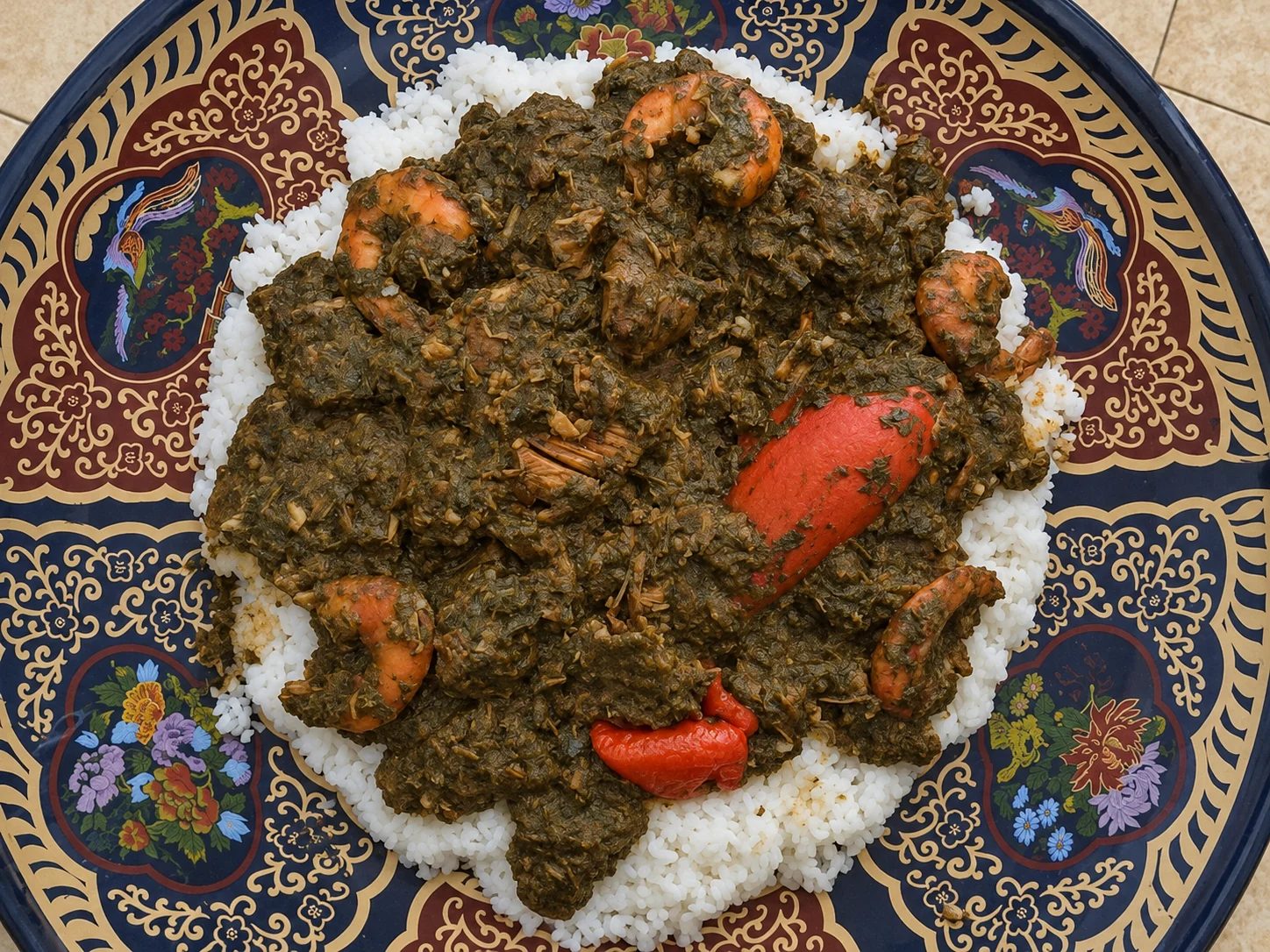
Borokhé is a cassava leaf sauce simmered with peanut paste, served over white rice. In this Senegalese version, the beef becomes tender before the shrimp are added at the end of cooking.
Rating · 5/5 (1 ratings)
Ingredients
- 600 g pounded cassava leaves, already processed and fully cooked, ready to eat, drained weight
- 600 g boneless and trimmed beef chuck, cut into 3 cm cubes
- 240 g raw peeled shrimp, plain and without brine
- 100 g plain peanut paste, no added salt
- 30 g red palm oil (food grade)
- 2 medium onions, about 200 g
- 3 cloves garlic
- 1 whole red chili pepper
- 600 ml hot water, plus a little more if needed
- 4 g fine salt for the entire recipe
- ½ teaspoon ground black pepper
- 360 g white rice, preferably broken rice
- Water for rice according to package instructions
Preparation
Prepare the ingredients. Finely slice the onions and crush the garlic. Drain the already cooked leaves in a colander. If they are compact, break them up with a fork so they distribute easily in the meat juice. Pat the beef dry with paper towels to help it brown. Check that the shrimp are peeled and deveined, then keep them chilled until the last step. Finally, take out the peanut paste. If the oil has separated in the jar, stir it before weighing out 100 g.
Brown the beef and sweat the onions. Heat half of the palm oil in a heavy-bottomed Dutch oven over medium heat. Brown the beef for 7 to 9 minutes, turning the pieces. Do this in two batches if the Dutch oven is small. Set aside the meat, then sauté the onions in the same Dutch oven for 5 minutes. Add the garlic and pepper and stir briefly. Pour in a little hot water, scraping the bottom with a wooden spoon to loosen the fond. This will give the juice a roasted meat flavor that will remain noticeable once the peanut paste is incorporated.
Simmer the meat. Return the beef to the Dutch oven. Pour in the remaining 600 ml of hot water and add 2 g of salt. Bring to a simmer, cover, leaving a small opening, and let it simmer over low heat for 45 to 55 minutes. Check occasionally that the bottom remains moist. Pierce the largest piece with a fork. It should begin to yield under pressure. If it remains firm, extend the cooking time in 10-minute increments. The duration depends on the cut and size of the pieces. Add a little hot water if the juice has reduced significantly.
Incorporate the leaves, then the peanut paste. Add the drained leaves to the tender meat. Stir, lifting the mixture from the bottom to distribute the leaves well, then let it simmer for about 10 minutes. Ladle out some of the hot juice and dilute the peanut paste in it in a bowl. Pour this mixture into the Dutch oven with the remaining palm oil and the whole chili pepper. Let it simmer uncovered or partially covered for 15 to 20 minutes over low heat. Regularly stir the bottom of the Dutch oven, especially around the edges where the sauce thickens first.
Cook the rice while the sauce reduces. Rinse the rice with cold water and drain it. Cook it according to package directions, without adding salt, then let it rest covered for a few minutes. Gently fluff it with a fork. Broken rice is well suited for serving in a large dish. Spread it in an even layer and keep a few spoonfuls of plain rice around the edge. Everyone can take more or less sauce according to their taste. If the rice is ready a little early, leave it covered until the shrimp are finished.
Add the shrimp and serve. Remove the whole chili pepper and taste the sauce. Add all or part of the remaining 2 g of salt, depending on the saltiness of the leaves and shrimp. Slide the shrimp into the simmering sauce and stir gently to coat them. Count about 3 to 5 minutes depending on their size, until the flesh is opaque throughout. Serve the borokhé immediately over the rice and present the chili separately. First, distribute the beef pieces and shrimp, then add the leaf sauce between the pieces.
Introduction
Borokhé is a cassava leaf sauce simmered with peanut paste, served over white rice. In this Senegalese version, the beef cooks gently until tender, then the shrimp join the pot a few minutes before serving. Red palm oil gives the sauce its richness, and the whole chili peppers flavor the dish while allowing everyone to adjust the heat on their plate.
The preparation proceeds in several stages. The meat begins to cook with the onions to form a flavorful juice. The already fully cooked leaves then absorb the taste of this juice. The peanut paste, diluted in a ladle of hot liquid, gradually thickens the sauce. The shrimp finish the recipe with a short cooking time. While the pot simmers, the rice can cook separately. When serving, the sauce should remain flexible enough to coat the grains, with pieces of meat that are easy to share.
Cultural context
Recipes published in Senegal under the names borokhé and mborokhé combine cassava leaves, peanuts, and palm oil, with beef or fish depending on the versions. The sauce belongs to a set of leaf-based preparations found in several West African cuisines. Here, the beef provides the cooking base, and the shrimp retain a distinct flavor thanks to their addition at the end of preparation.
Sources https://seneweb.com/fr/news/Gastronomie/plat-du-jour-mborokhen163104.html https://www.ndarinfo.com/Le-Borokhe-Mali-Senegala4787.html
Tips
My advice Adjust the consistency before adding the shrimp. Stir the middle of the Dutch oven. If the furrow closes slowly, the sauce is thick enough to hold on the rice. If it flows like a broth, let it reduce for a few minutes uncovered. If it accumulates in blocks around the spoon, add two spoonfuls of hot water, mix, and check again. With this adjustment, the shrimp can be served as soon as they are cooked.
Planning
This recipe uses fully cooked and ready-to-eat leaves. Raw leaves contain compounds that can release cyanide and require proper processing. A product sold pounded or frozen may still be raw. Check the label before purchasing. If the product requires pre-treatment, follow the manufacturer's instructions before using it in this recipe. https://www.foodstandards.gov.au/consumer/prevention-of-foodborne-illness/cassava
Serving
How to measure the chili? Add it whole and let it float near the edge, where you can easily remove it. Avoid pressing it against the side when stirring. For a milder dish, remove it after a few minutes and serve it separately. For a spicier sauce, crush a small part of the cooked chili in a bowl with a ladle of sauce. Everyone can add it directly to their portion.
Storage
Can borokhé be prepared in advance? Prepare the sauce up to the end of the peanut step. If you are cooking it for the next day, cool it quickly and refrigerate it. At mealtime, reheat it, stirring over low heat. Peanuts and leaves thicken together when resting. Plan for a little hot water to regain the desired texture, then add the shrimp at the last moment.
Variations
Can beef be substituted? You can make a fish version, as in some borokhé recipes. Choose a firm-fleshed fish, poach it separately, and remove the bones before adding it to the sauce at the end of cooking. With smoked fish, taste the juice before adding salt. Its seasoning depends heavily on the product used.
Nutrition notes
Approximate values for one-sixth of the recipe, including rice, with the 4 g of salt added for the entire dish. The estimate assumes leaves and peanut paste without added salt and shrimp without brine. Beef contributes iron, zinc, and vitamin B12. Shrimp provide selenium, and peanuts provide vitamin E. Allergens: peanuts and shellfish.