Paylla
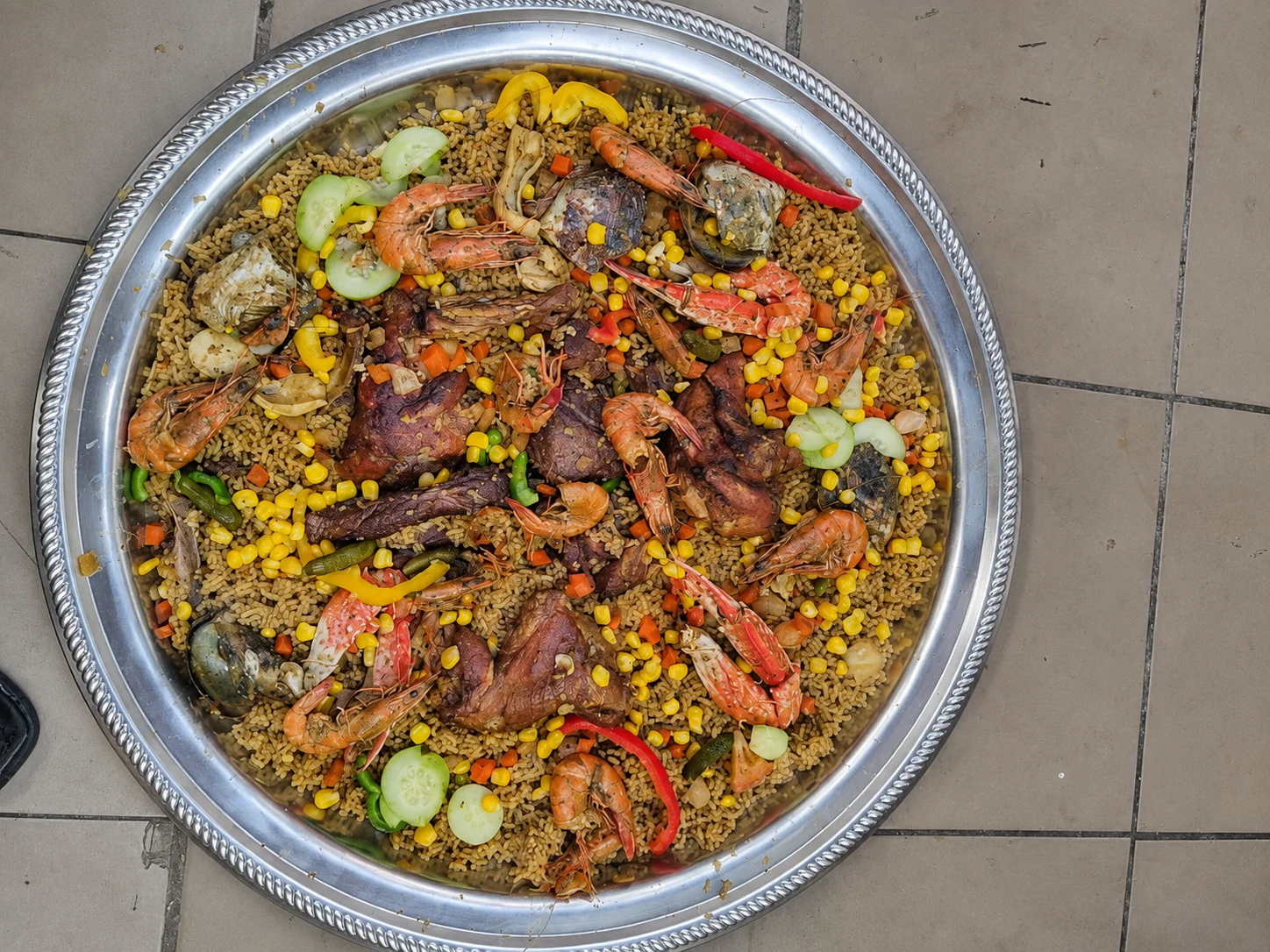
Paylla is a Senegalese adaptation of paella, here with golden chicken, shrimp, crab, and clams. The rice absorbs a fragrant broth with onion, garlic, and bell pepper. Corn and carrots add a touch of sweetness. When serving, a few slices of fresh cucumber add crunch to the dish. As shown in the photo, the rice is spread on a large platter before the meat, seafood, and colorful vegetables are arranged on top.
Rating · 5/5 (1 ratings)
Ingredients
- 420 g parboiled long-grain rice
- 750 g bone-in, skinless chicken thighs
- 400 g whole raw shrimp
- 400 g raw crab sections
- 350 g live clams
- 900 ml low-sodium chicken broth, about 100 ml reserved
- 100 ml water for the clams
- 1 large onion (about 150 g), 4 cloves garlic, and 2 tablespoons chopped parsley
- 2 bell peppers, 1 red and 1 yellow (about 300 g total)
- 2 carrots (about 160 g) and 150 g drained corn
- ½ cucumber (about 150 g) and 1 lemon
- 3 tablespoons neutral oil, 1 bay leaf, 1 teaspoon sweet paprika, salt and pepper
Preparation
Prepare the ingredients. Quickly rinse the rice with cold water, then drain it thoroughly. Peel the carrots and cut them into approximately one-centimeter cubes. Reserve a few strips of bell pepper for garnish and dice the rest. Chop the onion and garlic. Brush the clams under cold water, discard broken shells and those that remain open after a light tap. Keep the seafood refrigerated until cooking. Prepare the cucumber on a clean board and keep it chilled.
Brown the chicken. Pat the pieces dry with paper towels. Season them lightly with salt, pepper, and half of the paprika. Heat two tablespoons of oil in a large, heavy-bottomed sauté pan. Brown the chicken for eight to ten minutes, turning it over. If all the pieces touch, do it in two batches. Reserve them on a plate intended for meat still cooking. Keep the juices at the bottom of the sauté pan.
Build the broth. In the same sauté pan, sauté the onion, carrots, and bell peppers for five minutes. Remove the strips intended for serving when they are slightly tender. Add the garlic and the remaining paprika and stir for about thirty seconds. Pour in 800 ml of hot broth and gently scrape the bottom. Add the bay leaf, return the chicken, and simmer for about ten minutes, covered. Taste the broth before adding salt, taking into account the natural salinity of the seafood.
Cook the rice and finish the chicken. Spread the rice in the broth around the chicken pieces. Bring to a gentle simmer, cover, and reduce the heat. Count about twenty to twenty-five minutes depending on the rice. If the grains are still firm and the bottom is dry, add a little of the reserved hot broth, in small quantities. Distribute the corn in the last five minutes. Check that the chicken reaches 74 °C at its thickest part, away from the bone. If the rice is ready before the chicken, finish cooking the meat, covered, in a small pan with a little broth.
Cook seafood separately. While the rice is cooking, open the clams, covered, in a saucepan with 100 ml of water. Remove them when they open and discard any that remain closed. If you wish to use their juice, strain it finely to remove sand. In another pan, heat the last spoonful of oil, add the crab sections and a splash of water, then cover. When the crab meat is almost cooked, add the shrimp in a single layer and turn them halfway through cooking. Remove each seafood item as soon as its flesh is opaque, checking the thickest pieces.
Serve on a large platter. Let the rice rest for five minutes off the heat, covered. Remove the bay leaf and fluff the grains with a fork. You can add one or two spoonfuls of the filtered clam juice if the rice allows and the juice is moderately salty. Spread the rice on the dish, then arrange the chicken, crab, clams, and shrimp. Add the reserved bell peppers, cucumber slices, and parsley. Serve the lemon wedges on the side so that everyone can adjust the acidity to their taste.
Introduction
Paylla is a Senegalese adaptation of paella, here with golden chicken, shrimp, crab, and clams. The rice absorbs a fragrant broth with onion, garlic, and bell pepper. Corn and carrots add a touch of sweetness. When serving, a few slices of fresh cucumber add crunch to the dish. As shown in the photo, the rice is spread on a large platter before the meat, seafood, and colorful vegetables are arranged on top.
This version relies on two cooking methods that come together during plating. The chicken flavors the cooking liquid, then the rice absorbs the broth in the same pan. Meanwhile, the seafood cooks separately. Their juices can flavor the rice during assembly. Their separate cooking primarily allows the shrimp to be removed as soon as they are tender, giving the chicken time to be thoroughly cooked.
Cultural context
The connection to paella can be seen in the cooking of the rice in broth and in the way the garnish is arranged on a single dish. In this version of paylla, the parboiled long-grain rice, the onion and garlic base, and serving on a platter also echo familiar practices in Senegalese cuisine. The name “Paylla” is the one chosen for this recipe. The composition reflects the spirit of the dish photographed. The quantities, choice of chicken, and seasoning correspond to the version offered here.
https://www.foodsafety.gov/food-safety-charts/safe-minimum-internal-temperatures
Tips
Choose the widest sauté pan for which you have a lid. The rice cooks in an even layer and absorbs the broth more uniformly. If the sauté pan is thin, move it slightly over the heat halfway through cooking to distribute the heat. To check the texture, taste a few grains taken from the center and near the edge. If they are tender and there is still a little liquid, uncover the sauté pan and let it evaporate briefly over low heat. The final rest completes the absorption and makes the rice easier to serve.
Variations
If your fishmonger doesn't have clams, mussels are suitable. Keep them cooking separately and also remove the shellfish as they open. For a platter that is easier to eat, peel some of the shrimp after cooking and leave a few whole on top. If you want a spicy dish, serve chili separately. The cucumber remains crunchier when sliced just before serving and left plain.
Nutrition notes
Approximately 530 kcal, 37 g protein, 66 g carbohydrates, 13 g fat, 4 g fiber, and approximately 1.5 g salt (600 mg sodium). The salt calculation assumes a broth with 0.35 g salt per 100 ml and 3 g added salt for the entire dish. Estimate for one-sixth of the recipe, based on edible quantities after removing bones and shells. Broth, added salt, and seafood yield notably alter sodium content and values per serving. Bell peppers provide vitamin C, carrots provide beta-carotene, and seafood provides vitamin B12 and selenium. Allergens in the proposed version: crustaceans and mollusks. Also check the broth's composition.