Fish layered with greens
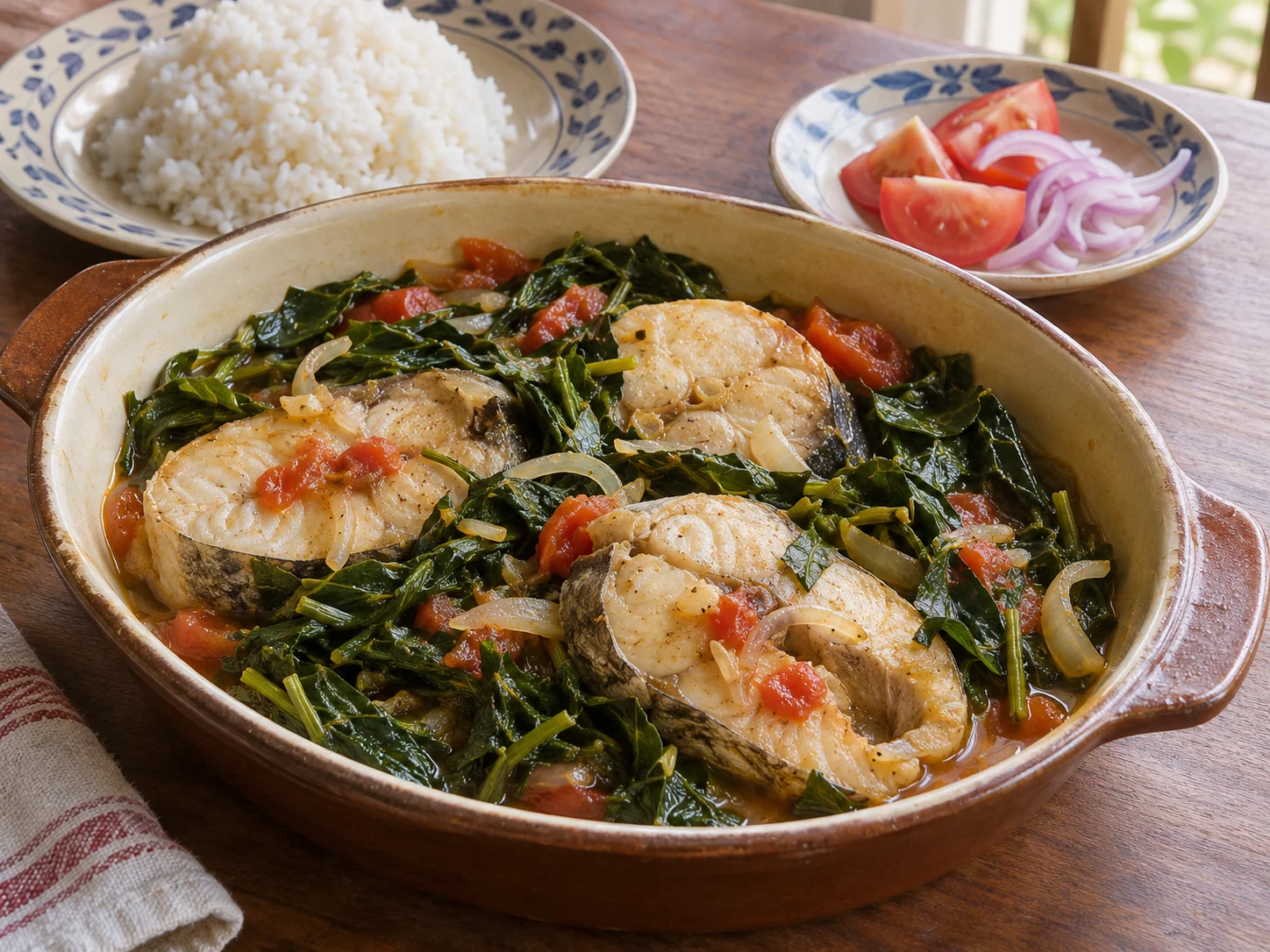
Trondro nolafihana anana. The source places fish between layers of greens, onion and tomato. The lower vegetables provide the first cooking liquid and the upper layer keeps the fish moist. Serve with a small amount of pan juice.
Ingredients
- 650 g firm white fish
- 400 g edible leafy greens
- 350 g tomatoes
- 160 g onion
- 20 ml oil
- up to 150 ml water
- salt and pepper
Preparation
Layer some tomato and onion in an oiled casserole, then add greens, deboned fish, more greens and the remaining tomato and onion. Cover and heat gently. Add hot water at the edge if the vegetables give too little liquid. Cook until the greens are tender and the fish is cooked through. Serve with rice.
Introduction
Choosing fish and greens
Use firm white fish such as thick cod or pollock fillets, or steaks if comfortable removing bones. Buy greens sold for cooking and choose a type you know how to prepare. Weigh after trimming. Put tender stems in the lower layer for longer cooking and delicate leaves above. Wash different varieties separately if using both.
Preparing the pieces
Remove pin bones with tweezers and cut portions of similar thickness. Pat dry, especially after thawing. Refrigerate while preparing the vegetables. Slice the onion evenly and cut the tomato into small wedges. Save their juices. Slice firm tomatoes thinner so they release liquid early, and hold back water if using juicy tomatoes.
Building the layers
Oil a shallow casserole and spread tomato and onion across the base. Add tender stems and the first layer of leaves, then space the fish pieces over them. Cover with more leaves and the remaining tomato and onion. Leave the top loose enough for steam. Deep layers in a small pan cook unevenly and are harder to lift.
Checking the first juices
Cover over low heat. After a few minutes, tilt gently to check the liquid without shifting the layers. If the base sizzles without visible juice, pour a little hot water down the side. If tomatoes are releasing juice, leave the layers alone. Salt lightly at first and keep a gentle simmer to avoid breaking the fish.
Checking doneness and reducing
Lift some greens from the thickest piece. The fish should be cooked through and flake easily. Check that the lower stems are tender. If the fish is done but there is too much liquid, lift the pieces with some greens and reduce the sauce briefly. Remove thin pieces first if needed. Taste the juices and spoon them over each portion.
Plating without breaking the layers
Slide a wide spatula under each portion and lift it with leaves above and below. Plate rice first and add the fish and greens beside it. Spoon a little sauce at the last moment. Offer sakay and tomato lasary separately. If serving in the casserole, identify the fish even if it is mostly covered, and use separate spoons for sides.
Scaling and reheating
For six to eight, use two shallow casseroles to preserve the depth of the layers. A wider pan may need more water. Prepare the vegetables ahead if needed. Refrigerate cooked leftovers in shallow portions within two hours. Reheat gently in their juices and use a broad spatula because the portions are more fragile after resting.
Combining two kinds of greens
Put the firmer leaves below and delicate ones above. Tear very large leaves into two or three pieces so they do not form a tight lid. Moisten the top with the tomato juice and decide on extra water after the first layer has started to wilt.
Cultural context
Trondro nolafihana anana. The source places fish between layers of greens, onion and tomato. The lower vegetables provide the first cooking liquid and the upper layer keeps the fish moist. Serve with a small amount of pan juice.
Source https://mamina.org/fr/recette/trondro-nolafihana-anana https://www.anses.fr/system/files/BIORISK2012sa0005.pdf