Steamed maize cakes
Mofo katsaka masak’evoka. The source describes individual maize cakes cooked under a lid. This adaptation uses heatproof ramekins and steams them above the water.
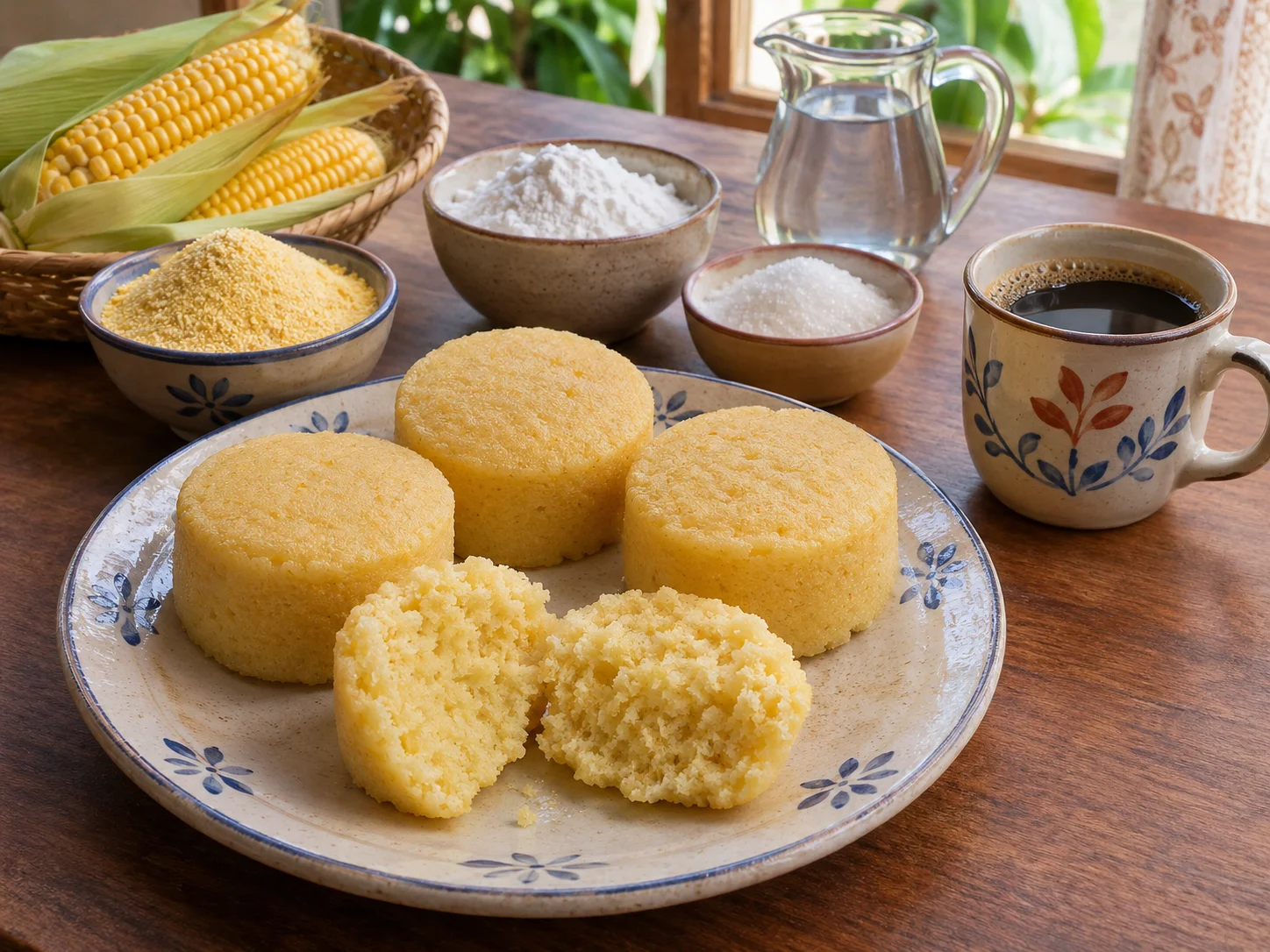
Ingredients
- 150 g fine maize flour
- 70 g wheat flour
- 6 g baking powder
- 55 g sugar
- 2 eggs
- 180 ml milk
- 25 ml neutral oil
- a pinch of salt
Preparation
Combine the flours, salt and baking powder. Whisk eggs, sugar, milk and oil, then stir in the dry mixture. Fill greased heatproof ramekins two thirds full. Steam covered over simmering water for 20–30 minutes and test the centre. Let stand briefly before unmoulding. Contains wheat, eggs and milk.
Introduction
Choosing maize flour
Use fine white or yellow maize flour. Coarse meal stays more noticeable in the crumb and cornflour used as starch makes a different batter. Wheat flour gives the cake structure. Weigh the flours separately and break up lumps before adding milk. Check how the mixture thickens after a few minutes if using an unfamiliar flour.
Preparing the steamer and ramekins
Choose shallow ramekins of similar size. Check cold that they fit without touching and the lid closes. Brush the insides with oil. Fill wider moulds to the same depth rather than using equal amounts. Heat the water below the basket and leave gaps for steam. Keep suitable tongs nearby before closing the lid.
Mixing the batter
Whisk eggs and sugar until partly dissolved without making a stiff foam. Stir in milk and oil, then add the flours and baking powder in stages. Scrape the bowl to pick up dry pockets. The batter should fall slowly from a spoon. Give the maize flour a few minutes to absorb liquid, stir briefly and fill the ramekins two thirds full.
Steaming steadily
Set the ramekins above simmering water and cover. Keep enough heat for steady steam without letting water rise into the moulds. Avoid lifting the lid early. When checking, open away from your face and test the thickest cake. Moist crumbs are fine, but wet batter needs more time. Remove smaller cooked cakes first and close the basket again.
Managing condensation
A domed lid usually directs water to the edges. With a flat lid, loosely cover the ramekins with a suitable cooking sheet so droplets do not fall on the batter. Keep it away from heating elements. Top up with hot water if needed, following the steamer instructions. Use dry oven gloves or stable tongs when removing the ramekins.
Unmoulding
Rest the cakes briefly until the edges hold. Run a thin, blunt blade around the sides if needed and invert each on a rack. A pale surface is normal. Look for a soft crumb with small air pockets. Allow steam to escape before serving with tea or coffee. Mention the wheat, milk and eggs if offering several kinds of cake.
Making a larger batch
Use two batches if the steamer only takes four ramekins. Weigh everything ahead and mix the second batter while the first cooks. If making one bowl, fill the last ramekins only when there is space. Brief steaming can soften cooked cakes again. Take them out once warm and judge the crumb when the cake is warm rather than steaming hot.
Comparing moulds
Thick ceramic heats more slowly than small metal moulds made for steaming. Group them by type so you can check one batch together. Record batter depth as well as diameter when comparing timings. A taller cake may look set while the centre still needs time.
Cultural context
Mofo katsaka masak’evoka. The source describes individual maize cakes cooked under a lid. This adaptation uses heatproof ramekins and steams them above the water.
Source https://www.mamina.org/mg/recette/mofomamy-katsaka