Bambara groundnuts with fish
Voanjobory sy trondro. A Malagasy recipe combines Bambara groundnuts and fish in a tomato laoka. Here the fish goes in at the end so the beans remain whole and the fish separates into large flakes.
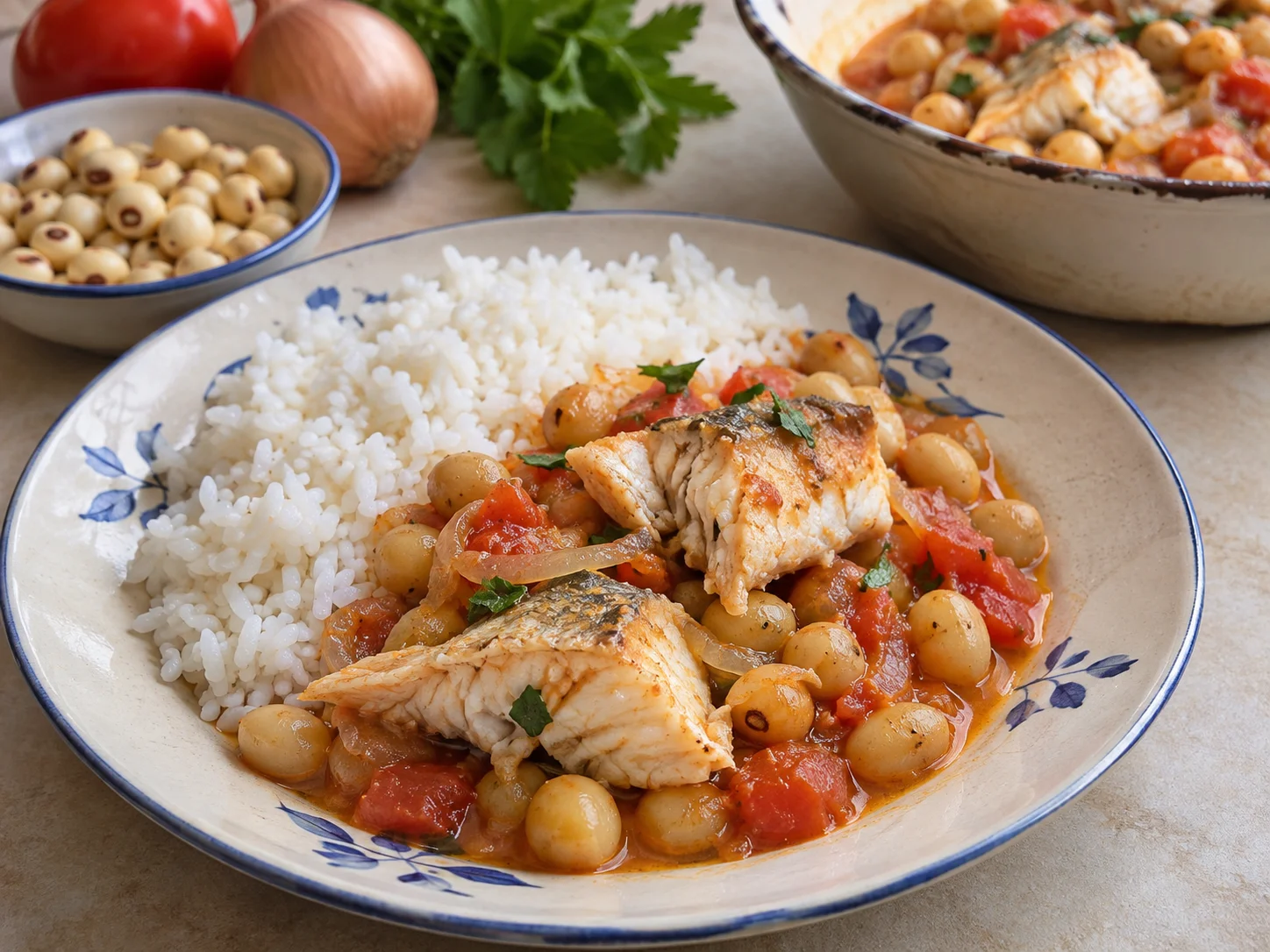
Ingredients
- 500 g cooked drained Bambara groundnuts
- 600 g firm white fish
- 350 g tomatoes
- 150 g onion
- 2 garlic cloves
- 15 ml oil
- 280 ml water
- salt and pepper
Preparation
Soften onion, add garlic and reduce the tomatoes. Add water and the groundnuts and simmer for about 12 minutes. Set the fish on top and spoon the sauce over it while it cooks. Check the thickest piece is cooked through and serve with rice.
Introduction
Choosing Bambara groundnuts
The 500 g refers to fully cooked, drained groundnuts. Check the drained weight on the jar. Compare the texture if using two jars and warm the softer ones a few minutes later if needed. Cook dried peas separately according to the packet before weighing. A firm centre must soften before the fish goes in. Rinse salty packing liquid away and taste a bean.
Choosing and cutting the fish
Select thick fillets that lift without breaking. Run clean tweezers along the pin bones and cut serving pieces rather than cubes. Pat thawed fish dry and refrigerate it until needed. Keep thinner pieces separate so they can go in a few minutes later, especially if the pan does not heat evenly.
Making a loose tomato base
Soften the onion before adding garlic. Include the juices from chopping the tomatoes and reduce until the pulp stays visible. Hold back some measured water if the tomatoes are very juicy. Keep the sauce loose enough to flow around the beans. A very thick base can catch once the fish is in and stirring is limited. Taste for acidity and soften it with well-cooked onion if necessary.
Adjusting the beans first
Warm the beans at a gentle simmer and check both texture and liquid after a few minutes. Add hot water to a tight base or briefly reduce a thin one. Mash a small spoonful of beans into the sauce for body, leaving most whole. Season before adding the fish, allowing for salt already in the beans and any remaining reduction.
Cooking the fish in place
Make a gap for each piece and let the sauce come partway up the sides. Baste by carefully tilting the pan and partly cover. A hard boil breaks up the flakes. Check the thickest piece for full cooking. If a thinner piece finishes early, transfer it to a clean plate with a spoonful of sauce and serve it once the other pieces are ready.
Serving the dish
Put rice on the plates, add groundnuts with their sauce and lift the fish onto them with a wide spatula. Keep the lasary fresh by serving it separately. If using a shared casserole, identify the fish and use a broad serving spoon so diners can take the beans without breaking the pieces. Greens can round out the meal.
Cooking in two batches
Make the tomato and bean base in advance and divide it before adding fish for two sittings. Poach a fresh portion in the reheated sauce. Refrigerate leftovers in shallow containers within two hours. If the sauce thickens, reheat some juices with water first and lift the fish back in gently. Keep rice separate so it does not soak up the sauce during storage.
Choosing the lasary
Cucumber lasary brings freshness to a tomato-rich sauce. Tomato lasary highlights the difference between fresh and cooked tomato. Taste the sauce with rice and choose according to its acidity. Offer chilli separately so it does not dominate the fish.
Cultural context
Voanjobory sy trondro. A Malagasy recipe combines Bambara groundnuts and fish in a tomato laoka. Here the fish goes in at the end so the beans remain whole and the fish separates into large flakes.
Source https://mamina.org/mg/recette/voanjobory-sy-trondro https://www.anses.fr/system/files/BIORISK2012sa0005.pdf