Plantains simmered with tomatoes
A home recipe to serve as a laoka. Firm plantains simmered in a tomato and ginger sauce offer a different preparation from the fried plantains in the manuscript.
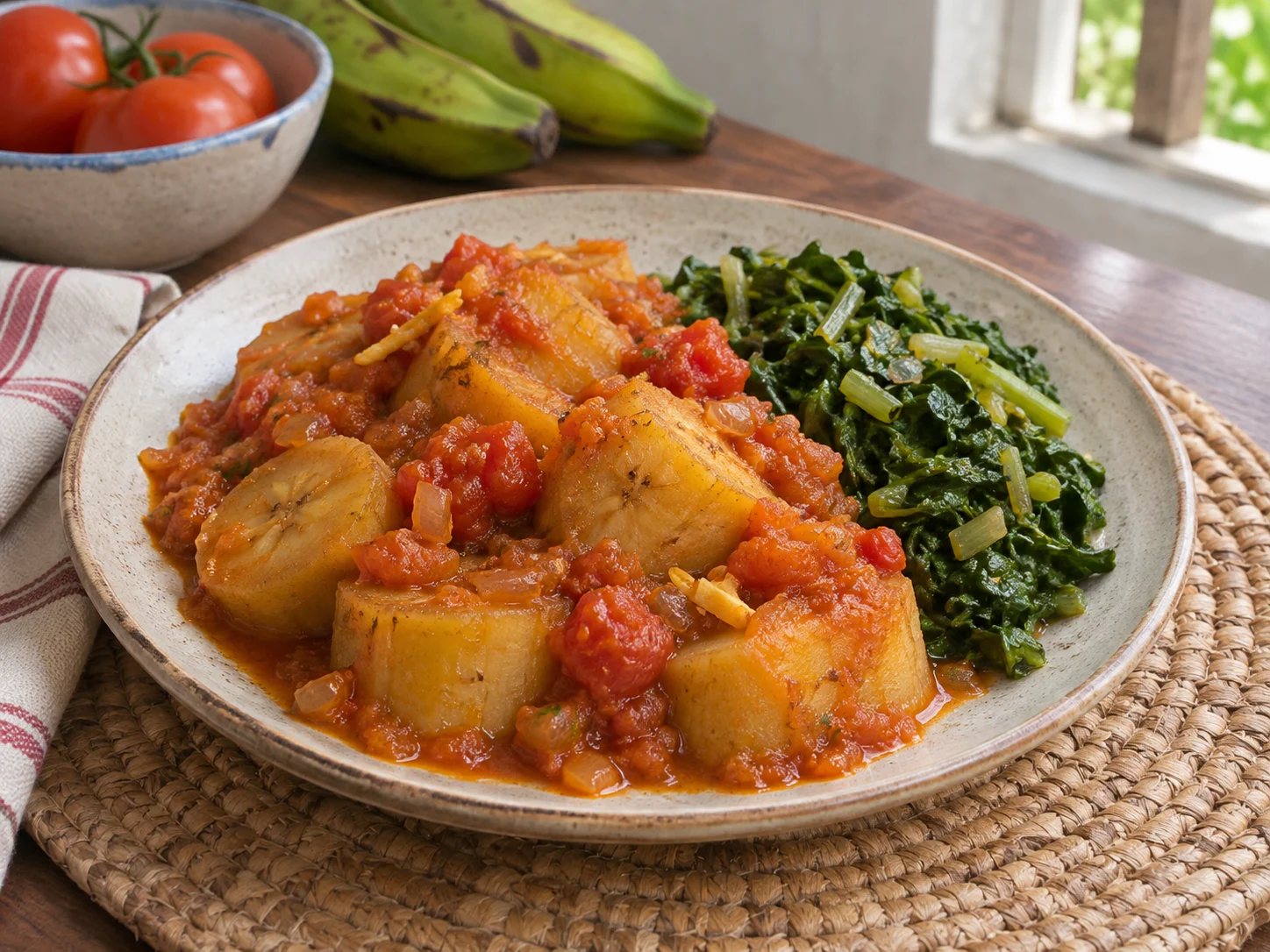
Ingredients
- 650 g peeled green plantains
- 350 g tomatoes
- 150 g onion
- 12 g ginger
- 2 garlic cloves
- 20 ml oil
- 380 ml water
- 3 g salt to start
Preparation
Score the skins lengthwise and peel them away in strips. Cut the plantains into 2–3 cm chunks. Soften the onion in the oil, add the garlic and ginger, then add the crushed tomatoes. Cook down the pulp before adding the plantains and water. Partly cover and simmer. Check the texture regularly with the tip of a knife. When the chunks are tender and hold their shape, reduce the sauce uncovered if needed. Stir by lifting the pieces with a spatula and adjust the salt.
Introduction
Choosing plantains
Use green plantains that are firm from end to end. A yellowing skin gives a sweeter side and flesh that softens more quickly. Mention this difference if serving both versions. Weigh the flesh after peeling. The tapered ends cook faster, so cut them a little longer to match the larger pieces from the centre. Use a sharp knife and stable board for the firm fruit.
Peeling and preparing the tomatoes
Trim the ends, score the ridges shallowly along the skin and lift it off in strips. If the skin is stubborn, prise up the edge and push it away with your thumb. Slice the flesh just before it goes into the pot to limit its time exposed to air. Crush the tomatoes over a bowl to catch the juice. Chop the garlic, grate the ginger and slice the onion. Keep hot water available so there is enough liquid to cook the plantains through if the sauce reduces quickly.
Reducing the tomato pulp
Soften the onion in oil. Add the garlic and ginger, stir briefly and add the tomatoes and juice. Cook until the pulp thickens. If the tomatoes are especially watery, reduce them for longer and taste before adding the plantains. Arrange the pieces in one layer where possible and add the measured water. Turn them once in the sauce and partly cover. Moderate heat keeps the liquid from evaporating before the plantains are tender.
Testing the centre
Insert the tip of a knife into the largest piece. If the centre still resists, simmer longer before adjusting the sauce. If the liquid thickens before the plantain softens, add a few spoonfuls of hot water and close the lid a little more. Uncover to reduce once the knife reaches the centre and the pieces still hold their shape. The edges may soften, so lift the chunks with a wide spatula or gently shake the casserole to distribute the sauce.
Choosing accompaniments
Serve a lighter vegetable such as leafy greens or cucumber lasary. Plantains provide the starchy part of the meal, so keep any rice portion small if rice is already on the table. Add beans, Bambara groundnuts or another protein-rich dish as appropriate. Divide the plantains among four plates and spoon sauce around them. Offer sakay at the table. The ginger already gives the sauce its own distinctive flavour.
Cooking for two sittings
For a double batch, use a wide pot so you can spread the pieces out and check them easily. Total water depends on the evaporation and the tomato juice. Add any extra in small amounts during cooking. If serving twice, hold some pieces in their sauce without boiling them through the first service. Loosen the sauce with hot water poured around the side and reheat gently. Avoid crushing the pieces against the base while stirring.
Watching the liquid level
Keep enough liquid to cook the plantain through. Tomatoes that give little juice may require a few spoonfuls of water during cooking. Pour it down the side of the pot and bring the sauce back to a gentle simmer. Keep the lid more closed to hold steam. Open it to reduce only after a knife passes through the largest pieces. If the base thickens too soon, cover and continue over moderate heat. Judge the final volume of sauce by how much you want to spoon onto the portions.
Keeping the pieces whole
The tapered ends often cook before the thick pieces. Lift out tender pieces if the rest still need time. Return them when all the plantain is cooked and let the heat even out, or serve them first. Test one piece at a time rather than moving all the contents of the pot. A flat spatula supports tender pieces better than tongs, which can cut them. Reserve a little sauce for the last plates.
Planning the meal and leftovers
If also serving rice, offer the plantain as a smaller side with greens and a bean laoka. Without rice, increase the plantain portion and keep the other dishes. The tomato sauce can dress the vegetables and beans as well. Divide leftovers into shallow containers and refrigerate within two hours. When reheating, add hot water, cover to loosen the sauce and check the texture in the centre of the pieces.
Trying a sweeter version
Use a less green plantain for a slightly sweeter sauce. Test it earlier so the pieces do not collapse. Serve it with a sharper lasary and mention the difference in ripeness if offering two versions at the same meal.
Cultural context
A home recipe to serve as a laoka. Firm plantains simmered in a tomato and ginger sauce offer a different preparation from the fried plantains in the manuscript.
Source https://www.madagascar-destination.mg/culture/gastronomie.html
Food safety references https://www.anses.fr/system/files/BIORISK2012sa0005.pdf