Chicken with green chillies
Akoho sy sakay maitso saosy. Midi Madagasikara documents a preparation with chicken, tomato, ginger, curry powder and green chilli added late. The green chilli and tomato sauce distinguish this dish from the ginger and coconut chicken recipes already in the manuscript.
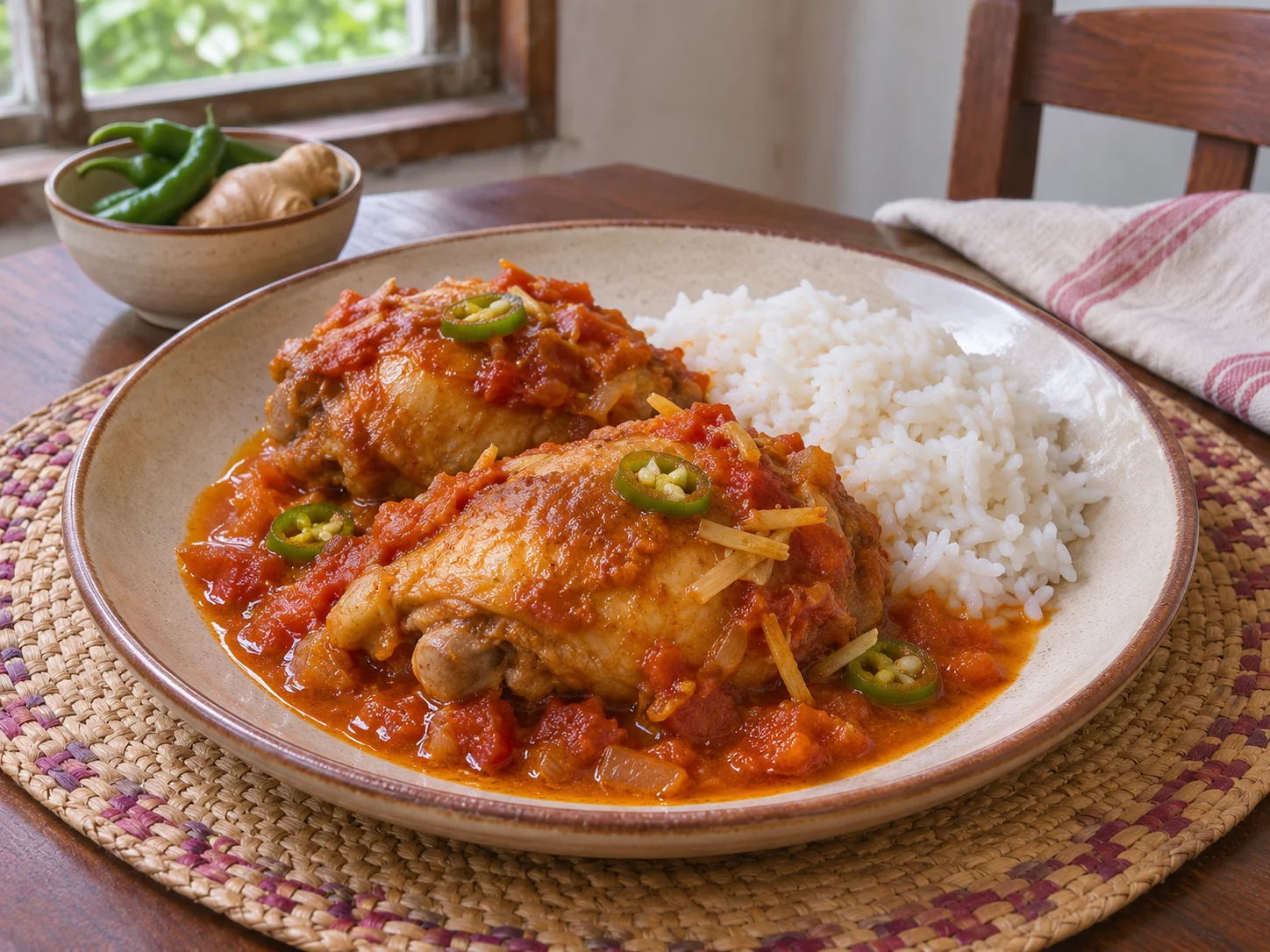
Ingredients
- 750 g chicken thighs
- 350 g tomato
- 150 g onion
- 15 g ginger
- 2 garlic cloves
- 1–2 green chillies depending on their heat
- ½ teaspoon curry powder
- 15 ml oil
- 200 ml water
- salt and black pepper
Preparation
Brown the chicken, then soften the onion in the casserole. Add the garlic, ginger, curry powder and tomatoes. Cook down the tomato pulp, then return the chicken and add the water. Cover and simmer gently until the chicken is cooked through. Uncover to reduce the sauce until it coats the meat. Add sliced chilli gradually near the end of cooking, tasting the sauce between additions. Serve any remaining chilli separately.
Introduction
Judging the heat of the chillies
Choose firm green chillies and ask the seller about their heat. Two chillies of the same size can differ considerably. Slit the first one lengthwise and remove the white ribs for a milder result. Slice some into thin rounds and reserve the rest separately. Wash your hands and clean the board after cutting. For a group, start with a few rounds in the pot and offer extra chilli in a separate dish.
Preparing the chicken and tomatoes
Choose thighs of similar size, with or without skin. If keeping the skin, brown that side first and spoon away excess rendered fat. Keep raw chicken in its own container. Finely dice the tomatoes, slice the onion and prepare the ginger and garlic ahead. Have the curry powder ready, as dry spice can burn if left on a hot base. Measure the water and keep it nearby to loosen the browned juices.
Building the sauce
Set the browned chicken aside and soften the onion in the casserole. Stir in the ginger and garlic, then add the curry powder and tomatoes. Once the tomatoes release their juices, scrape the base gently to incorporate the browned residue. Reduce the pulp before returning the chicken. Add the measured water and bring to a gentle simmer. Excessive heat reduces the sauce too quickly and can toughen the surface of the chicken. Check the thickest piece if the thighs vary in size.
Adding the chilli at the end
Once the chicken is cooked through, remove the lid to adjust the sauce. If a long reduction is needed, move the chicken to a clean plate and return it when the sauce coats a spoon. Add a few chilli rounds, give them time to flavour the sauce and taste before adding more. Excess heat is hard to correct without increasing the volume. A little water and cooked tomato can help. Check the consistency again after adding them.
Timing the rice and serving
Put the rice on while the chicken simmers. Arrange the chicken on a warm platter and spoon over some sauce. Offer the rest separately so diners can adjust their portions. Tomato or cucumber lasary gives a fresh side. If cooking ahead, bring the chicken and sauce back up to temperature and taste before adding fresh chilli. Its heat spreads through the sauce as it sits, so save the final garnish for plating.
Scaling the recipe
For six to eight people, brown the chicken in batches so the base stays hot. Use two casseroles if needed to keep the pieces in one layer. Adjust the water by checking the depth of the liquid. A wide casserole loses more water than a narrow pot. For the chilli, increase the amount offered at the table if needed and season each casserole to taste. Chillies vary in heat more than the sauce changes with the number of portions.
Checking the tomato base
Ripe tomatoes give pulp that reduces readily. If the tomatoes are pale or very firm, chop them finer and cook them uncovered for longer. Taste at this stage to assess the acidity. If the pulp begins to catch, add a spoonful of the measured water and scrape gently. Aim for a red sauce thick enough to cling to the chicken. A watery sauce dilutes the curry and ginger and can lead to overseasoning.
Checking the thickest pieces
Use a clean thermometer in the thickest part of the largest thigh, avoiding the bone. The Food Standards Agency gives 70°C at the centre for two minutes as a cooking benchmark for poultry. Keep simmering gently if the centre is not ready. Transfer smaller cooked pieces to a clean plate and return them when coating the meat in sauce. Wash any tongs that handled raw chicken before using them at serving time.
Serving different tastes
If some diners prefer a milder sauce, set some aside before adding chilli and finish the portions in a small pan. Prepare cucumber slices or tomato lasary while the rice cooks. Divide leftover chicken into shallow portions and refrigerate within two hours. Taste the reheated sauce before adding more chilli the next day, as the perceived heat may have changed.
Adjusting the curry powder
Curry powders differ in composition. If yours is strong, start with part of the half teaspoon and taste the tomato base before adding the rest. Use fresh chilli sparingly if the powder itself is hot. Adjusting them separately helps preserve the flavour of the ginger.
Cultural context
Akoho sy sakay maitso saosy. Midi Madagasikara documents a preparation with chicken, tomato, ginger, curry powder and green chilli added late. The green chilli and tomato sauce distinguish this dish from the ginger and coconut chicken recipes already in the manuscript.
Source https://midi-madagasikara.mg/wp-content/uploads/2023/07/13.pdf
Food safety references https://www.anses.fr/system/files/BIORISK2012sa0005.pdf https://www.food.gov.uk/safety-hygiene/cooking-your-food