Bambara groundnuts with beef
Voanjobory sy henomby. Beef, Bambara groundnuts and anamalaho greens are documented together in a brothy laoka. The combination is distinct from the pork and Bambara groundnut stew and the plain legumes in the collection.
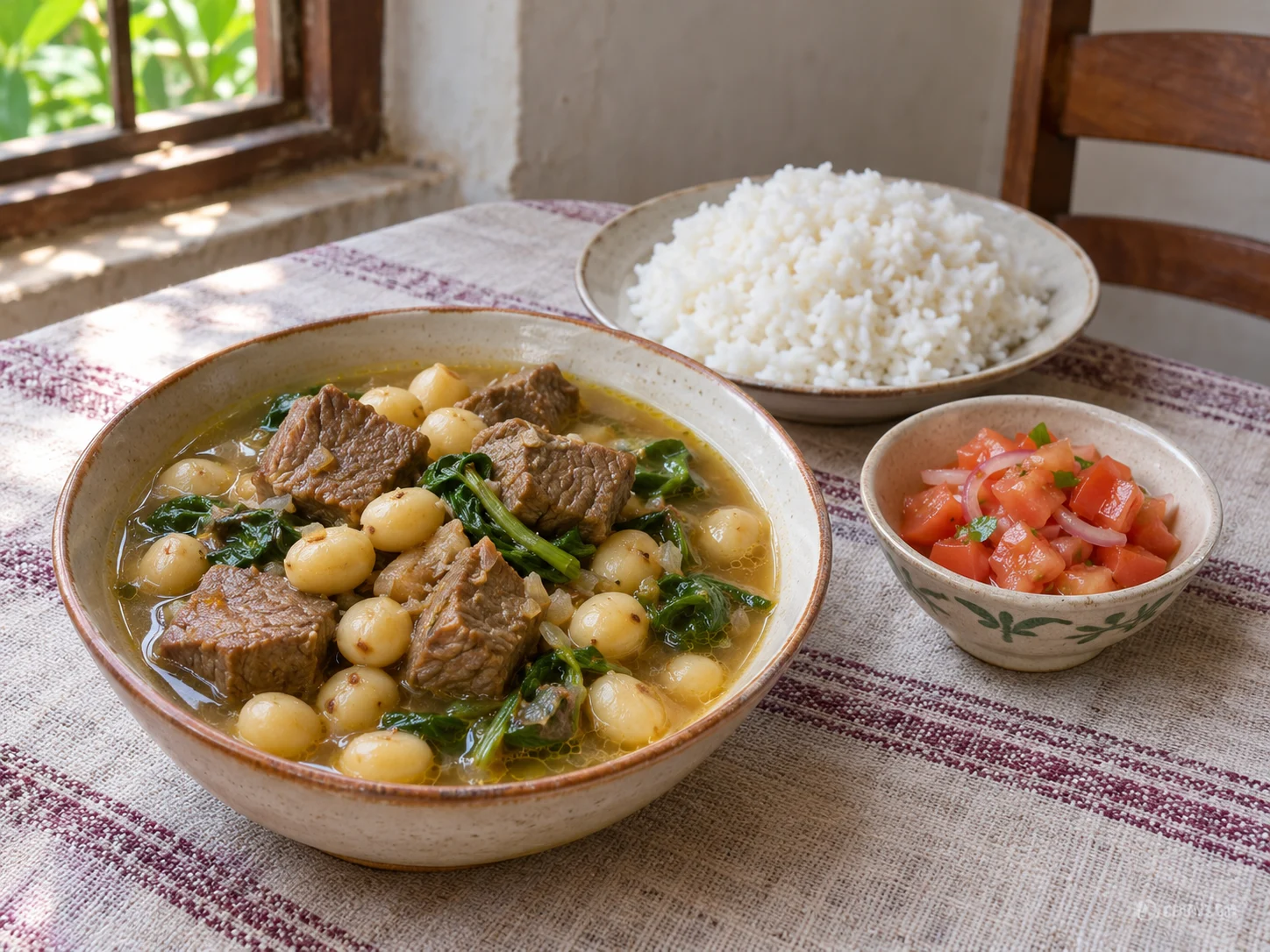
Ingredients
- 500 g braising beef
- 500 g fully cooked Bambara groundnuts
- 100 g edible anamalaho greens
- 140 g onion
- 2 garlic cloves
- 15 ml oil
- 650 ml water
- salt
Preparation
Brown the beef in the oil, then soften the onion in the pan juices. Add the garlic and water. Simmer gently until the beef is tender. Rinse the groundnuts if their packing liquid is salty and add them to the broth. Heat through for 12–15 minutes. Stir in a small amount of washed anamalaho to start, then cook until the leaves are done. Taste and adjust the quantity of greens and the salt. Serve with plain rice and lasary voatabia.
Introduction
Choosing Bambara groundnuts
Look for voanjobory in Malagasy food shops. This recipe uses fully cooked groundnuts. If buying a jar, weigh the contents after draining. Split one with your fingers to check that its centre is soft. A hard centre needs more cooking separately before the groundnuts go into the beef. Preserved groundnuts often have visible skins. Keep them on if they are pleasant to eat and you want a little more texture in the broth.
Preparing the greens
Ask for anamalaho sold as a food vegetable. Its strength varies, so start with a small handful and taste the broth before adding more. Sort, wash and drain the leaves. Separate tender stems if you want to give them a few extra minutes in the liquid. Set a bowl for the aromatics, a plate for the browned beef and a colander for the groundnuts by the stove so you can add each at the right time.
Keeping the broth clear
Pat the beef dry before putting it in hot oil. Turn the cubes once the first side is browned. Remove the beef and cook the onion in the same casserole. Give the garlic only brief contact with the hot base before adding water. Return the beef, bring to a simmer and keep the lid on. Check for evaporation and add hot water if needed. Broth to spoon over rice should flow more freely than a reduced braising sauce.
Bringing the dish together
Check the beef first. Once tender, lower the groundnuts into the broth with a ladle so they stay whole. Simmer gently to warm them through and let them take on the flavour of the broth. Add the drained leaves and press them below the surface with the ladle. Cook them through and taste before adding the rest. Salt sparingly, especially if the groundnuts were packed in salted liquid. A brief rest helps the heat spread evenly through them.
Adjusting the broth and serving
If there is too little liquid, add a few spoonfuls of hot water and bring the broth back to a simmer. If it tastes bland, adjust the salt and try it with rice before reducing the whole pot. Serve lasary voatabia separately for acidity. Divide the beef among the bowls, ladle in the groundnuts and broth and arrange the leaves on top. Diners can then mix the broth into their rice.
Cooking for a larger table
For a double batch, brown the beef in small batches. A deep pot retains broth but makes it harder to distribute what has settled at the bottom. Stir gently before serving and dip the ladle deep enough to reach the groundnuts. Braise the beef ahead if needed and reheat it with the groundnuts before adding the greens. You can serve the laoka from a tureen with rice on the side. Avoid boiling the groundnuts hard while the other dishes finish.
Comparing preserved groundnuts
Some jars show the weight including the packing liquid. Look for the drained weight when shopping. If using two jars, taste the groundnuts from each because their textures can vary. Reheat the firmer ones first and add the softer ones a few minutes later. If they are already salted, start the broth with less salt and adjust after they have been in the pot for a few minutes. Reserve a little broth to compare its flavour before and after adding the greens.
Sizing the beef
Larger cubes hold together when stirred and served with a ladle. For smaller portions, cut the tender pieces at serving time instead of dicing the raw beef too finely. If some pieces cook faster, move them to a warm bowl and return them once everything else is nearly ready. This keeps the broth clear and the pieces intact. Taste a whole groundnut with a spoonful of broth to check whether it is seasoned enough for rice.
Packing lunch for the next day
The groundnuts take on more of the broth’s flavour as they sit. Divide leftovers into shallow containers and refrigerate within two hours. Keep rice and any fresh garnish separate. Add a little hot water when reheating and stir gently so the groundnuts remain whole. A fresh portion of lasary can brighten the meal. Taste the broth before adding more anamalaho, as it may already have taken on the flavour of the greens. Adding fresh leaves late gives a more distinct flavour.
Serving a shared meal
Set the meat and groundnuts in a deep dish and ladle the remaining broth at the table. If the lasary is particularly sharp, offer it in a small bowl so diners can decide how much to serve with the laoka.
Cultural context
Voanjobory sy henomby. Beef, Bambara groundnuts and anamalaho greens are documented together in a brothy laoka. The combination is distinct from the pork and Bambara groundnut stew and the plain legumes in the collection.
Source https://mamina.org/fr/recette/voanjobory-sy-henomby
Food safety references https://www.anses.fr/system/files/BIORISK2012sa0005.pdf