Beef with greens and angivy
Henomby sy anamamy ary angivy. A Malagasy recipe documents the combination of beef, anamamy greens and angivy. The edible angivy brings a vegetal note and a bitterness distinct from the tingling greens used in romazava.
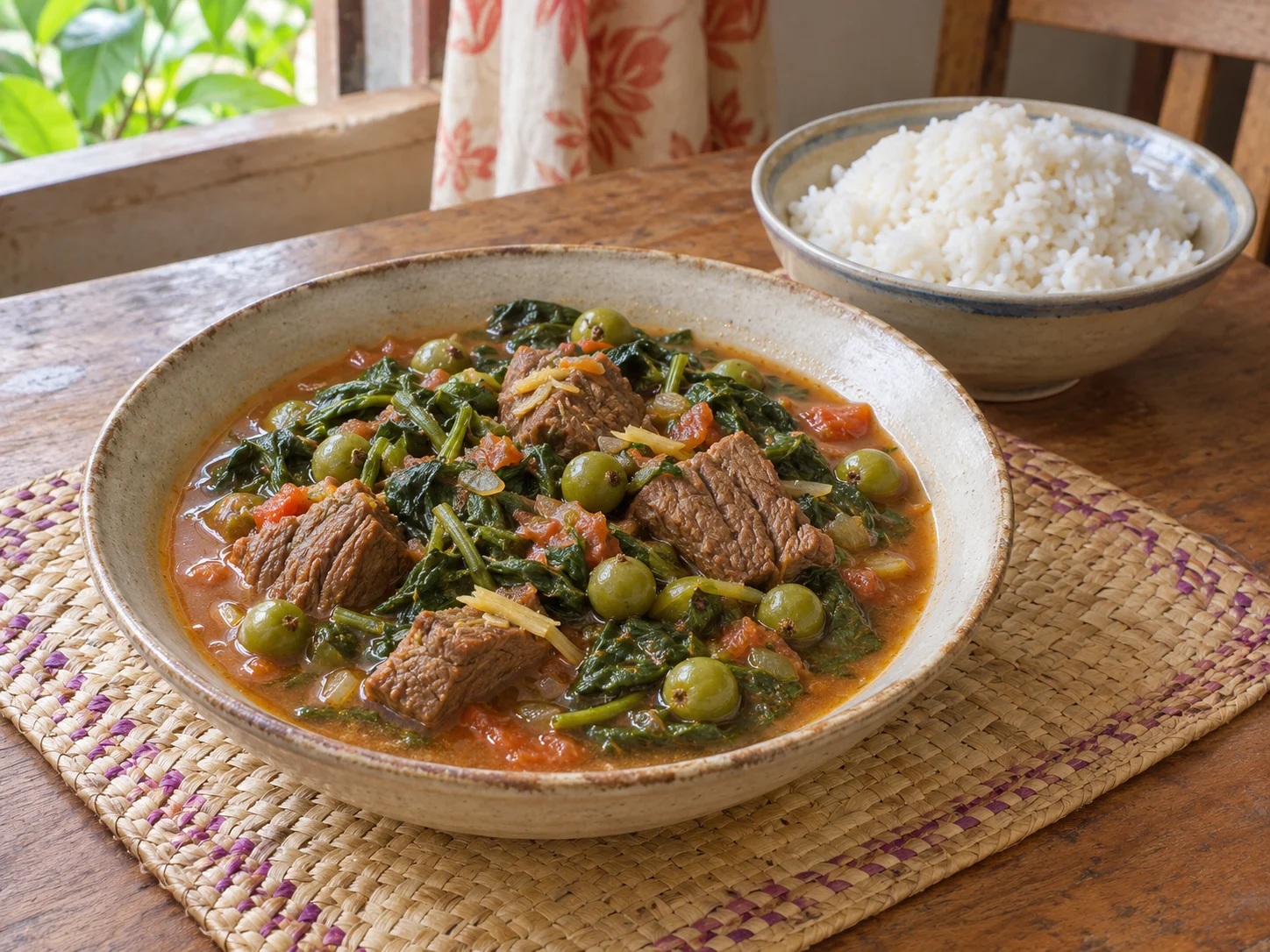
Ingredients
- 550 g braising beef
- 300 g anamamy greens sold for cooking
- 120 g edible angivy
- 160 g onion
- 200 g tomato
- 2 garlic cloves
- 12 g ginger
- 650 ml water
- 15 ml oil
- salt
Preparation
Brown the meat and soften the onion. Add the garlic and ginger, stir, then add the tomato and let it cook down for a few minutes. Pour in the water and simmer covered until the beef is tender. Sort and wash the vegetables. Add the angivy and cook until tender. Add the greens and continue until fully cooked. Taste the broth before adding salt. Serve with rice and offer sakay separately.
Introduction
Identifying the vegetables
Ask a food seller for anamamy greens and angivy intended for cooking. These names alone are not a reliable way to identify a foraged or unlabelled plant. If the ingredients are unavailable, make a beef and commercial spinach variation with its own flavour and name. In this version, the angivy is what contributes much of the vegetal note and slight bitterness.
Preparing the ingredients
Use separate boards for raw meat and vegetables. Remove tough stems and damaged leaves from the anamamy. Wash and drain the leaves without packing them into the colander. Follow the seller’s instructions for preparing the angivy and discard damaged pieces. Slice the aromatics before heating the casserole. Finely grate the ginger to distribute it through the broth. Dice the tomato so it breaks down while the greens remain recognisable in the bowl.
Making the broth
Brown the beef in small batches and soften the onion in the browned juices. Add the garlic, ginger and tomato. Once the tomato juice starts to concentrate, pour in the water and return the beef. Bring it to a simmer, cover and keep the heat low. Check the liquid midway, especially in a wide casserole. Keep enough broth to partly cover the vegetables when they go in. Add a little hot water if needed and taste before changing the seasoning.
Cooking the vegetables in sequence
Once the beef is tender, add the angivy. Start with part of it if the ingredient is new to you and taste the broth before adding the rest. Check the angivy is tender before adding the greens. Add the leaves by the handful and press them down with the back of a spoon. Give slender stems a head start if needed. Cook the leaves through at a gentle simmer. A hard boil scatters the tomato pulp and damages the leaves.
Tasting in small spoonfuls
Taste a leaf and a little broth together. If the broth is too concentrated, add hot water and bring it back to a simmer. If the angivy tastes too bitter, serve more rice and less angivy in each portion. Offer sakay at the table. Chilli in the pot can obscure differences between the leaves, broth and angivy. Taste again before salting and stir gently to distribute the seasoning.
Choosing a serving bowl
Use a shallow bowl to arrange rice, beef and vegetables before adding broth. For a group, offer the rest of the broth in a tureen. Lift the beef with tongs and divide the leaves with a ladle so the last diners get more than broth. You can braise the beef ahead and add the vegetables after bringing the liquid back to a simmer just before serving. This preserves the texture of the leaves.
Adjusting the strength of the broth
Keep enough liquid to moisten the rice without covering it. With multiple sides, offer the broth separately so diners can add more. Dilute an overly concentrated broth with a little water and bring it back to a brief simmer. Taste after adding water because both saltiness and ginger strength will change. Serve tomato lasary separately if you want a little acidity at the table.
Keeping the ingredients distinct
Availability and identification are the main challenges. Name any replacement greens when you serve the variation. When using both anamamy and angivy, keep them in separate bowls so each can go into the broth at the right time and be checked for tenderness on its own. Move the beef to one side of the casserole when adding the leaves to give them room without turning over all the contents.
Planning a second sitting
Set aside some beef and broth before adding leaves if you intend to serve twice. Cook a fresh batch of vegetables in that broth for the second sitting. Divide cooked leftovers into shallow containers and refrigerate within two hours. Reheat gently, stirring enough to distribute heat without cutting through the leaves. Cook the quantity of rice you need and offer sakay separately to preserve the flavour of the broth.
Dividing the leaves
Put a little broth into each bowl first and lay the leaves over it. Add the beef and rice if serving everything in the same bowl. Use a deeper bowl for anyone who wants more broth.
Cultural context
Henomby sy anamamy ary angivy. A Malagasy recipe documents the combination of beef, anamamy greens and angivy. The edible angivy brings a vegetal note and a bitterness distinct from the tingling greens used in romazava.
Source https://mamina.org/fr/recette/henomby-sy-anamamy-ary-angivy
Food safety references https://www.anses.fr/system/files/BIORISK2012sa0005.pdf