Beef in peanut sauce
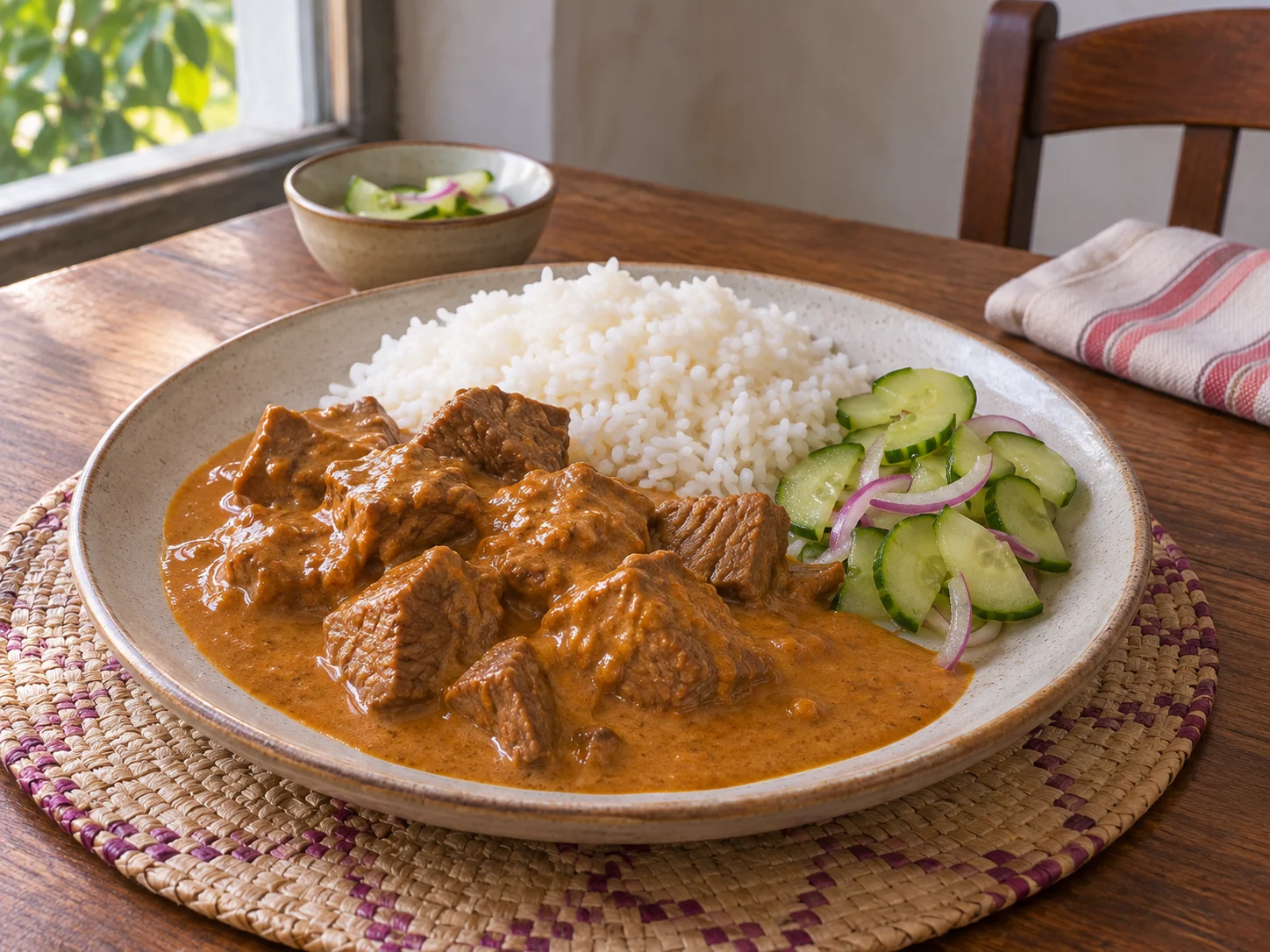
Henomby sy saosy voanjo. A Malagasy recipe documents this laoka and serves it with rice and lasary. The quantities below are for a home kitchen.
Ingredients
- 650 g beef chuck
- 160 g onion
- 250 g tomato
- 45 g unsweetened plain peanut butter
- 15 ml oil
- 450 ml water
- salt
Preparation
Brown the cubed beef and soften the onion in the same casserole. Add the tomato and cook until the pulp thickens, then pour in the water. Cover and braise until the meat is tender. Ladle a little hot cooking liquid into a bowl and whisk it with the peanut butter. Pour the smooth mixture into the pot. Simmer for 15–20 minutes, stirring along the bottom regularly. Adjust the consistency with a few spoonfuls of hot water. Season with salt and serve with rice and a tomato or cucumber lasary.
Introduction
Choosing the peanut butter and beef
Unsweetened peanut butter lets you control the seasoning. If oil has separated in the jar, stir before weighing. Smooth peanut butter blends quickly, while chopped peanuts give the sauce texture. Cut an even piece of beef chuck into similarly sized cubes. Some connective tissue softens during braising. Trim the very tough edges you would not want to serve, while leaving enough of the cut for a good braise.
Making the tomato base
Slice the onion before heating the casserole and chop juicy tomatoes over a bowl. Transfer the browned beef to a plate and soften the onion in the same pot, stirring to pick up the residue. Cook the tomato until thick. If the edges dry out while the centre stays watery, stir and lower the heat a little. Add the measured water, return the beef and simmer covered. Wait until the meat is tender before adding the peanuts.
Loosening the peanut butter
Put the weighed peanut butter in a heatproof bowl. Add a spoonful of hot braising liquid and press the paste against the side of the bowl. It may stiffen initially. Continue to add the liquid in small amounts until the mixture runs in a ribbon from the spoon. Pour it into the casserole and stir the sauce around the meat. Rinse the bowl with another spoonful of hot liquid and return it to the pot so no concentrated paste stays in one place.
Watching the sauce
Maintain a quiet simmer. Run a spatula across the bottom and into the corners where the sauce is most likely to catch. Taste once it is smooth. If it thickens too quickly, add a little hot water and keep cooking. If some oil rises to the surface, stir gently and check the texture before deciding whether to skim it. Adjust the salt once you know how much sauce you will serve.
Serving and scaling
Spoon sauce and a few pieces of beef over plain rice. A tomato or cucumber lasary brings a fresh contrast. Serve the salad separately to retain its texture and offer chilli at the table. When cooking for six, scale the ingredients and choose a wide enough pot to keep the liquid at roughly the same depth as for four. Hold back a little water for the end, because evaporation depends on the surface area of the pan as well as the batch size.
Finishing for service
The sauce thickens as it sits. If it becomes stiff, add a little water over low heat and stir until pourable. To cook ahead, braise the beef first and add the peanut butter shortly before serving. Label the dish clearly on a buffet because peanuts blend into the sauce and may be hard to see. Give it a dedicated ladle.
Tasting the peanut butter
Dark-roasted peanut butter can give a pronounced toasted flavour. Taste a small amount before loosening it. For a strongly roasted paste, add about three quarters first and taste the sauce after it returns to a simmer. Add the rest as needed, using the stated weight as a guide. If the paste already contains salt, season the pot sparingly. Weigh the paste rather than relying on spoons of different sizes.
Checking the braise
Take out a piece of beef and try pulling it apart with a fork. If the fibres resist, keep braising before adding the peanuts, which make the pot more likely to catch. You can stop at tender beef and finish the sauce just before serving. If the braising liquid is greasy, skim off some of the fat. A cleaner sauce lets the tomato and peanuts come through separately. Return the meat before the final simmer.
Packing the meal
Pack the lasary and rice in separate containers to keep their textures. Divide the stew into small portions and refrigerate within two hours. Loosen the sauce with a little water when reheating, stirring regularly along the base. Combine it with hot rice at serving. For a shared meal, tell diners that the stew contains peanuts and keep the serving spoon with the dish. The finished sauce may look like a thick tomato sauce.
Using a leaner cut
Ask the butcher whether a leaner cut is suitable for slow cooking. Cut even pieces and avoid leaving them in the finished sauce too long. Reduce the liquid separately if the meat becomes tender before the sauce reaches the right consistency.
Cultural context
Henomby sy saosy voanjo. A Malagasy recipe documents this laoka and serves it with rice and lasary. The quantities below are for a home kitchen.
Source https://www.mamina.org/mg/node/865
Food safety references https://www.anses.fr/system/files/BIORISK2012sa0005.pdf