Zebu and white bean stew
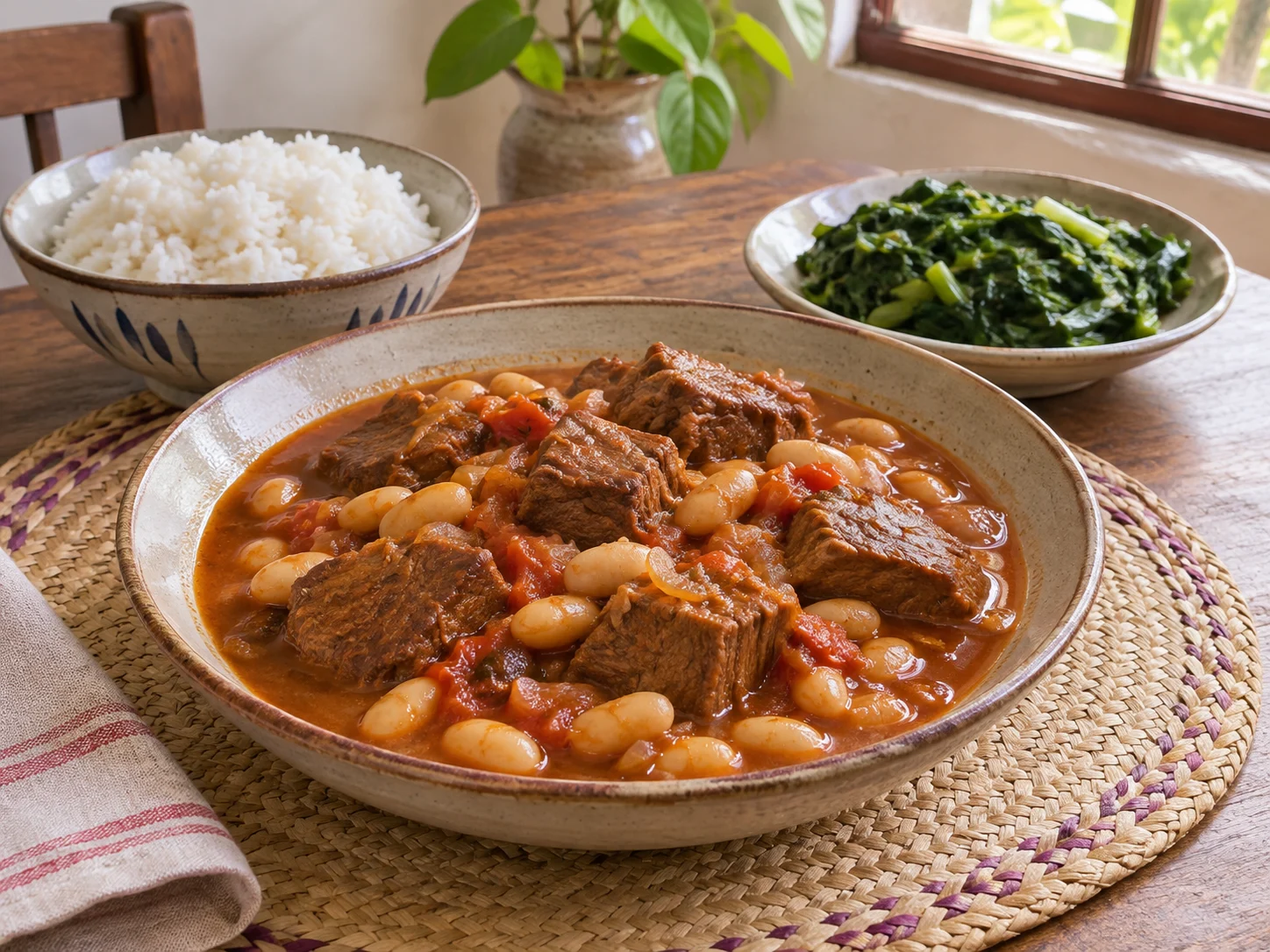
Hena omby sy tsaramaso. Zebu and white beans are documented among the dishes of the hanim-pitoloha. The zebu and its braising juices give the stew a different flavour from the pork and beans already in the collection.
Ingredients
- 650 g braising zebu or beef as an alternative
- 500 g fully cooked and drained white beans
- 150 g onion
- 200 g tomato
- 2 garlic cloves
- 20 ml oil
- 450 ml water
- salt
Preparation
Brown the meat in 4 cm pieces. Cook the onion in the same casserole, add the garlic and then the tomato. Return the meat, pour in the water and cover. Maintain a steady simmer for 75–110 minutes, depending on the cut. Check that the meat is tender before adding the drained beans. Cook them together for about 15 minutes. Crush a small ladleful of beans against the side of the pot to thicken the sauce. If it thickens too far, add hot water a spoonful at a time. Adjust the salt at the end.
Introduction
Choosing the meat and beans
Choose a braising cut such as shoulder and cut it into roughly four-centimetre cubes. Zebu is the meat named in the culinary source. Use braising beef as an alternative if it is hard to find. Weigh the beans after draining and press one against a plate with a spoon to check that it is tender at the centre. The beans should still hold together as you lift them out of the colander.
Getting the ingredients ready
Keep raw meat separate from the vegetables. Slice the onion, chop the garlic and dice the tomato finely enough to soften in the casserole. Keep hot water by the stove to top up the braising liquid. Set out a small ladle and a spoon for mashing some of the beans. Taste a drained bean to decide whether to rinse away salty packing liquid. Leave the beans to drain until the meat is tender so the packing liquid does not change the braise.
Browning and braising
Heat a thin layer of oil in the casserole and arrange the meat in one layer. Turn each piece with tongs once the first side releases from the base. Set the browned meat aside. Soften the onion in the same casserole. Once translucent, add the garlic and tomato. Scrape the browned residue off the base as the tomato releases its juice. Return the meat, add the water and cover. Adjust the heat so the liquid simmers gently under the lid.
Finishing with the beans
At the lower end of the cooking time, test one of the largest cubes. If a fork goes in with difficulty, continue in short intervals and check the liquid level. Add the cooked beans only once the meat is tender. Lower them into the pot gently and spoon sauce over them. After a few minutes, mash a small ladleful of beans in a bowl with some sauce, then stir the mixture back in stages. Use as much as the bean variety and the consistency of the liquid require.
Checking the sauce
Draw a spoon across the base. When the trail closes slowly and the sauce coats the beans, let the casserole rest for a few minutes. If the sauce is too thick, add hot water just before serving. If still thin, reduce briefly uncovered before salting. The mashed beans will thicken the liquid. Stir gently to keep the other beans whole. A light shake of the casserole redistributes them before transferring to a serving dish.
Serving with rice
Put a little rice beside the meat, then spoon over the beans and sauce. Serve the greens separately and let diners add sauce to taste. For a group, braise the meat ahead and add the beans when reheating. This lets you check the meat before putting the rice on. Serve smaller portions when several laoka are on the table. A wide ladle helps each serving get its share of vegetables and beans.
Checking the texture of the beans
The bean skins can stay visible after the centres soften. If the skins loosen while stirring, keep further stirring to a minimum. A slightly floury centre goes well with a loose sauce. Taste one bean and a piece of meat together. Use smaller pieces of meat when several laoka are served and keep whole beans to contrast with the mashed beans that thicken the sauce.
Portioning for different menus
Decide how much rice to cook according to the rest of the menu. If there are greens and another side, put the stew in a shared dish. For individual plates, place the meat first and add beans and a ladle of sauce. Stir gently before serving the last portions because beans can settle on the bottom. Keep the sauce a little looser for firm red rice and offer extra juice at the side if needed.
Correcting differences in cooking time
If the meat is tender before the beans, set it aside and simmer the beans gently in the sauce. If the beans are ready first, keep them drained until the end of the braise. Taste for salt once everything is together, especially if the beans were packed with salt. Divide leftover stew and rice into separate containers and refrigerate within two hours. If the sauce has thickened, loosen it before stirring the beans as you reheat.
Serving zebu or beef
Allow the sauce and beans to spread naturally in a deep dish. Arrange the meat so diners can lift it without crushing the beans. For beef, keep the quantities the same and adjust the time for the cut. If serving both versions, identify them by the meat and use the same accompaniments.
Cultural context
Hena omby sy tsaramaso. Zebu and white beans are documented among the dishes of the hanim-pitoloha. The zebu and its braising juices give the stew a different flavour from the pork and beans already in the collection.
Source https://www.madagascar-destination.mg/culture/gastronomie/hanim-pito-loha.html
Food safety references https://www.anses.fr/system/files/BIORISK2012sa0005.pdf