Ginger-braised duck
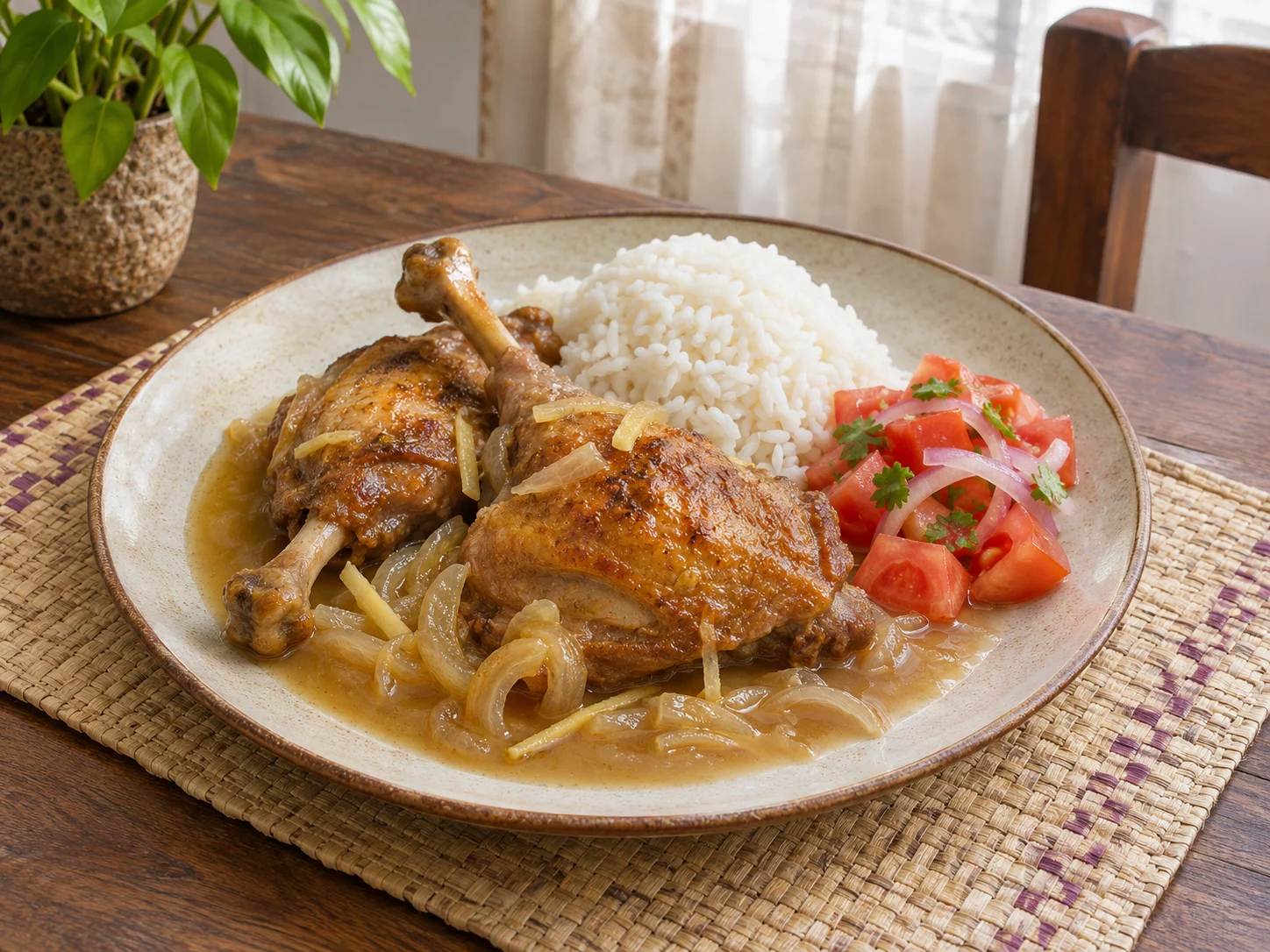
Gana ritra. Duck with ginger is documented among the dishes of the hanim-pitoloha. This version uses a reduced pan sauce with ginger as its main seasoning, giving it a different flavour from the green peppercorn duck in the manuscript.
Ingredients
- 4 duck legs
- 30 g fresh ginger
- 150 g onion
- 2 garlic cloves
- 400 ml water
- 4 g salt to start
Preparation
Put the legs skin side down in a cold casserole. Heat gradually and spoon off the rendered fat, leaving a thin film for the onion. Turn the legs to colour the other side lightly, then set them aside. Soften the sliced onion until golden, then add the garlic and two thirds of the grated ginger. Return the duck, add the water and cover. Simmer for 75–105 minutes, until the meat is fully cooked and pulls easily from the bone. Lift out the legs, skim the fat if needed and reduce the sauce uncovered. Return the duck with the remaining ginger and simmer for a few minutes.
Introduction
Working with ginger
Cut into the root before weighing it. The flesh should be firm and fragrant. Scrape thin skin away with the back of a spoon to follow the contours without losing much flesh. Grate two thirds for the initial cooking and leave the rest whole until you can grate it straight into the casserole at the end. If the ginger is fibrous, slice it thinly across the fibres and chop it. The two additions give depth to a sauce without coconut milk or green peppercorns.
Rendering the fat
Choose a casserole wide enough for all four legs to lie flat. Skin that lifts off the base renders unevenly. Start the legs in the cold pot and bring it to medium heat. Lift one edge with tongs to check the colour. Spoon the rendered fat into a heatproof container, leaving a thin layer for the onion. Legs may brown at different rates depending on the burner. Swap their positions if needed and remove each leg once it has coloured.
Building the braising liquid
Soften the onion before adding garlic and ginger. Lower the heat before putting the grated aromatics onto a hot base and stir until fragrant. Add a splash of the measured water and scrape the browned residue with a wooden spoon. Add the rest of the water and return the duck. The liquid covers the base and steam helps cook the legs under the lid. Check earlier if the lid fits loosely, and top up with a little hot water if needed.
Simmering and reducing
Once the liquid simmers, adjust the heat so only a few bubbles break the surface. Cooking time depends on the size of the legs. Probe the fleshiest part without touching bone and cook the duck through. If small legs finish first, set them aside. Transfer all the legs to a clean plate to reduce the sauce by itself. Skim any fat that rises with a small ladle. Stop when the sauce leaves a glossy film on a spoon and there is enough left to reheat the legs.
Adding the final ginger
Grate the reserved ginger and add it in two stages if you want to control its heat. Let the sauce simmer briefly between additions. If the flavour is too sharp, add a little hot water and return the legs for a few minutes. Salt the sauce after the final reduction and tasting. Spoon some sauce over the duck and serve the rest separately. The softened onion gives texture even when the sauce has reduced to a small volume.
Serving the duck
If serving several laoka, divide the meat from each leg into smaller portions. Leave the legs whole when duck is the main dish. Plain rice or red rice and a tomato lasary go with the hot sauce. For eight people, brown the legs in batches and use two casseroles if they overlap. Adjust the final ginger for each group of diners. Use a dish deep enough for the rice to take up some of the sauce.
Choosing the pot
Make sure the lid fits and the legs can lie flat. With a narrow pot, brown two at a time, then return all the legs and rearrange them halfway through braising. If there is a lot of rendered fat, spoon it out before adding the onion. Keep the base warm but lower the heat while doing so. A thin film of fat is enough for the aromatics. Let the onion soften gradually before it spends the rest of cooking in the duck juices.
Planning the timing
Start early enough to allow extra simmering for thick legs. Check with a clean probe in the thickest flesh, away from bone. The Food Standards Agency gives 70°C at the centre for two minutes as a cooking benchmark for poultry. The meat may need more time to become tender. Keep a clean plate ready for legs that are already tender. If you have a spare burner, start the rice while the sauce reduces and adjust the ginger just before serving.
Adjusting and reheating the sauce
If the sauce reduces too far, stir in hot water before tasting. If the flavour is right but there is more liquid than you want, save some for spooning over the finished dish and reduce the rest. Divide leftover duck and sauce into shallow portions and refrigerate within two hours. Coat the legs with sauce before reheating covered. If you have fresh ginger left, taste the hot sauce before adding more, as the original ginger will have infused the sauce during storage.
Cultural context
Gana ritra. Duck with ginger is documented among the dishes of the hanim-pitoloha. This version uses a reduced pan sauce with ginger as its main seasoning, giving it a different flavour from the green peppercorn duck in the manuscript.
Source https://www.madagascar-destination.mg/culture/gastronomie/hanim-pito-loha.html
Food safety references https://www.anses.fr/system/files/BIORISK2012sa0005.pdf https://www.food.gov.uk/safety-hygiene/cooking-your-food