Pork and eel stew
Henakisoa sy amalona. A Malagasy account of the hanim-pitoloha includes this pairing of pork and eel. The combination sets this laoka apart from the braised pork and fish stews already in the collection.
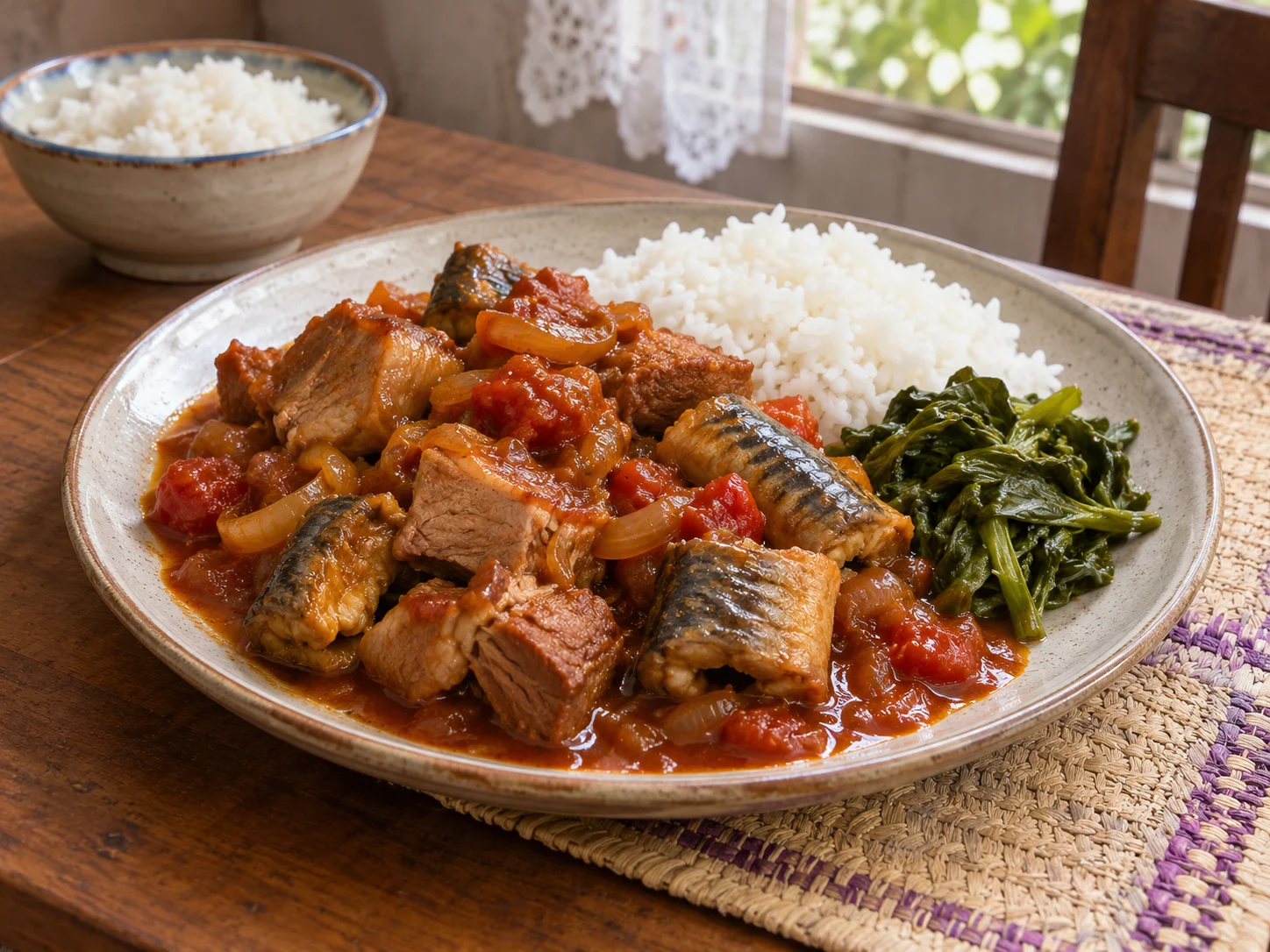
Ingredients
- 500 g diced pork shoulder
- 400 g eel prepared by a fishmonger
- 300 g tomatoes
- 140 g onion
- 2 garlic cloves
- 15 ml oil
- 350 ml water
- 3 g salt to start
- black pepper
Preparation
Pat the pork dry, brown it in two batches and set it aside. Soften the onion in the same pot, add the garlic and chopped tomatoes, then cook down until a spatula leaves a trail through the pulp. Return the pork and pour in the water. Cover and simmer for 55–75 minutes, until a fork slides easily into the cubes. Reduce the sauce uncovered. Lay the eel pieces in the sauce. Spoon sauce over them and simmer gently until cooked through, checking the thickest piece. Remove bones before serving. Serve with plain rice and leafy greens.
Introduction
Choosing the pork and eel
Ask for pork shoulder with some connective tissue and only a modest fat cap. Cut it into evenly sized cubes so they tenderise together. Watch lean pork closely, as the sauce will reduce after braising. Ask the fishmonger to skin and clean the eel, cut it into even pieces and show you where to look for bones. Weigh it once prepared and keep it in a separate container in the refrigerator until the pork is tender.
Setting up
Have a heavy casserole, tongs, a spoon and separate plates for raw and cooked ingredients ready. Dice the tomatoes finely so they break down before the long simmer. Collect any juice they release on the board. Slice the onion finely. Add the tomato shortly after the garlic goes in, as finely cut garlic browns quickly on the hot base. Pat the pork dry so it sizzles on contact with the pan.
Building the sauce
Leave space between the pork cubes. If their juices cover the base, remove some of the cubes and brown them in batches. Once the pork is out, use a spatula to loosen the light brown residue as you stir the onion. Add a splash of water if the base colours too quickly. Blackened residue will make the fish sauce taste burnt. When the tomato has reduced, return the pork and its juices and add the water. The liquid should rise partway up the cubes and circulate between them as they simmer.
Adding the eel
Turn down the heat after the initial boil. Lift the lid near the end to check the pork and the liquid level. If the pork still resists a fork and the base is almost dry, add a little hot water, cover and cook longer. Once the pork is tender, reduce the sauce to the desired consistency. Make gaps between the cubes for the eel and spoon sauce over it. Avoid stirring hard. A small spatula helps lift each fish piece intact.
Adjusting and serving
Taste the sauce once the pork and eel are cooked. If too concentrated, loosen it before adding salt. If the tomato is sharply acidic, try mashing a little of the softened onion into the sauce served with each portion. Check for bones as you plate. Serve plain rice and leafy greens alongside the pork and eel. Spoon the sauce around the rice and offer any extra in a separate bowl.
Cooking for a group
To double the recipe, use a wide casserole or two small ones. Brown the pork in batches even with a large casserole. Split the eel between pans if you cannot lay the pieces in one layer. You can braise the pork and prepare its sauce ahead, then bring them back up to temperature before adding the eel. This leaves time for the rice and greens. Separate serving spoons for the meat and fish make it easier to give each diner a share of both.
Timing the meal
Start with the pork because its braising time varies. Begin the accompaniments once the pork starts to soften. Wash and drain the greens early if convenient, then cook them as the eel finishes. Taste the sauce with a spoonful of rice. Once the eel goes in, the sauce will taste stronger than the pork braising liquid. Keep hot water nearby so you can adjust the consistency without interrupting cooking.
Keeping the pieces intact
Even pieces of the same length can differ in thickness. Place the thickest in the hottest part of the casserole and check the thinner ones once they start to firm. Slide a spatula under the entire piece before lifting it. For individual portions, spoon sauce onto the rice first, then lay the fish on top so you can remove any visible bone without disturbing the plate. Keep a little sauce warm for portions that need more.
Storing and reheating
For two sittings, cook each batch of eel in its own portion of sauce so the fish is handled and heated as little as possible. Divide cooked leftovers among shallow containers and refrigerate within two hours. Keep the rice separate from the sauce. When reheating, warm the sauce first and lift the fish in with a spatula. If any pieces have broken up, carefully check the fragments for bones before returning the flesh to the sauce.
Cultural context
Henakisoa sy amalona. A Malagasy account of the hanim-pitoloha includes this pairing of pork and eel. The combination sets this laoka apart from the braised pork and fish stews already in the collection.
Source https://www.madagascar-destination.mg/culture/gastronomie/hanim-pito-loha.html
Food safety references https://www.anses.fr/system/files/BIORISK2012sa0005.pdf