Ginger drink
A fresh ginger infusion, strained and diluted with water and lime, with sweetness adjusted to taste.
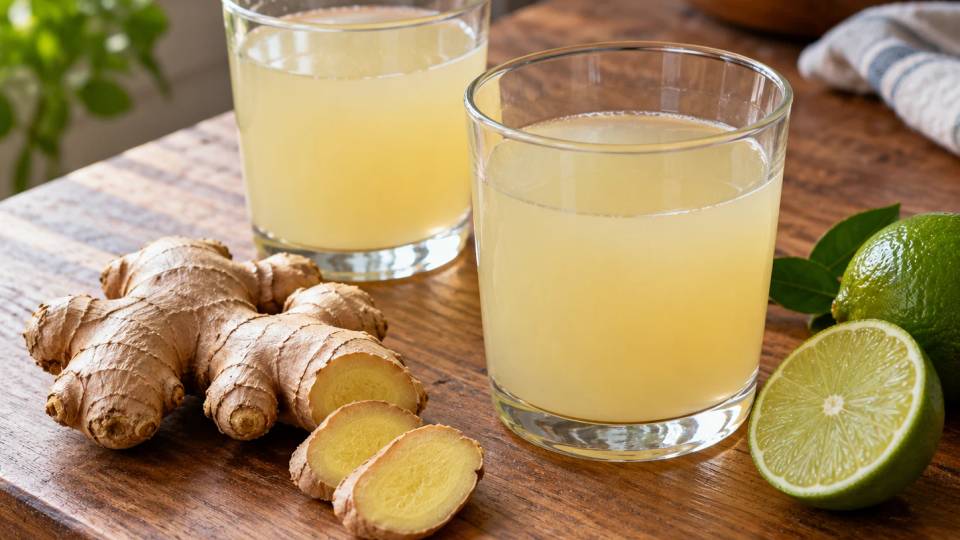
Ingredients
- 80 g prepared fresh ginger, adjusted according to strength
- 1 litre drinking water: 500 ml hot for infusion and 500 ml cold
- 30 ml lime juice, adjusted after chilling
- 20–40 g sugar, optional
Preparation
Wash the ginger, remove damaged parts and scrape or lightly peel as needed. Weigh 80 g prepared ginger. Set out a board, knife or grater and heatproof bowl. Wash the lime and refrigerate the 500 ml dilution water.
Slice ginger thinly or grate coarsely. Consistent cutting makes batches more comparable. Grating creates smaller particles needing finer straining; slices are easier to catch. Avoid a very fine paste if you want a light filtered drink.
Bring 500 ml water to a simmer and remove from the heat. Add ginger, cover and steep ten to fifteen minutes. Taste a little after the first few minutes, cooling the spoonful enough to avoid burns. Stop earlier for particularly strong ginger.
Strain into a clean bowl through a fine sieve. Press moderately without forcing all fibre through; grated ginger may need a second straining. Remove the pieces rather than leaving them in the jug to continue changing the drink’s strength.
Dissolve the first 20 g optional sugar in the still-warm infusion. Mix in the reserved 500 ml cold water. Cool promptly and refrigerate; do not leave a large lukewarm bowl on the counter for hours.
Once cold, add the 30 ml lime juice, stir and taste. Assess ginger heat, acidity and sweetness separately. Excessive ginger heat needs some water rather than much sugar; a flat drink may need a few lime drops. Change one element at a time.
Add further sugar only in small portions, dissolving it in a little drink before returning it. Record the amount and cutting method. These are more useful next time than an unspecified ginger piece, whose size and strength vary greatly.
Cover and keep cold until serving. Stir gently and divide into four modest glasses. Preferably drink that day; refrigerate leftovers promptly and use the next day. Dilute an individual glass separately if someone finds it too strong.
Introduction
This ginger drink is infused and chilled, not pure pressed ginger juice, which would be much stronger. Making an aromatic base before dilution gives control over heat, lime and sweetness. The intended result is slightly cloudy and straw-coloured, without milk or thickener.
Choose firm, sound ginger without soft patches or mould. Thin skin can be lightly scraped; remove damaged or dried areas. The 80 g is prepared weight, not a guarantee of identical strength. For particularly hot ginger, start with less and retain the option of dilution.
Heat helps extract aroma, but prolonged boiling is not automatically better: it can make the drink harsh and reduce water unpredictably. These are household table-drink proportions, not medicinal instructions. Ginger is used as flavour, without immunity, digestive or detox claims that might encourage serving it excessively concentrated.
Cultural context
Ginger appears in many sweet and savoury Malagasy preparations. This is a household drink for the Madagascar collection, not a ritual recipe or a claim of exclusive origin. Tourism accounts place juices within local food culture without supplying one universal dosage. Context source: https://www.ambassade-madagascar.fr/decouvrir/repas-et-boissons/ . The stated infusion and lime distinguish this diluted drink from a very concentrated pure preparation.
Tips
Keep a little unlimed drink aside on the first trial to compare the lime’s effect.
Fine grating increases sediment; a very fibrous drink differs from the filtered texture intended here.
Set the final balance at serving temperature, not while the infusion is scalding.
Old, dried ginger can be fibrous and weakly aromatic. More boiling does not replace sound ingredients.
Offer water and sugar separately for different preferences, keeping the base recipe identifiable and repeatable.
Variations
For a milder next batch, reduce ginger before increasing sugar. A few washed mint leaves can briefly flavour a clearly labelled variant and then be removed. Adding pineapple juice makes another drink requiring new water, lime and sugar balance. A warm version can be diluted and served after filtering, once cool enough to drink safely.
Accompaniments
Offer a small glass with sambos, vegetable fritters or a simple snack. Its heat may contrast with rich food without claiming a digestive benefit. With a highly spiced meal, make it milder and keep water available. A concentrated jug may be offered with water only if clearly identified as requiring dilution.
Nutrition notes
The drink is mainly water, an aromatic ingredient, lime and optional sugar. It replaces neither food nor medical care. Count added sugar as for other sweetened drinks. No numerical nutrition is stated without actual yield and dilution.