Pineapple juice
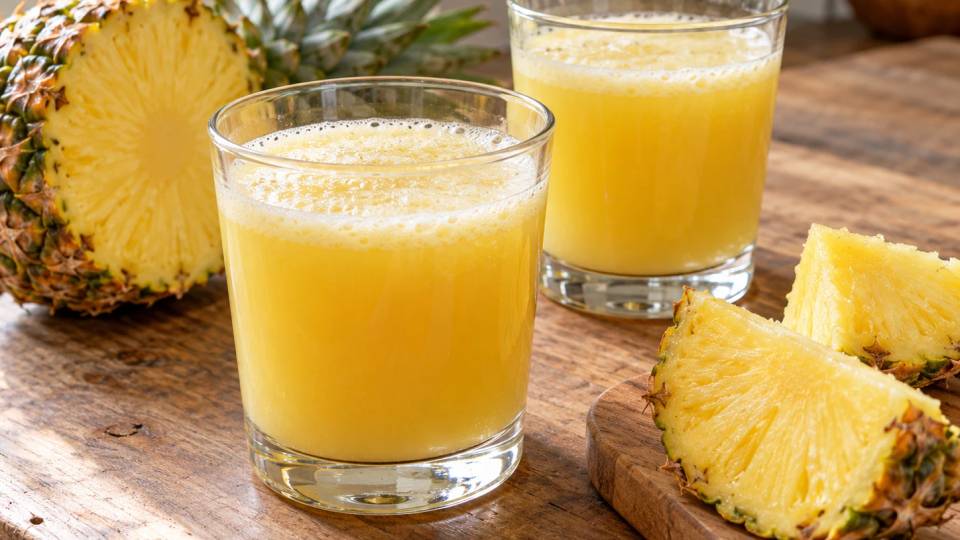
Fresh pineapple blended with cold water, strained to the desired texture, with optional lime.
Ingredients
- 700 g ripe pineapple flesh, skin and eyes removed
- 400 ml cold drinking water, plus 100 ml reserved
- 10–20 ml lime juice, optional according to the fruit’s acidity
- 0–15 g sugar, optional after tasting
Preparation
Wash the outside of the pineapple and place it on a stable board. Prepare a suitable large knife and a waste bowl. Cut off the crown and base to create stable surfaces. Do not peel fruit held unsupported in your hand: its irregular surface encourages sudden slips.
Remove the skin in vertical strips, then cut out remaining eyes. Quarter the fruit. Taste a sound piece to assess sweetness and examine the core. Remove tough, stringy portions without wasting tender flesh unnecessarily.
Weigh 700 g and cut into pieces that can circulate in the blender. Put 200 ml cold water in the jug, add pineapple and close. For a small appliance, work in two batches, dividing fruit and water equally. Overfilling does not improve blending and may cause leaks.
Blend in two or three short bursts. Stop before opening or scraping the sides, and check that large pieces disappear. Pale foam is normal, partly from incorporated air; it is not a reason to add more water without tasting.
Add the remaining 200 ml water and blend briefly. Taste a sample before adding optional lime or sugar. Already tart pineapple may need no lime; very sweet fruit can benefit from a few drops. Make small changes so the balance remains clear.
To remove fibres, put a fine sieve over a jug and pour gradually, stirring with a spoon. Do not force all dry matter through, which defeats straining. For thicker juice, use a coarser sieve or leave the blend unstrained.
Use the reserved water only if the juice is still too dense or intense. Dissolve any needed sugar in a little juice before returning it. Refrigerate for five to ten minutes. Skim some foam if desired, without trying to make the drink completely transparent.
Stir gently and divide between four glasses. Serve immediately or keep the covered jug cold until the meal. Refrigerate leftovers promptly and use no later than the next day. Do not serve juice that smells fermented, shows deterioration or has swollen its container; sugar or another straining cannot correct it.
Introduction
Pineapple makes an aromatic, tart drink that naturally foams in a blender. This recipe keeps fruit central: weighed flesh, controlled water and no sugar before tasting. It does not aim for industrial clarity or artificially strong colour. The juice is slightly cloudy, and its foam settles after a short rest.
Choose fruit that feels heavy for its size, smells pleasantly at the base and has no damp, collapsing areas. Outside colour varies and cannot alone prove ripeness. Fruit cut too early may remain tart even if its skin becomes yellower after purchase. Reject pineapple with a distinctly alcoholic smell or deteriorated flesh; sugar cannot repair it.
The 700 g refers to trimmed flesh. Skin and eyes account for a real loss, so weigh after peeling. The core is not always unusable: include a tender portion if appropriate, but remove a very fibrous core. Judge the actual fruit rather than applying one rule to every pineapple. This is a household fresh-juice method suitable for fruit found in Madagascar’s markets, not a single national formula.
Cultural context
Pineapple appears among Madagascar’s market fruits and fresh drinks. Tourism descriptions place local fruit juices in the food landscape without fixing household proportions. This recipe therefore specifies its own method and texture choices. Context source: https://www.ambassade-madagascar.fr/decouvrir/repas-et-boissons/ . Blender use and optional straining are practical choices. Different dilutions are not counted as separate regional specialities, nor does this claim to reproduce every juice seller’s method.
Tips
Fruit quality matters more than blender power. Fibrous pineapple still needs a sieve.
Thaw plain frozen pineapple in a closed container in the refrigerator and include its released juice when weighing; do not add all the water immediately.
Natural separation usually needs gentle stirring. Prolonged reblending mainly adds foam.
Prepare glasses before taking out the jug so the unused portion can return to the refrigerator quickly.
Keep discarded skin away from clean, prepared flesh, and rinse equipment after handling the fruit’s exterior.
Variations
Try a measured piece of ginger in a clearly labelled variation. For pineapple and mango, weigh both fruits and start with less water because mango thickens the drink. Very sweet pineapple may need neither sugar nor lime. For a sparkling version, replace some water at serving time with sparkling water and stir without shaking a closed container.
Accompaniments
Serve a small glass with savoury fritters, mofo gasy or a simple snack. Its tartness contrasts with coconut dishes but does not replace drinking water. When tasting several drinks, use small glasses to enjoy pineapple without imposing a large sweet portion. Simple presentation also shows the natural colour clearly.
Nutrition notes
Fine straining removes more pulp than blending alone. Fruit and added sugar determine sweetness, which is why tasting first is useful. No medical or digestive benefit is claimed. Numerical nutrition would require the actual yield.