Mangahazo masaka
Tender commercial cassava, already fully processed and cooked, reheated in water and drained: a home adaptation of plain Malagasy cooked cassava.
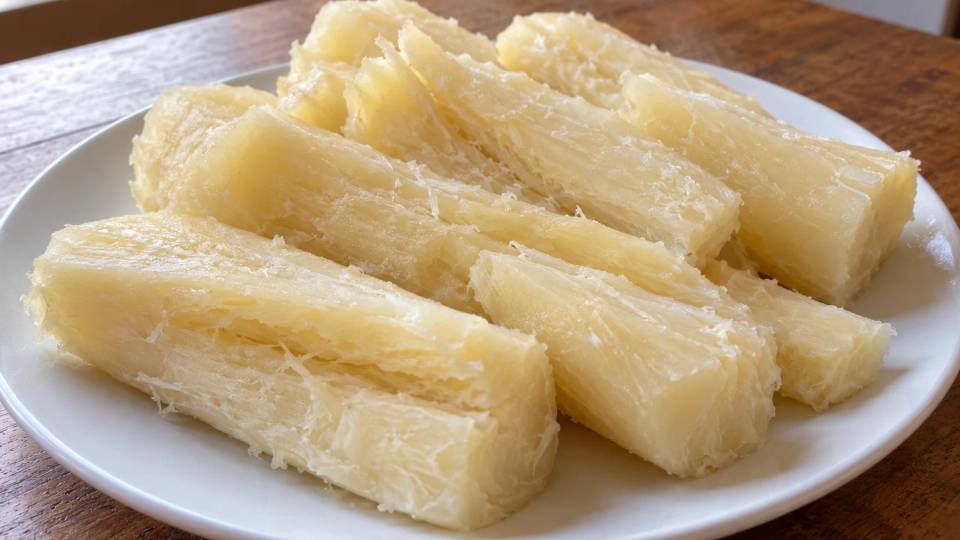
Ingredients
- 1 kg commercial cassava, fully detoxified and cooked, explicitly ready to eat; follow its reheating label
- 3 litres drinking water, or the amount specified for reheating
- 1/2 teaspoon salt, optional
- 1 lime, served separately, optional
Preparation
Choose an intact package explicitly stating fully processed, cooked and ready to eat. Check the date and storage conditions. Merely peeled or frozen cassava may still be raw and is unsuitable for this reheating method. Follow any additional manufacturer preparation in full. Never taste raw or uncertain cassava to identify its variety.
Clean the worktop, knife and board. Open the package shortly before use and inspect the prepared pieces. Discard damaged, swollen, poorly stored or spoiled packages; rinsing cannot rescue them. The ready-to-eat product should have no bark. Remove an accessible remaining central fibre gently without breaking up the tender flesh.
Separate similarly sized pieces. For frozen products, follow the package instructions for reheating from frozen or thawing in the refrigerator; do not thaw all day on the worktop. Prepare a large saucepan, heatproof colander and clean serving dish. The aim is even reheating of cooked flesh, not cooking it until it dissolves.
Bring the three litres of water to the boil, unless the label specifies another volume. Add the pieces carefully, restore gentle bubbling and follow the stated reheating time. Size, quantity and starting temperature change the time required. Keep enough water and headroom to prevent spills. A reheating time is never a detoxification guarantee.
Check the thickest piece: it must be very hot throughout, tender and free of cold spots. A knife checks texture and a probe can help assess reheating. Floury flesh may split and needs gentle handling. If the centre is cold, continue as directed. This culinary check cannot compensate for unidentified or inadequately processed cassava.
Drain fully and discard all the water; do not reuse it as stock or sauce. Let steam escape briefly, then remove any remaining large central fibres. Move the pieces with a wide spoon rather than vigorous stirring. Preserve some whole pieces for serving and add a little salt only if wanted.
Serve promptly on a warm dish. Keep lime and sauces separate so guests can first taste a plain piece. Do not soak the entire dish in acid. If reserving some for another recipe, put it in a clean container and identify it as already cooked.
Divide leftovers into shallow portions and refrigerate within two hours. Use within two days. Reheat once, covered or by steaming, until very hot in the centre; a little water limits drying. Moistening or reheating cannot make improperly stored food safe. Do not keep a dish that has stood for a long time at room temperature.
Introduction
This version starts with commercial cassava explicitly labelled fully processed, cooked and ready to eat. The instructions reheat it; they do not detoxify a raw root. Peeled, sweet or frozen does not automatically mean ready to eat. Ask the manufacturer if the label is unclear and do not substitute bitter or unidentified cassava. Follow all preparation and storage instructions on the package.
The desired result is tender ivory flesh that separates into flakes without sitting in water. Ordinary boiling or frying cannot guarantee safe reduction of cyanogenic compounds in inadequately processed cassava. Keeping the dish plain makes its texture clear before adding sauce, coconut or a fried finish.
Cultural context
Roots and tubers feature among Madagascar’s hanin-kotrana, alongside sweet potatoes, taro and maize. Cassava belongs to many tropical cuisines; no exclusive Malagasy origin is claimed. This plain preparation is distinct from thin chips, chunky fries and coconut recipes.
Sources: https://www.madagascar-destination.mg/culture/gastronomie.html ; https://www.foodstandards.gov.au/consumer/prevention-of-foodborne-illness/cassava
Tips
The quantity is the drained weight of prepared, ready-to-eat cassava. Check the package net drained weight when planning four even portions.
Use a large enough saucepan to keep pieces covered without overflowing.
Handle floury flesh gently rather than turning everything into mash.
Keep sauce separate to control the liquid in each portion.
Variations
Plain cassava needs only the prepared tuber and optional salt. Oil added after reheating is a finishing choice. To mash, remove fibres and add liquid gradually. Coconut requires its own recipe and does not justify retaining cooking water. Bitter cassava must not be substituted for this ready-to-eat product.
Accompaniments
Serve a measured portion with vegetables, tomato sauce or a separate laoka. Cassava already supplies the starch; large extra servings of rice or bread are not automatically necessary. A fresh salad gives contrast. Offer chilli separately and accompany the meal with water.
Nutrition notes
Cassava mainly supplies carbohydrates, not enough protein for a complete meal. Add vegetables and beans, fish, eggs or meat as appropriate. Portion size and sauces affect the meal’s balance. No precise energy figure is asserted without a calculation based on actual yield.