Sakay
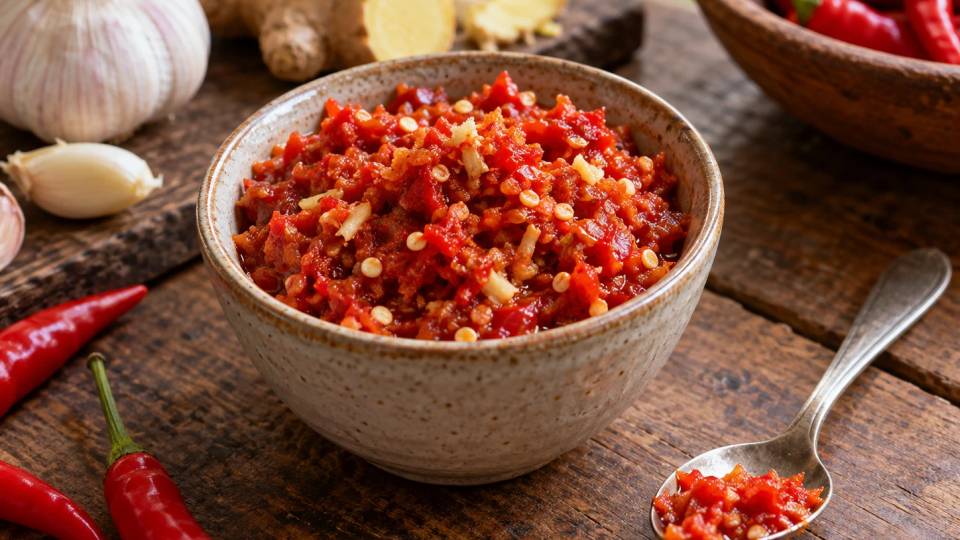
Fresh chilli, garlic and ginger paste, made in a small batch and offered separately.
Ingredients
- 120 g prepared fresh red chillies
- 20 g peeled garlic
- 20 g peeled fresh ginger
- 1 tablespoon oil, 15 ml
- 1 tablespoon lemon juice, 15 ml
- 1/4 teaspoon salt
Preparation
Wash and dry chillies thoroughly. Remove stalks and damaged parts, then chop while protecting your fingers. Membranes or some seeds may be removed for texture, but this does not reliably predict heat. The 120 g refers to prepared chillies.
Peel garlic and ginger, removing dry garlic sections. Slice ginger thinly across its fibres to avoid long strings. Squeeze lemon juice, removing seeds, and measure oil and salt before processing.
Crush or chop garlic, ginger and salt first into fairly even small pieces. Add chillies in two batches using short pulses or a pestle. Bring material down the sides with a clean utensil. Stop the appliance before scraping and never move paste near a blade with fingers.
Add 15 ml oil and 15 ml lemon juice. Mix briefly into a thick, moist, coarse paste, not a smooth emulsion or a pool of oil. If the chopper struggles, stop and redistribute rather than automatically adding lots of water or oil.
Taste a minute amount with a clean utensil; do not return an utensil that has touched the mouth to the bowl. Wait before adding more because heat can build. Adjust salt only if needed. The stated lemon juice is for flavour, not a validated canning acidification procedure.
Immediately transfer to a clean covered small container, date and refrigerate at 4 °C or below. Use within two days; do not store at room temperature. Freeze excess promptly in meal-sized portions rather than keeping a large opened jar for a long time.
Serve only the needed amount using a clean spoon. Keep the rest refrigerated and never return table-exposed paste to the jar. Clearly identify it as very hot and let each person add a tiny amount to rice, laoka or grilled food according to preference and chilli strength.
Introduction
Sakay is a condiment, not a mild sauce to serve by the spoonful. Chilli supplies heat, garlic and ginger add depth, and a little oil brings the paste together. This fresh version is not fermented and must remain chilled. Chilli strength varies greatly between batches; colour, size and seed removal cannot guarantee mildness. Choose firm sound red chillies for the pictured colour. Use a small mortar or chopper, clean equipment and food-safe gloves. Avoid touching eyes and leaning over the bowl. Short pulses keep a coarse texture without heating the mixture.
Cultural context
Sakay is one of the condiments associated with Malagasy meals alongside lasary. Producers and households use different chilli, garlic and ginger proportions. This is a fresh domestic batch, not a pasteurised commercial product or a controlled preserve, so commercial storage labels cannot be copied.
Reference sources : https://saveurs-de-madagascar.fr/blogs/recettes/sauce-pili-pili-maison-sakay ; https://nchfp.uga.edu/how/freeze/vegetable/freezing-garlic-in-oil/
Tips
Make small batches, not a jar for several weeks.
Keep a coarse texture if preferred.
Colour and size do not measure chilli heat.
An oil layer cannot replace refrigeration.
Use a clean utensil for every serving.
Variations
For less heat, start with a milder chilli and a small trial batch. Much tomato or sweet pepper creates a different, wetter sauce requiring a revised storage plan. Dried chillies need rehydration and another method, not equal-weight substitution. Reducing lemon for taste never makes room-temperature storage of garlic-oil paste acceptable.
Accompaniments
Offer small amounts with rice, vegetable or legume laoka, fish or grills. A separate bowl lets each person choose heat without masking the meal. Do not make the entire dish very hot and add this condiment without explaining its strength; the aim is choice, not a test of tolerance.
Nutrition notes
The tiny serving is not a treatment or a major nutrient source; salt and oil remain measured. Fresh garlic mixed with oil needs prompt refrigeration and short storage. Reference guidance limits refrigerated garlic-in-oil storage; this recipe adopts a cautious two-day household limit. Smell, colour or chilli cannot prove a long-kept jar safe.