Fish soup
A clear fish broth with carrot, tomato and leek, with fish pieces added near the end to retain their shape.
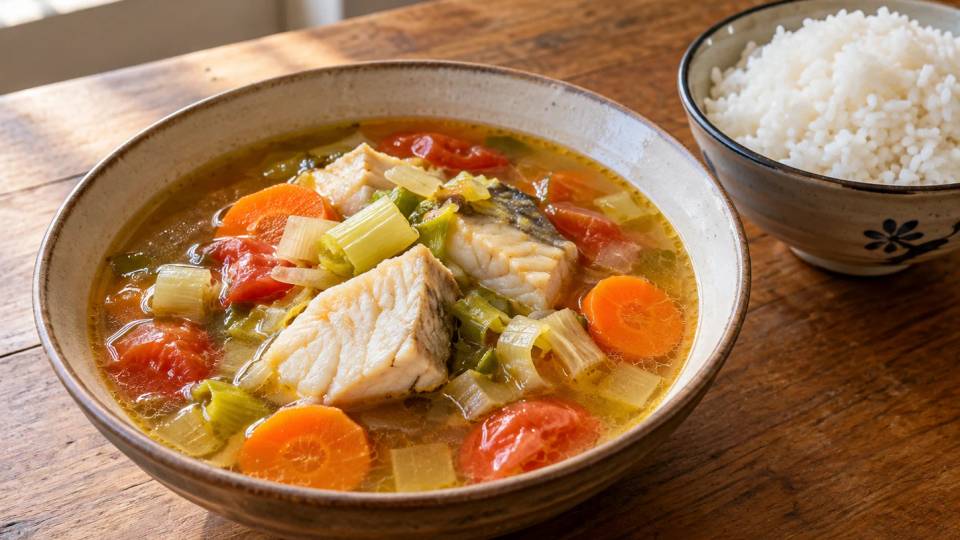
Ingredients
- 600 g firm white fish fillets, skin and large bones removed
- 2 carrots, about 200 g
- 1 leek, 150 g
- 2 tomatoes, about 250 g
- 1 onion, 150 g
- 2 garlic cloves
- 15 g fresh ginger
- 1 tablespoon oil, 15 ml
- 1 litre water or low-salt fish stock
- 1 bay leaf
- 1/2 lime
- 10 g coriander or parsley, optional
- Salt after tasting and black pepper to taste
Preparation
Inspect fillets with your fingers and remove bones with tweezers. Cut eight to twelve similar pieces large enough to lift with a spoon. Pat dry and refrigerate in a clean container. Initial inspection helps, but does not guarantee that no tiny bone remains, especially when serving children.
Peel and thinly slice carrots. Split and wash the leek thoroughly between its leaves, then slice the usable part. Slice onion, chop garlic, grate ginger and cut tomatoes. Similar-sized vegetables prevent one thick carrot piece from delaying the whole soup.
Soften onion and leek in oil over low heat for five to six minutes without browning, keeping the soup’s clear character. Add garlic and ginger for one minute. If vegetables catch, reduce heat and add a spoonful of water; frying darkly is unnecessary.
Add carrots and tomatoes and stir for two minutes. Pour in one litre of water or low-salt stock, add bay and bring to a simmer. Cook gently fifteen to twenty minutes until carrots are nearly tender. Skim if needed without removing much liquid. Do not add fish at this stage.
Taste broth. Dilute an overly concentrated base with hot water; simmer a weak base a little longer before proceeding. Adjust salt lightly according to the stock. There must be enough liquid to surround the fish rather than leave a compact mound protruding from it.
Gently add fish to simmering broth. Cook about six to ten minutes according to thickness without vigorous boiling or hard stirring. The flesh should be opaque and flake easily; a probe can check about 63 °C in a thick piece. Remove thin pieces when ready if sizes differ substantially.
Remove bay and switch off once fish is cooked. Add optional herbs and a few drops of lime, then taste. Offer remaining lime separately. Do not boil away the herbs’ fresh colour. Check carrot tenderness and ensure broth tastes pleasant with or without rice.
Divide fish first between four bowls, then add vegetables and broth. Serve cooked rice separately. Cool leftovers quickly in shallow containers and refrigerate within two hours rather than leaving a closed large pot to cool slowly. Reheat one portion once until thoroughly hot, handling fish gently.
Introduction
This family proposal keeps clear broth and recognisable fish pieces rather than a blended, strained texture. Vegetables make the base first; the fish enters a nearly finished soup. Serve rice separately for diners who want a more substantial meal. Use firm skinless fillets prepared by a fishmonger and low-salt stock, checking seasoning rather than assuming all stocks are equivalent.
Cultural context
Rice and seafood provide context for this family fish soup in the Madagascar collection. No unsupported local name or ceremonial use is invented. Fish and aromatics vary, while the gentle cooking and composed serving method remain explicit. Reference sources: https://www.ambassade-madagascar.fr/decouvrir/repas-et-boissons/ ; https://madagascar-tourisme.com/fr/activities/gastronomie/
Tips
Fish enters ready broth, not cold water with raw vegetables.
Wash leek carefully to keep sand out of the bowl.
Taste stock before salting, especially concentrated products.
Use a ladle for broth and a wide spoon for fragile fish.
Variations
Replace leek with a small courgette added later so it keeps its shape. Add cooked rice to individual bowls for a heartier version, rather than adding raw rice without recalculating liquid. Offer chilli separately. A broth made from heads or bones needs its own preparation and careful straining.
Accompaniments
Separate white rice is the simplest accompaniment. A small tomato salad is optional; the soup already contains vegetables. Leave room in bowls rather than filling to the rim, and provide a spoon plus a small receptacle for any remaining bones.
Nutrition notes
Fish supplies protein and vegetables add variety. Even clear stock may contain substantial salt. Rice quantity changes meal energy. Declare fish and check commercial stock for other allergens. No medicinal property or universal nutrient figures are claimed.