Squid in tomato sauce
Squid rings and tentacles gently simmered in tomato and onion sauce until tender.
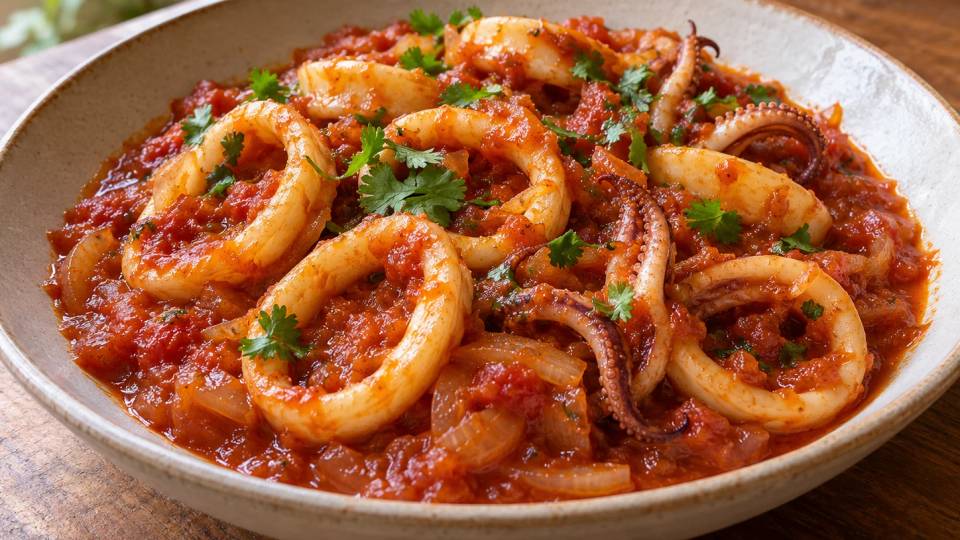
Ingredients
- 800 g cleaned squid rings and tentacles
- 500 g crushed tomatoes
- 2 onions, about 250 g
- 3 garlic cloves
- 15 g fresh ginger
- 2 tablespoons oil, 30 ml
- 150 ml hot water
- 1 bay leaf
- 1/2 teaspoon salt initially
- 1/4 teaspoon black pepper
- 10 g fresh coriander, optional
- 1/2 lime to serve
Preparation
Check that beak, rigid parts and internal residues are removed. Rinse briefly only if needed, then drain without soaking. Cut mantles into rings about two centimetres wide and divide large tentacle clusters. Keep cold while preparing vegetables and reserve clean equipment for cooked food.
Slice onions, chop garlic, grate ginger and prepare tomatoes with their juice. Keep hot water available. Use a suitable covered casserole with room for gentle stirring. A broad pan evaporates faster than a narrow one, so observe the sauce during cooking.
Soften onions in oil over medium heat for eight minutes without dark browning. Add garlic and ginger for one minute. Lower the heat if they catch rather than adding excessive oil to disguise uneven heating.
Add tomatoes, bay, initial salt and pepper. Reduce uncovered for eight to ten minutes, crushing large pieces. Retain some texture and do not reduce too far: the squid still needs a sustained moist cooking stage.
Add squid and 150 ml hot water. Bring to a gentle simmer and partly cover. Squid also releases liquid, so wait before adding more. The sauce should surround the pieces without becoming either a dry sticking base or a large watery broth.
Simmer gently for thirty-five to fifty minutes, longer if necessary. Stir every ten minutes and check the bottom. Add hot water one or two tablespoons at a time only when needed. A ring should yield without marked rubbery resistance; a firm piece needs further gentle cooking, not fierce boiling.
Once tender, uncover briefly if the sauce is watery, otherwise stop reducing. Remove bay, taste before adding salt and add optional coriander off the heat. Serve lime separately to adjust acidity without changing the entire casserole.
Divide rings and tentacles evenly among four bowls with sauce. Serve with ready-cooked rice. Cool unserved portions quickly in shallow containers and refrigerate within two hours. Reheat once until thoroughly hot, loosening with a little water if needed.
Introduction
This recipe deliberately uses long, gentle cooking rather than a rapid sear. Squid may first become firm before softening; species and piece size determine the time, so taste a representative ring rather than turning up the heat. Tomato, onion, garlic and ginger define this version without cream or coconut milk. The weight refers to cleaned squid, not whole animals including waste.
Cultural context
Seafood belongs to Madagascar’s coastal food repertoire. This tomato stew is presented as a household proposal, without an unsupported attribution to a particular town or community. Its sauced long-cooked texture distinguishes it from fried squid. Reference sources: https://www.ambassade-madagascar.fr/decouvrir/repas-et-boissons/ ; https://madagascar-tourisme.com/fr/activities/gastronomie/
Tips
Squid and octopus are not interchangeable in size or timing.
Thaw frozen squid in the refrigerator, then drain before weighing.
Test a typical ring rather than a very thin fragment.
A separately reduced sauce can concentrate flavour without drying the squid.
Variations
Infuse a little optional chilli with the tomatoes or serve it separately. Omit coriander if preferred. Diced pepper can soften with onion but changes sweetness and colour. Already cooked squid does not automatically need this long simmer; verify the product rather than mixing unclear cooking states.
Accompaniments
Plain rice absorbs the sauce and a separate raw salad adds contrast. Distribute tentacles and rings fairly. If packing a meal, cool and refrigerate promptly and maintain cold storage until reheating; a closed lunchbox alone is insufficient.
Nutrition notes
Squid supplies protein; vegetables and oil contribute to the sauce, and rice determines much of the meal’s energy. Squid is a mollusc, an allergen group distinct from crustaceans and fish. No universal nutrient figures are invented from an uncertain cleaning yield.