Sesame squares
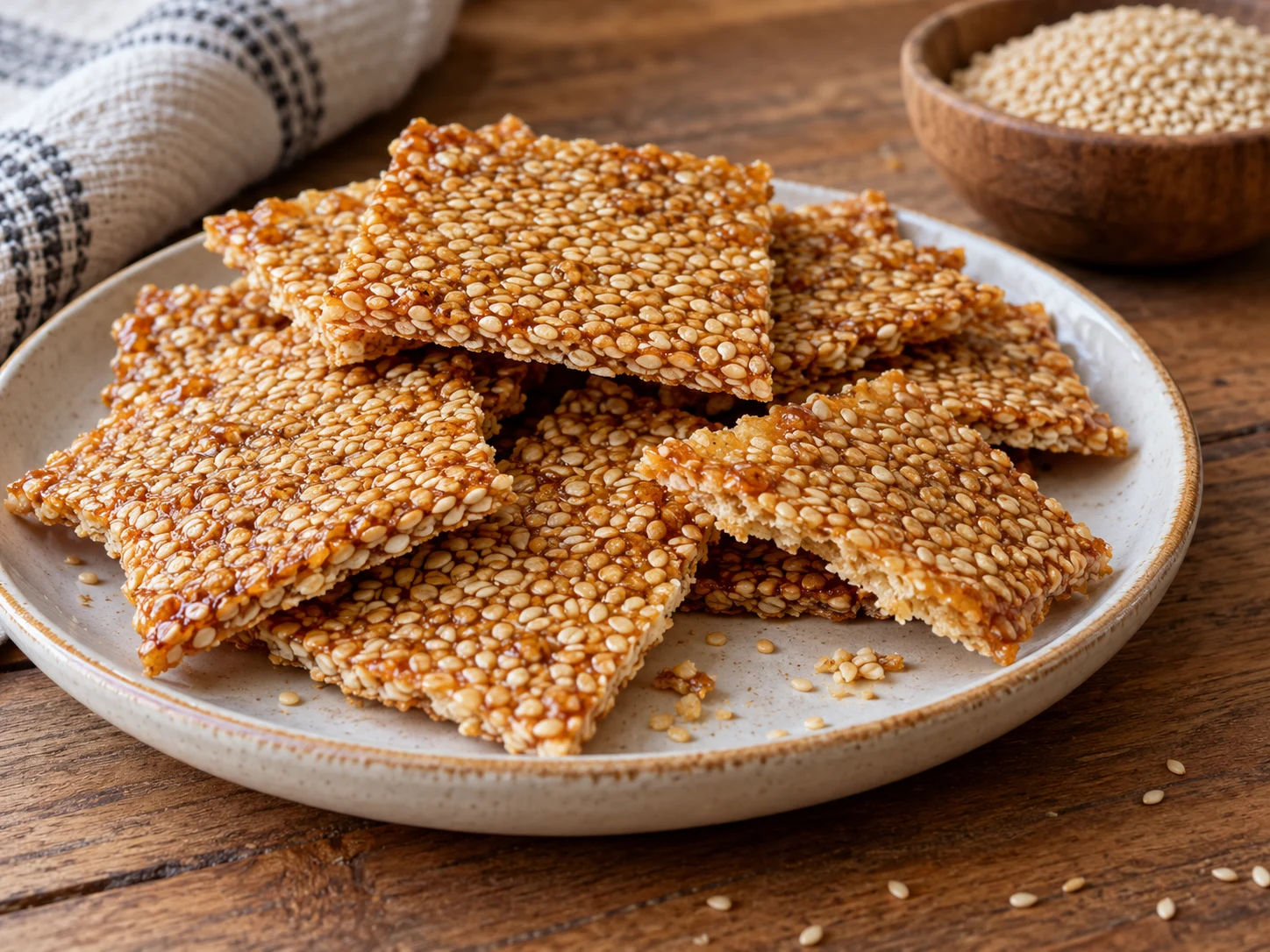
🌾 Thin, crunchy squares of toasted sesame bound with light caramel. A home adaptation of sesame sweets sold in Niger.
Ingredients
- 200 g clean, dry food-grade white sesame seeds
- 150 g white sugar
- 40 ml drinking water
- 5 ml neutral oil for greasing baking paper
Preparation
Prepare a heatproof tray with lightly oiled baking paper. Keep a second sheet and a rolling pin nearby. Weigh everything before heating: the mixture sets quickly once seeds are added.
Toast seeds in a dry pan over medium-low heat for 3–5 minutes, stirring, until lightly coloured and fragrant. Immediately transfer to a dry bowl; do not leave in the hot pan.
Put sugar and 40 ml water in a heavy-based saucepan. Moisten evenly, then heat without stirring with a spoon. Watch the boiling syrup until light amber. Gently swirl the pan if colour is uneven.
Remove from heat as soon as caramel is light amber. Immediately stir in the still-warm sesame with a heatproof spatula, working quickly to coat it. Never touch or taste the hot caramel.
Pour onto the prepared tray, cover with the second sheet and roll to about 4–5 mm thick without touching the mixture. Remove the top sheet when it lifts easily. Keep hands away from hot edges.
While still warm and pliable, score 24 small squares with a lightly oiled knife. Cool completely for about 30 minutes before separating. Divide into 12 servings of two squares; serve only when cold.
Introduction
A sweet built around seeds
These squares combine two main ingredients: sesame and sugar. The seeds contribute toasted flavour and texture, while caramel binds them. The aim is a thin sheet that breaks easily rather than a thick block that is hard to share. Squares are a practical choice for regular small servings. The shape does not identify a speciality exclusive to a Nigerien town, nor does this version claim to reproduce a particular maker’s formula. These quantities are a home adaptation with a stated yield to make preparation easier.
Choosing seeds and equipment
Buy food-grade sesame without a rancid smell or noticeable moisture. Seeds stored for a long time in warmth can lose their pleasant aroma. Check them before starting because caramel cannot hide an unpleasant taste. If washing is necessary, dry them completely before adding to hot sugar. Clean, ready-to-use seeds are easiest here. Baking paper, tray and spatula must withstand heat; decorative paper or an ordinary plastic spoon is unsuitable.
Understanding toasting
Toast lightly. Seeds go quickly from golden to brown and keep heating in a pan removed from the stove. Transfer them to a bowl once the aroma develops. Stir during toasting so the lower seeds do not burn while the upper ones remain pale. Moderate colour lets you distinguish the sesame aroma from the caramel flavour. Blackened seeds produce bitterness; repeating this small step is better than turning the whole batch into burnt-tasting sweets.
Making caramel and working promptly
Water moistens the sugar for more even heating, then evaporates. Do not add water to already hot caramel to slow cooking. Work on an uncluttered surface without children near the pan. Observe colour against the light pan base rather than relying only on timing. When the desired shade appears, remove from heat and add seeds. Residual heat is enough for mixing. If caramel turns very dark brown and smokes, leave it to cool without handling and start again in a clean pan.
Rolling and portioning evenly
Even thickness makes cutting easier and helps squares cool at a similar rate. Roll over the upper paper sheet, never directly over fingers or plastic film. Nudge the edges with a spatula while pliable if desired. Perfect geometry is unnecessary: broken pieces can also be served once cold. Score portions before fully set, then leave undisturbed. Complete cooling prevents distortion and reveals their final crunch.
Cultural context
FOPAT’s 2018 report records these sweets sold in Niger. Quantities are a home adaptation. Source: https://reca-niger.org/IMG/pdf/fopat-rapportphase2-0604vf2.pdf
Tips
Prepare the tray before the caramel; spreading time is short after sesame is added.
Keep seeds dry and slightly warm to aid even mixing.
Use a light pan base to monitor sugar colour.
Do not confuse pleasant toasted flavour with burnt-seed bitterness.
Clearly declare sesame to diners: it is an allergen.
Allow utensils to cool before soaking them for cleaning.
Serving
Make 24 small squares and allow two per serving. Adjust size to the actual sheet.
Storage
Once completely cold, store airtight in a dry place for up to 7 days for good quality. Separate layers with baking paper. Moisture softens caramel; never seal while warm.
Variations
For rustic shards, cool without scoring and break into pieces.
A little spice may be mixed into seeds but changes this plain version.
Do not replace sugar with equal-weight honey without revising cooking; moisture and results differ.
Accompaniments
Water, unsweetened tea or herbal infusion.
A small portion alongside fresh fruit, which is excluded from nutrition estimates.
Nutrition notes
Estimate for two small squares, one of twelve servings: about 149 kcal, based on 200 g sesame, 150 g sugar and up to 5 ml oil. Sesame provides fat, some protein and fibre. This remains a sugary confection for small servings. Mineral content depends on seeds and whether they are hulled.