Pondu ya madesu
🥬 Pondu ya madesu combines cassava leaves and beans in a vegetable-thickened sauce with a measured amount of red palm oil. This plant-based version uses commercially prepared cassava leaves that are already fully cooked and ready to eat, together with cooked white beans. It makes four servings of stew. Prepare rice, fufu or chikwangue separately.
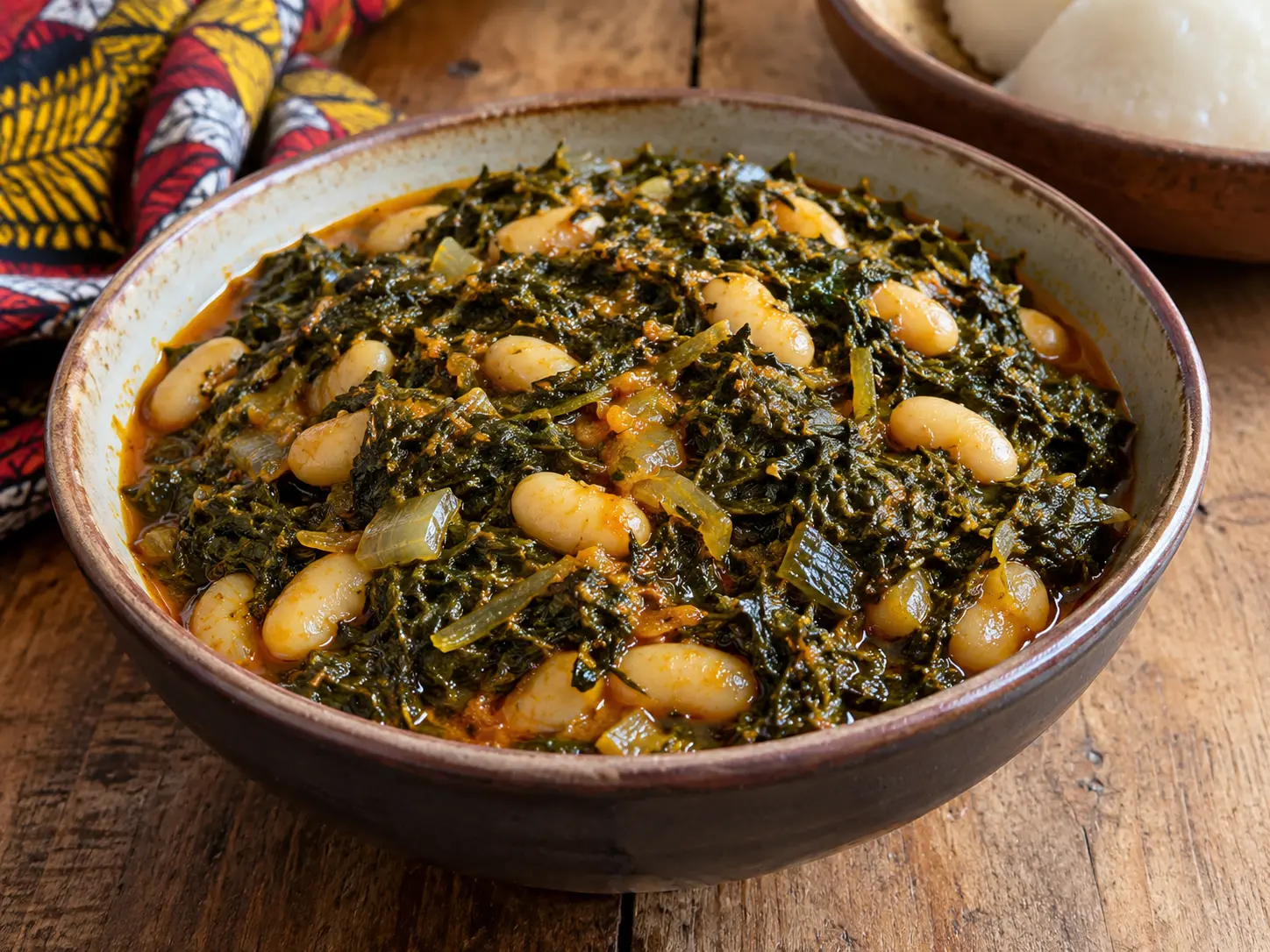
Ingredients
- 800 g plain commercially prepared cassava leaves, fully cooked and ready to eat, drained weight
- 500 g canned cooked white beans, rinsed and drained
- 150 g sliced onion
- 100 g cleaned, sliced white part of leek
- 200 g washed aubergine, finely diced
- 8 g chopped garlic
- 30 ml food-grade red palm oil
- 200 ml drinking water, plus up to 150 ml hot water as needed
- Up to 2 g added salt, reduced according to the canned ingredients
- 1/4 teaspoon black pepper
- Optional fresh chilli, served separately
Preparation
Prepare the ingredients. Confirm that the pondu is fully cooked and ready to eat. Weigh 800 g drained leaves and 500 g rinsed, drained beans. Prepare onion, leek, aubergine and garlic separately. Measure 200 ml water and keep a little hot water available.
Soften the aromatics for 8 minutes. Warm 30 ml red palm oil over moderate heat. Add onion and leek and stir regularly until soft. They may turn lightly golden but should not brown. Add garlic during the final minute so that it does not burn.
Cook the aubergine for 12 minutes. Add the dice and 200 ml water, stir, cover and simmer gently. Stir once or twice. A piece should squash easily under the spoon; if still firm, cook a little longer with extra water. Tenderness matters more than the exact minute.
Add the cooked leaves and simmer for 15 minutes. Break up clumps with the spoon before mixing into the vegetables. Maintain a gentle simmer, partly covered. Gently scrape the base regularly to prevent sticking. If the mixture becomes compact, add hot water in 30–50 ml portions.
Add the beans and cook for another 8 minutes. Fold them in gently rather than beating the mixture. Heat until the whole pot is thoroughly hot. If the sauce remains thin, crush only one or two spoonfuls of beans against the pot, leaving most beans whole.
Finish for about 2 minutes. Add pepper and taste before salting: canned leaves and beans may already contain salt, so the stated 2 g is a starting limit rather than a required addition. Loosen with hot water or briefly simmer uncovered to thicken. Serve hot with chilli separately.
Introduction
The aim is a stew that is both soft and substantial. Chopped leaves form its base, while most of the beans should remain recognisable. A few crushed beans help thicken the sauce. Leek, onion and a small aubergine add softness without flour or cream. The measured red palm oil flavours the pot rather than leaving a greasy layer on top.
This recipe deliberately uses ingredients whose initial cooking is complete. Buy plain canned or packaged pondu explicitly labelled fully cooked and ready to eat. Choose a product without fish or peanuts to keep this version plant-based. Raw chopped leaves and leaves that have merely been blanched are not equivalent. The times below apply only to simmering an already cooked food; they are not instructions for processing raw cassava leaves.
Use a three- to four-litre heavy pot, a wooden spoon and a small reserve of hot water. Weigh both leaves and beans after draining: the total weight of a can often includes a variable amount of liquid. Read the pondu ingredient list to check for oil and salt already added.
Cultural context
🇨🇩 Cassava leaves cooked with beans are documented in the Democratic Republic of the Congo as pondu madesu or pondu ya madesu. Families vary their beans, seasonings and amount of oil. The dish is more than pondu with a spoonful of beans served alongside: the ingredients finish cooking together and share the sauce.
This measured home version uses fully cooked canned ingredients for reproducibility. It does not represent every provincial practice or replace the knowledge needed for traditional cassava processing. Onion, leek and garlic remain restrained so that leaves and beans dominate.
📚 Cultural reference: Agriboost, 26 January 2026. The quantities and detailed method are an editorial proposal by RecettesAfricaines.com.
Tips
Dice the aubergine finely and allow it to become tender before adding the leaves. Heating the pondu will not automatically soften firm aubergine. Avoid increasing the heat sharply to compensate, as the aromatics may stick.
The stew should hold on a spoon while remaining soft. A dry mass needs more water; a watery puddle around the food calls for brief reduction. Adjust gradually because canned products contain different amounts of moisture.
If the base starts sticking, lower the heat and add a little water around the edge. If a layer has burnt, transfer the food above it to another pot without scraping up the burnt layer. More oil will not remove the bitter taste.
White beans suit this version because of their tender flesh. Fully cooked red beans can replace them at the same drained weight, with a different colour and flavour. Never add dry beans directly to this 45-minute stew.
To double the recipe, use a wider pot and stir gently. Double the main ingredients but still add extra water gradually. A larger volume heats more slowly: check that the centre is thoroughly hot before serving.
Planning
Open cans with clean equipment. Reject swollen or damaged containers and any contents that appear abnormal. Drain the pondu as directed on its packaging; never assume that a frozen product is already fully cooked. Rinse the beans under running drinking water and drain them to control the amount of liquid in the pot.
Split the leek lengthways, separate the layers slightly and carefully remove all soil before slicing. Cut the aubergine into approximately one-centimetre dice so that it softens within the cooking time. Set the beans aside until needed: adding them while the vegetables are still firm would crush them through repeated stirring.
Serving
Share the leaves and beans evenly between four deep plates. Stir gently before serving, as liquid may settle at the bottom. The stew thickens slightly while standing; a spoonful of hot water is often enough to loosen it without repeating the cooking process.
Storage
Divide leftovers into shallow small containers and refrigerate promptly, within two hours of preparation. Keep at 4 °C or below and eat within 48 hours. Reheat only the portion needed until thoroughly hot throughout, stirring and adding a little water if needed. Freeze in closed, dated portions and thaw in the refrigerator. Do not leave a whole pot at room temperature until the next meal.
Variations
For a smoked-fish variation, add 100–150 g carefully deboned food-grade smoked fish flesh, ready to cook, with the leaves. Follow the supplier’s instructions for any preliminary preparation. This version contains fish and is no longer plant-based; it often needs less salt.
For a version without palm oil, use 20–30 ml neutral oil. The colour and flavour will change; there is no need to add colouring to imitate the red shade. Peanuts are not included in the base recipe: adding them changes the texture and introduces another allergen. Clearly explain adaptations to the people eating the dish.
Accompaniments
Serve with separately prepared white rice, fufu or chikwangue. Choose one accompaniment to make portions easy to manage. Fresh tomato or washed raw vegetables can add contrast but are not required. Offer water and let each person add chilli to their own plate.
Nutrition notes
Beans provide plant protein and fibre; the leaves and other vegetables add variety. The oil supplies most added fat. The figures below are estimates per serving without an accompaniment and vary substantially with the purchased pondu. They are neither a laboratory analysis nor dietary instructions. Check labels when controlling salt intake or managing an allergy.