Coconut rice pudding
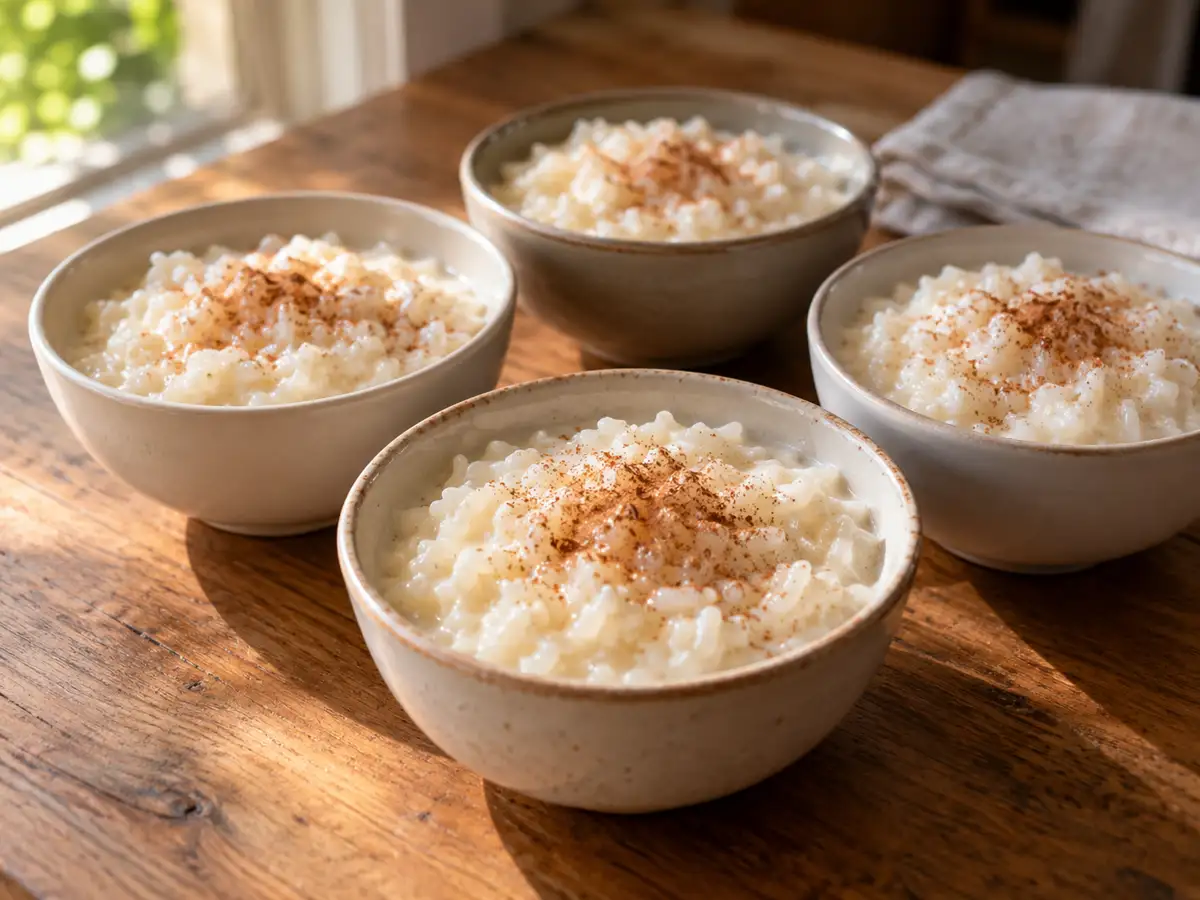
Coconut rice pudding, a detailed recipe for 6 servings with dry short-grain rice, unsweetened coconut milk, pasteurised milk.
Ingredients
- 150 g dry short-grain rice
- 300 ml unsweetened coconut milk
- 400 ml pasteurised milk
- 300 ml drinking water
- 60 g sugar
- 1 g ground cinnamon
Preparation
Rinse rice briefly. Cook gently in a heavy pan with 300 ml water for 8–10 minutes until partly absorbed.
Add warm milk and coconut milk. Simmer very gently 25–35 minutes, stirring to the base often, until rice is tender in a still-fluid cream.
Add sugar and cinnamon for the final 5 minutes. Divide into six bowls. Serve warm or cool promptly and refrigerate; it thickens as it cools. Never leave a large pan cooling slowly overnight.
Introduction
Round rice first cooks in water, then in both milks. Add sugar and cinnamon in the final five minutes. Keep the hot cream fluid because rice thickens on cooling; a firm mass in the pan would give a denser dessert.
Control heat in creamy preparations. A heavy base spreads heat but still needs stirring into corners. Add powders or maize meal gradually or loosen first in cold liquid to avoid lumps. Eggs may coagulate too early in a scorching liquid; follow the stated temperatures and water bath rather than a hard boil.
Hot and cold consistencies differ: rice or pudding keeps absorbing liquid as it rests. Stop while still supple instead of seeking a compact mass. Divide into shallow containers for quick cooling. Milk, egg or cooked-rice desserts need refrigeration even with sugar. Lemon juice or caramel does not make them shelf-stable. For unmoulding, allow full setting time and loosen edges gently with a clean utensil.
Cultural context
This recipe belongs to the Mozambique culinary collection. This version is presented as a defined family preparation with its ingredient choices stated, without claiming exclusive origin. Proportions and procedure are an editorial proposal by RecettesAfricaines.com. Substitutions and adaptations for domestic equipment are explicitly stated. This is neither an official formula nor a description of every family practice in the country. References provide context; they do not certify each quantity or variation. Context reference: https://www.visitmozambique.gov.mz/o-que-fazer/gastronomia/
Tips
Serving — Serve an amount suited to appetite and the role of this preparation in the meal. The 6 servings are a calculation reference, not an instruction to consume everything. Count extra sauce, bread, garnish or sugar separately. Offer optional additions on the side so everyone can adjust their plate or glass. Serving temperature should preserve the intended texture. Set the table before the method ends to avoid unnecessary waiting.
Storage — Do not leave perishable food waiting on the table. Cool leftovers rapidly in clean shallow containers, cover, and refrigerate at 4 °C or below within two hours. Label the date and preferably use within 24–48 hours, taking the most perishable ingredient into account. A normal smell does not establish that poorly stored food is safe. Foods intended to be eaten cold stay cold; dishes served hot should be reheated completely once, until steaming throughout. Never return portions already served to the container kept for later.
Accompaniments
Water; choose accompaniments according to the role of the dish or dessert in the meal.
Nutrition notes
Values are estimates per serving, calculated from listed quantities and average food compositions. They are not laboratory measurements and vary with brands, preparation losses and final yield. Cooking that concentrates a food changes its weight, not simply the total energy provided by ingredients. Frying oil absorption is approximate; the entire oil bath is not consumed. Vitamins and minerals are qualitative guidance without daily-intake percentages or therapeutic claims. Count extra accompaniments separately.