Cassava cake
Cassava cake, a detailed recipe for 8 servings with sweet cassava already boiled and drained, unsweetened desiccated coconut, eggs without shells.
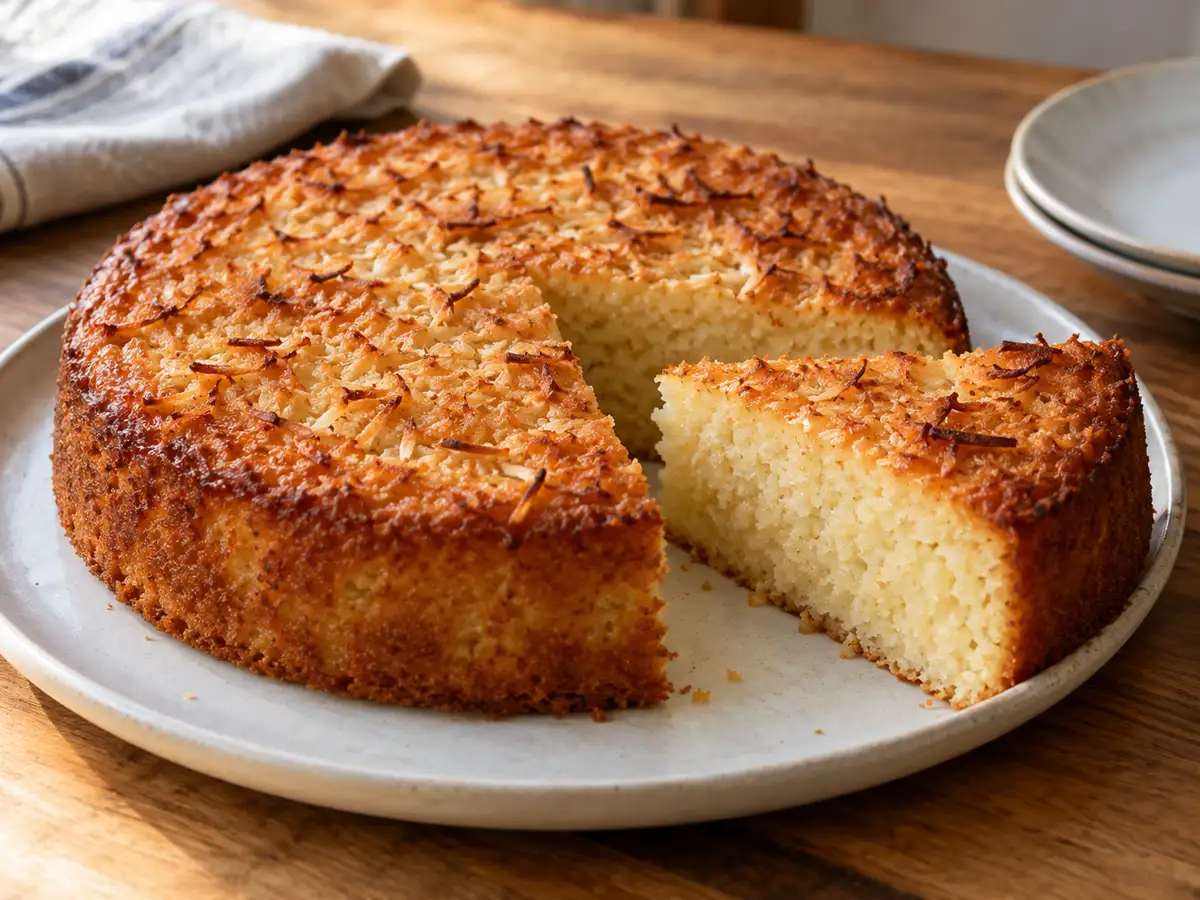
Ingredients
- 500 g sweet cassava already boiled and drained
- 80 g unsweetened desiccated coconut
- 150 g eggs without shells
- 60 g unsalted butter
- 100 g sugar
- 200 ml unsweetened coconut milk
- 5 g baking powder
Preparation
Use sweet cassava already boiled uncovered until tender, with all water discarded and central fibres removed. Weigh 500 g after draining and mash. This version does not use raw grated cassava.
Preheat oven to 170 °C and line a 20 cm tin. Beat eggs and sugar; add cooled melted butter and coconut milk, then mashed cassava, desiccated coconut and baking powder.
Spread in tin and bake 45–55 minutes until the centre sets and top turns golden. Rest 15 minutes, unmould, cool and cut eight slices with a clean knife.
Introduction
This bolo uses 500 g cassava already boiled, drained and mashed before mixing with eggs and coconut. It does not start with raw grated root. A twenty-centimetre tin sets reference thickness; check the centre is set before resting and cutting eight slices.
Even baking starts with the right tin and a fully preheated oven. A wider tin makes a flatter cake that cooks faster; a narrow deep tin needs longer. Use the specified size for the first attempt. Place centrally and avoid opening the oven early. Colour alone does not prove the centre is cooked: check with a skewer and observe the crumb. Cooked-cassava cake remains denser than flour cake; do not expect the same lightness.
Fold dry ingredients briefly to avoid making wheat batter elastic. Weigh eggs without shells; melted butter should be lukewarm, not scorching. Nut meals absorb differently with grind size. Let cake settle before unmoulding and cool before slicing; a clean blade protects the crumb. Do not seal a warm cake, as condensation wets its surface.
Cultural context
This recipe belongs to the Mozambique culinary collection. This version is presented as a defined family preparation with its ingredient choices stated, without claiming exclusive origin. Proportions and procedure are an editorial proposal by RecettesAfricaines.com. Substitutions and adaptations for domestic equipment are explicitly stated. This is neither an official formula nor a description of every family practice in the country. References provide context; they do not certify each quantity or variation. Context reference: https://www.visitmozambique.gov.mz/o-que-fazer/gastronomia/
Tips
Serving — Serve an amount suited to appetite and the role of this preparation in the meal. The 8 servings are a calculation reference, not an instruction to consume everything. Count extra sauce, bread, garnish or sugar separately. Offer optional additions on the side so everyone can adjust their plate or glass. Serving temperature should preserve the intended texture. Set the table before the method ends to avoid unnecessary waiting.
Storage — Do not leave perishable food waiting on the table. Cool leftovers rapidly in clean shallow containers, cover, and refrigerate at 4 °C or below within two hours. Label the date and preferably use within 24–48 hours, taking the most perishable ingredient into account. A normal smell does not establish that poorly stored food is safe. Foods intended to be eaten cold stay cold; dishes served hot should be reheated completely once, until steaming throughout. Never return portions already served to the container kept for later.
Accompaniments
Water; choose accompaniments according to the role of the dish or dessert in the meal.
Nutrition notes
Values are estimates per serving, calculated from listed quantities and average food compositions. They are not laboratory measurements and vary with brands, preparation losses and final yield. Cooking that concentrates a food changes its weight, not simply the total energy provided by ingredients. Frying oil absorption is approximate; the entire oil bath is not consumed. Vitamins and minerals are qualitative guidance without daily-intake percentages or therapeutic claims. Count extra accompaniments separately.