Cassava chips
Cassava chips, a detailed recipe for 6 servings with peeled food-grade sweet cassava, drinking water, sunflower oil.
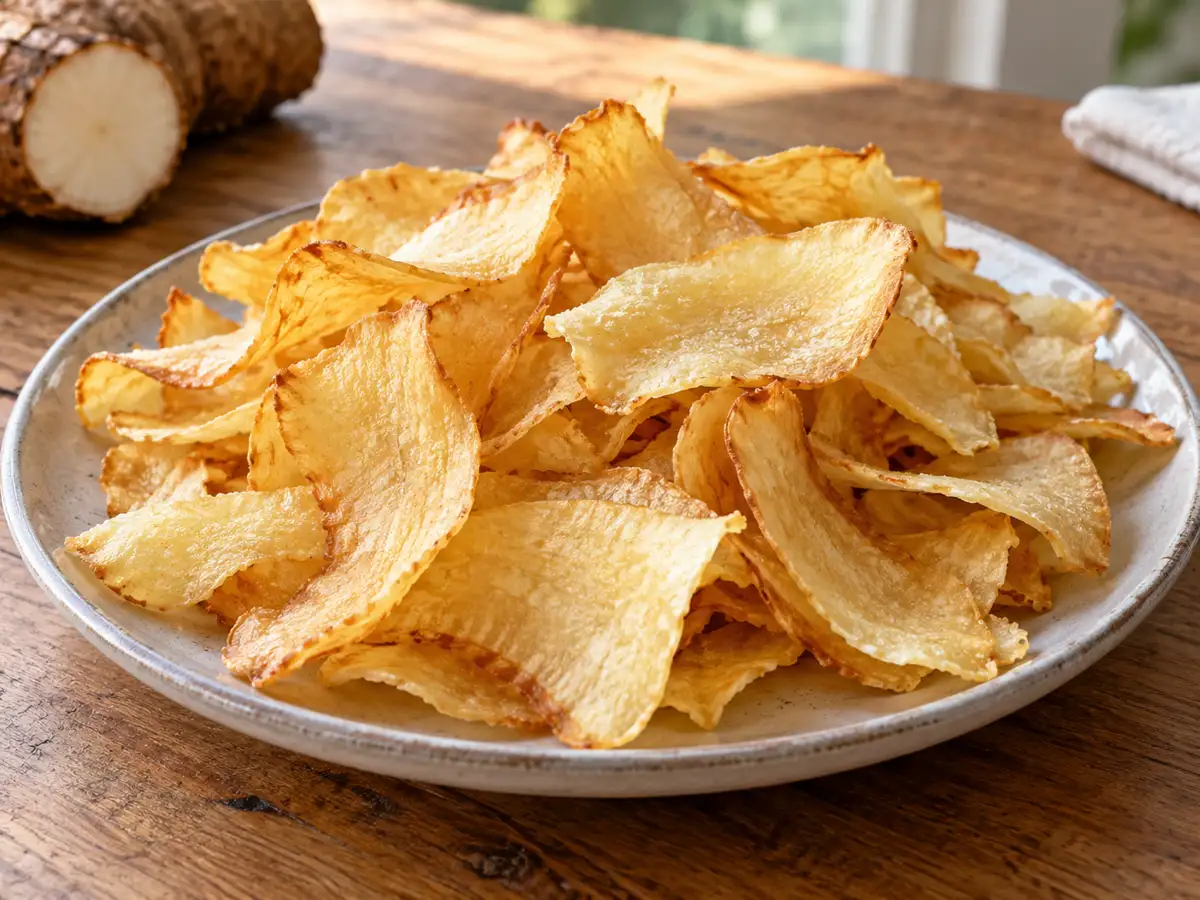
Ingredients
- 600 g peeled food-grade sweet cassava
- 1500 ml drinking water
- About 700 ml frying oil, of which 40 g estimated absorbed
- 2 g fine salt
Preparation
Use identified food-grade sweet cassava. Peel completely, wash and cut thin even slices with a guarded mandoline.
Boil slices uncovered in plenty of water for 15–20 minutes until cooked. Drain and discard water. Spread and dry thoroughly without leaving for long at room temperature.
Use a 700 ml oil bath at 170 °C; the listed 40 g is estimated absorption. Fry small batches for 2–4 minutes until lightly golden and crisp. Drain on a rack, salt and serve. Never fry wet slices.
Introduction
These chips use thin cassava slices cooked in water before frying. Drying between stages is distinct from draining. Do not confuse the roughly 700 ml frying bath with the 40 g estimated absorbed oil.
Piece size matters: small even fritters cook through more readily than large balls that darken outside. Start with a test piece and open it. If the crust is dark but the centre doughy, reduce size and correct temperature rather than over-browning everything. Cool filling before enclosing pastry to limit steam tearing the edges. Seal turnovers without large air pockets and remove loose flour.
Use a stable deep pan less than half full of oil or a suitable fryer. Add thoroughly drained food in small batches using dry utensils. Oil must not smoke. Never add water to hot oil or carry the pan during cooking. Drain on a rack without stacking; trapped steam softens crusts. Oil absorption estimates vary and do not describe the exact amount retained by each piece.
Cultural context
This recipe belongs to the Mozambique culinary collection. This version is presented as a defined family preparation with its ingredient choices stated, without claiming exclusive origin. Proportions and procedure are an editorial proposal by RecettesAfricaines.com. Substitutions and adaptations for domestic equipment are explicitly stated. This is neither an official formula nor a description of every family practice in the country. References provide context; they do not certify each quantity or variation. Context reference: https://www.visitmozambique.gov.mz/o-que-fazer/gastronomia/
Tips
Serving — Serve an amount suited to appetite and the role of this preparation in the meal. The 6 servings are a calculation reference, not an instruction to consume everything. Count extra sauce, bread, garnish or sugar separately. Offer optional additions on the side so everyone can adjust their plate or glass. Serving temperature should preserve the intended texture. Set the table before the method ends to avoid unnecessary waiting.
Storage — Do not leave perishable food waiting on the table. Cool leftovers rapidly in clean shallow containers, cover, and refrigerate at 4 °C or below within two hours. Label the date and preferably use within 24–48 hours, taking the most perishable ingredient into account. A normal smell does not establish that poorly stored food is safe. Foods intended to be eaten cold stay cold; dishes served hot should be reheated completely once, until steaming throughout. Never return portions already served to the container kept for later.
Accompaniments
Water; choose accompaniments according to the role of the dish or dessert in the meal.
Nutrition notes
Values are estimates per serving, calculated from listed quantities and average food compositions. They are not laboratory measurements and vary with brands, preparation losses and final yield. Cooking that concentrates a food changes its weight, not simply the total energy provided by ingredients. Frying oil absorption is approximate; the entire oil bath is not consumed. Vitamins and minerals are qualitative guidance without daily-intake percentages or therapeutic claims. Count extra accompaniments separately.