Boiled cassava
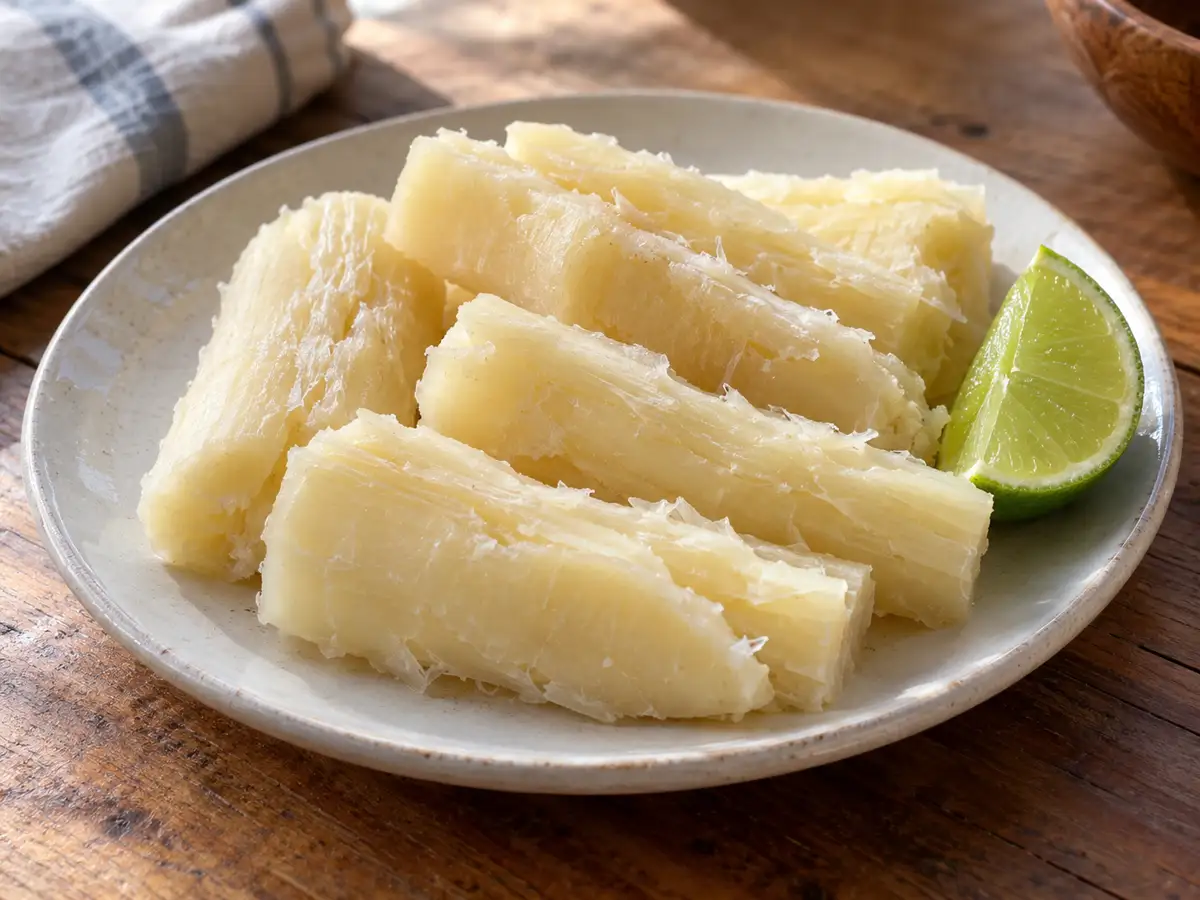
Boiled cassava, a detailed recipe for 4 servings with peeled food-grade sweet cassava, drinking water, sunflower oil.
Ingredients
- 900 g peeled food-grade sweet cassava
- 2000 ml drinking water
- 15 g sunflower oil
- 30 ml lime juice
- 2 g fine salt
Preparation
Use only identified food-grade sweet cassava, never bitter or unknown varieties. Remove both layers of peel completely, wash, cut into lengths and split.
Boil uncovered in 2 litres water for 25–40 minutes until fully tender. Never taste raw. Drain and discard all cooking water; remove central fibres.
Return to the empty pan over low heat for 1 minute to dry lightly. Add oil, salt and lime juice, fold gently and serve hot.
Introduction
Mandioca cozida serves tender cassava pieces dressed after draining with oil and lime. This is neither a dough nor a cake. Remove central fibres before serving; a minute in the empty pan releases surface moisture rather than frying the cassava.
Choose similar-sized pieces so some do not fall apart while others stay firm. Test tenderness at the centre of several pieces, not just the top one. For steaming, keep water below the basket without food sitting in it. For boiling, maintain enough liquid throughout and drain carefully.
Cassava needs particular care: use an identified food-grade sweet variety and prepare completely, never tasting raw. Cooking does not make bitter or unknown roots suitable for this recipe. Remove peel and fibres as directed and discard cooking water. Do not confuse raw peeled weight with cooked weight used in baking. Season gently when serving; the root should remain recognisable even if partly mashed on purpose.
Cultural context
This recipe belongs to the Mozambique culinary collection. This version is presented as a defined family preparation with its ingredient choices stated, without claiming exclusive origin. Proportions and procedure are an editorial proposal by RecettesAfricaines.com. Substitutions and adaptations for domestic equipment are explicitly stated. This is neither an official formula nor a description of every family practice in the country. References provide context; they do not certify each quantity or variation. Context reference: https://www.visitmozambique.gov.mz/o-que-fazer/gastronomia/
Tips
Storage — Do not leave perishable food waiting on the table. Cool leftovers rapidly in clean shallow containers, cover, and refrigerate at 4 °C or below within two hours. Label the date and preferably use within 24–48 hours, taking the most perishable ingredient into account. A normal smell does not establish that poorly stored food is safe. Foods intended to be eaten cold stay cold; dishes served hot should be reheated completely once, until steaming throughout. Never return portions already served to the container kept for later.
Accompaniments
Water; choose accompaniments according to the role of the dish or dessert in the meal.
Nutrition notes
Values are estimates per serving, calculated from listed quantities and average food compositions. They are not laboratory measurements and vary with brands, preparation losses and final yield. Cooking that concentrates a food changes its weight, not simply the total energy provided by ingredients. Frying oil absorption is approximate; the entire oil bath is not consumed. Vitamins and minerals are qualitative guidance without daily-intake percentages or therapeutic claims. Count extra accompaniments separately.