Khichri
A soft one-pot mixture of rice and split red lentils, seasoned with turmeric, cumin, ginger and curry leaves.
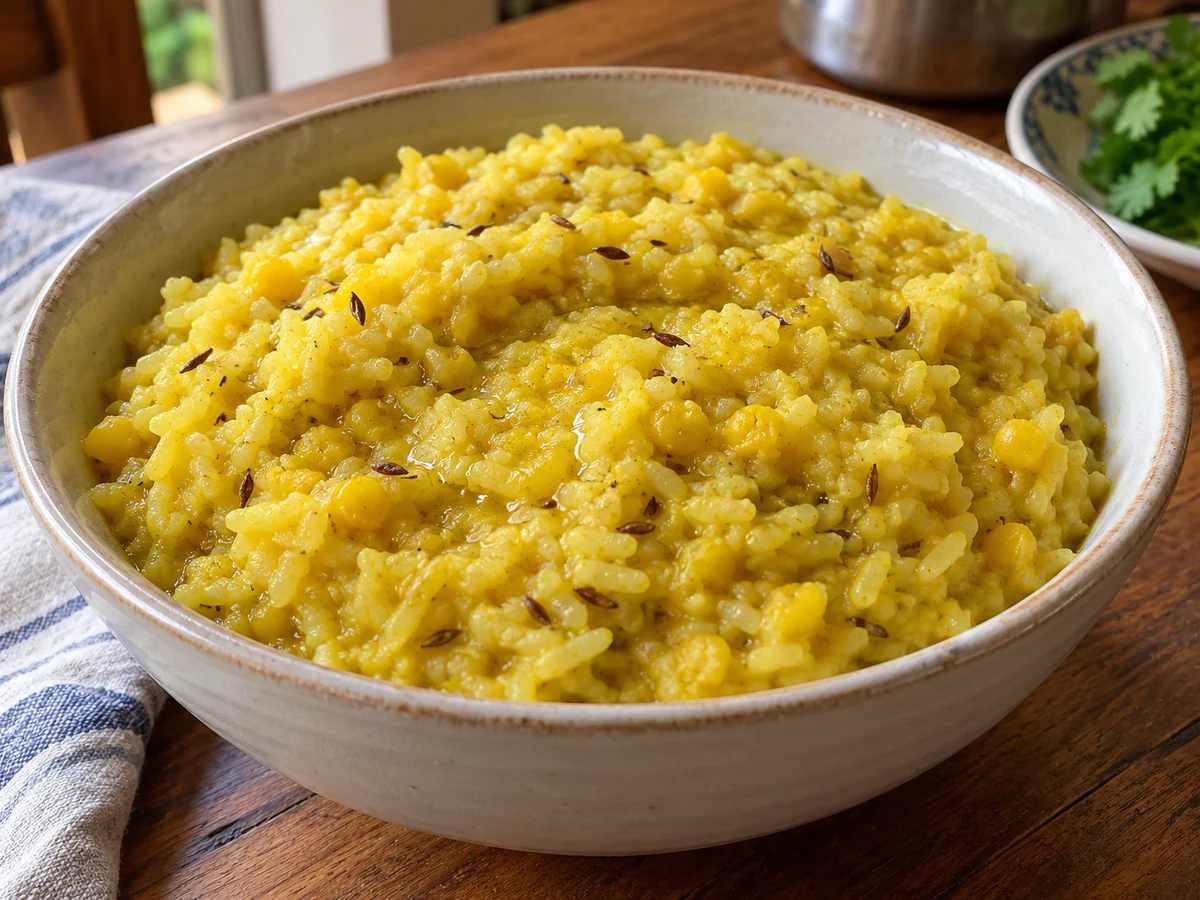
Ingredients
- 200 g uncooked long-grain rice
- 120 g dry peeled split red lentils
- 150 g peeled carrot in small cubes
- 100 g finely sliced onion
- 2 chopped garlic cloves and 10 g grated fresh ginger
- 20 ml neutral oil
- 1/4 tsp mustard seeds
- 4 curry leaves and 1 small thyme sprig
- 1/2 tsp turmeric and 1/2 tsp ground cumin
- 1.1 litres drinking water initially, plus a little hot water if needed
- 3 g salt initially, adjusted after cooking
- 10 g optional fresh coriander; optional chilli served separately
Preparation
Sort and rinse red lentils in a fine sieve. Rinse rice separately until less cloudy, then drain. Do not replace with split peas or brown lentils without changing the method.
Cut peeled carrot into 5–8 mm cubes. Prepare onion, garlic, ginger, spices, curry leaves and thyme. Measure 1.1 litres water and keep a small extra supply of hot water ready.
Heat 20 ml oil in a heavy saucepan. Add mustard seeds; when they begin to crackle, lower the heat slightly and add onion. Cook 5–7 minutes, stirring without blackening it.
Add garlic, ginger, curry leaves and thyme for 30 seconds, then turmeric and cumin for about 20 seconds. Add a splash of the measured water if the spices threaten to catch.
Add carrot, drained rice and lentils. Stir gently to coat, then add the remaining measured water and 3 g salt. Bring to a simmer, scraping the base with a wooden spoon.
Partly cover and simmer gently for 25–35 minutes. Stir carefully every 5–7 minutes, reaching the base as lentils thicken. If drying before the rice is tender, add hot water in 50 ml portions.
Taste rice and a carrot cube. Rice must have no hard centre, lentils should be soft and carrot tender. Continue a little longer if necessary rather than relying only on elapsed time.
Adjust consistency: uncover briefly if too liquid, or add hot water if too thick. Stir without beating until the mixture is cohesive and slowly drops from the spoon.
Remove thyme, taste before adding more salt and switch off. Rest covered for 5 minutes, then mix gently. Add optional coriander at serving and keep chilli separate.
Serve hot in four bowls or deep plates. Divide leftovers promptly into shallow containers, cool quickly and refrigerate. Eat within 24 hours and reheat thoroughly once only, adding a little water.
Introduction
Khichri cooks rice and pulses together into a soft, spoonable dish. Here split red lentils partly break down and coat the rice, while carrot remains in tender little pieces. This is different from rice accompanied by a separate bowl of lima beans. The result should be moist and cohesive, neither a clear soup nor a dry block. Use peeled split red lentils deliberately: yellow split peas and brown lentils have different cooking times and cannot simply be substituted. They would need a revised method or separate precooking. Ordinary long-grain rice works well; basmati is optional, and perfectly separated pilaf grains are not the aim. Rinse rice and lentils separately after weighing and inspect for debris. The starting 1.1 litres of water suits this home formulation, but pot width, lid and heat alter evaporation. Keep some hot water ready for small adjustments. A gentle simmer prevents sticking and overflow more effectively than a strong boil. Serve after a short rest. Rice and lentils keep absorbing water off the heat, so a firmer texture later does not necessarily need more oil. A little hot water and gentle reheating often restore the intended consistency.
Cultural context
Khichri, kichri and kitchri are names used for a South Asian family of rice-and-pulse dishes present in Mauritius. Local context: https://bonappetit.mu/discover-delicious-mauritius/recette-dantan/khichri-symbole-de-makar-sankranti/ . A Mauritian recipe credited to Nu La Cuisine includes rice, lentils and dholl: https://restaurants.mu/fr/recettes-maurice/kichri . Our original saucepan adaptation uses only split red lentils for coherent cooking times. It is not a transcription or a claim of one universal traditional formula.
Tips
Check gentle heat and liquid before adding extra oil to solve sticking.
Weigh dry rice and lentils before washing: soaked weights no longer match the stated quantities.
Never add raw rice near the end simply to thicken the pot; it needs a full new cooking time.
If the base burns, transfer the upper mixture without scraping up the blackened layer; chilli will not remove a burnt taste.
Red lentils thicken even off the heat, so make the final water adjustment after the rest.
Use a clean ladle and do not return food from used plates to the saucepan.
Variations
Omit chilli while retaining ginger, cumin and curry leaves for a mild dish.
Basmati may replace ordinary long-grain rice; monitor tenderness and retain a cohesive texture.
For yellow split peas, precook separately until tender and recalculate water; this red-lentil method cannot be applied unchanged.
Accompaniments
Offer tomato or grilled-tomato satini, cooked leafy greens and optional coconut satini separately. The contrast between soft khichri and fresh condiment is worth preserving. Rice is already included, so a large extra helping of plain rice is unnecessary. Cucumber salad makes another fresh accompaniment; serve chilli according to guests’ preferences with drinking water available.
Nutrition notes
Lentils contribute plant protein, fibre, folate and iron; rice mainly provides carbohydrate and carrot adds carotenoids. This dish is not a treatment or prescribed diet. Mustard is an allergen. Although wheat is not used, gluten-free suitability also depends on spice labels and preparation conditions. No nutrition numbers from the previous lima-bean recipe are reused.