Beef katogo
Beef katogo
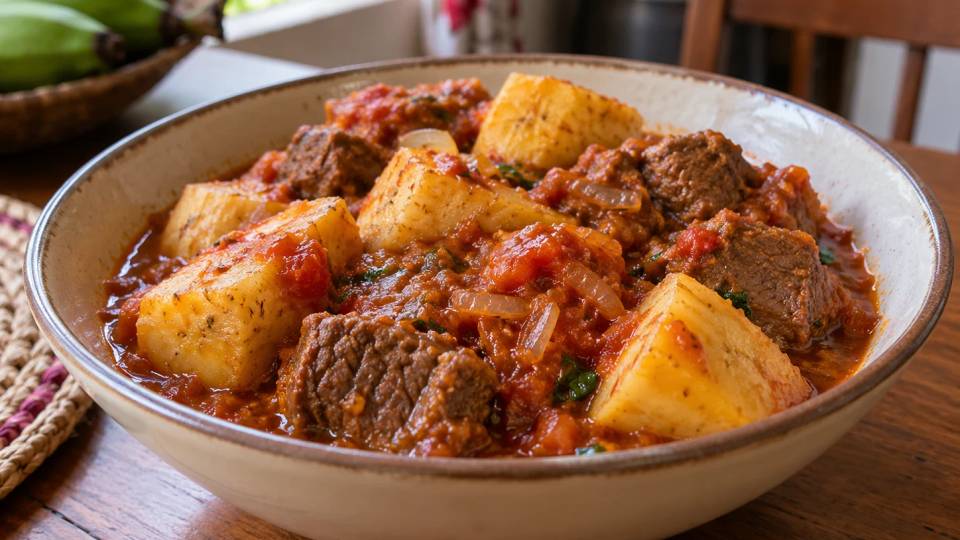
Ingredients
- 700 g braising beef (shoulder, cheek, shank, or chuck), cut into 3 to 4 cm cubes
- 4 ripe tomatoes, diced
- 2 large onions, finely chopped
- 4 cloves garlic, crushed
- 3 cm fresh ginger, grated
- 1.5 tablespoons vegetable oil
- 1 tablespoon tomato paste
- ½ teaspoon turmeric
- 1 teaspoon sweet paprika
- ½ teaspoon ground coriander
- 500 ml hot water or low-sodium broth
- 1 bay leaf
- Fresh chili, salt, and black pepper to taste
- 1 handful fresh coriander leaves for serving (optional)
- 800 g green matooke cooking bananas, peeled weight
Preparation
🥩 Cut the beef into regular cubes, pat them dry thoroughly with paper towels, and sear them in very hot oil for 3 to 4 minutes on each side, until a beautiful golden crust forms. Work in two batches if necessary to avoid overcrowding the pot. Set aside.
🧅 In the same pot, sauté the onions over medium heat for 8 to 10 minutes until well browned, then add the garlic, ginger, turmeric, paprika, and ground coriander; cook for 2 minutes, stirring.
🥫 Add the tomato paste and let it caramelize for 2 minutes, stirring constantly.
🍅 Incorporate the fresh tomatoes and let them melt completely for 10 to 12 minutes over medium heat until the sauce is thick and shiny.
🥩 Return the beef pieces and their juices to the pot, add the bay leaf, and mix to coat.
💧 Pour in the hot water or broth to just cover the meat; bring to a simmer.
♨️ Cover, reduce heat to very low, and let simmer for 1 hour to 1 hour 15 minutes, stirring every 20 minutes, until the meat is tender and the sauce is reduced and coating.
When the beef is almost tender, add 800 g peeled green matooke in chunks. Add just enough hot water for cooking, cover and simmer another 25–35 minutes, until bananas and beef are tender.
Introduction
Prepare the measured ingredients and equipment before heating. Follow the product-specific method below; cooked and raw weights are not interchangeable. Maintain the stated cold-chain and cooking precautions.
Cultural context
A measured home preparation for the Ugandan collection. Several dishes and techniques are shared across East Africa; this version does not claim an exclusively Ugandan origin. Side dishes are included only when listed among the ingredients. Cultural overview: https://exploreuganda.com/culinary/
Tips
Measure ingredients in the stated condition: raw, cooked, peeled or drained.
Use equipment sized for the quantity and avoid overcrowding.
Check the actual texture and cooking endpoint rather than time alone.
Prepare serving dishes before the last step and identify allergens.
Planning
Use food-grade products. Observe ingredient weights and preparation conditions.
Serving
Divide the main ingredients evenly between the stated portions.
Storage
Follow product-specific storage directions. Do not infer safe shelf life from appearance alone.
Variations
Keep the main ingredient and cooking method for the first batch. Change optional seasonings in another batch; a different main ingredient needs its own preparation and timing.
Accompaniments
Serve the stated portions. Side dishes and optional condiments are separate unless included in the ingredient list.
Nutrition notes
Values, when provided, are indicative per serving and exclude optional side dishes. Ingredient brands and preparation can change them.