Fried mukene
Fried mukene
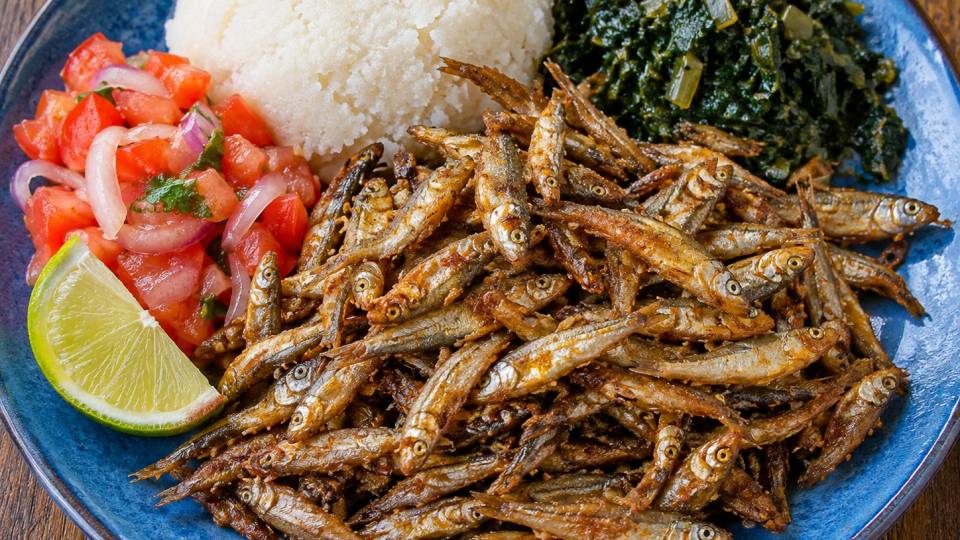
Ingredients
- 700 g fresh mukene, cleaned, or 250 g dried mukene
- 2 limes
- 3 ripe tomatoes, diced
- 2 onions, thinly sliced
- 2 cloves garlic, crushed
- 1 small fresh chili, optional
- 4 tablespoons oil
- 1 tablespoon corn flour, optional
- Coriander or finely chopped green leaves
- Salt and pepper
- posho and green vegetables for serving
Preparation
🐟 Quickly rinse fresh mukene and drain very carefully. For dried mukene, sort the small fish, rinse them briefly, then dry them carefully to remove excess salt and impurities.
🍋 Mix the fish with half of the lime juice, garlic, pepper, and a pinch of salt only if the fish is not already salted. Let rest for ten minutes in the refrigerator.
🔥 Heat the oil in a large pan. Lightly flour the mukene if you want a crisper crust, then fry in small batches until golden and crispy.
🧅 Reserve the fish on a rack or paper towel. Remove some of the oil, then sauté one onion with the chili without burning it.
🍅 Add the tomatoes and let them cook for five to eight minutes: they should release a vibrant juice, not become too thick a sauce. Salt sparingly.
🍽️ Return some of the mukene to the pan for just one minute to flavor it, keep the rest crispy for the top, then add the remaining lemon and herbs.
🌽 Serve immediately with hot posho, pumpkin leaves, cabbage, or spinach. Present the chili separately so that everyone can adjust the heat.
Introduction
Prepare the measured ingredients and equipment before heating. Follow the product-specific method below; cooked and raw weights are not interchangeable. Maintain the stated cold-chain and cooking precautions.
Cultural context
A measured home preparation for the Ugandan collection. Several dishes and techniques are shared across East Africa; this version does not claim an exclusively Ugandan origin. Side dishes are included only when listed among the ingredients. Cultural overview: https://exploreuganda.com/culinary/
Tips
Measure ingredients in the stated condition: raw, cooked, peeled or drained.
Use equipment sized for the quantity and avoid overcrowding.
Check the actual texture and cooking endpoint rather than time alone.
Prepare serving dishes before the last step and identify allergens.
Planning
Use food-grade products. Observe ingredient weights and preparation conditions.
Serving
Divide the main ingredients evenly between the stated portions.
Storage
Follow product-specific storage directions. Do not infer safe shelf life from appearance alone.
Variations
Keep the main ingredient and cooking method for the first batch. Change optional seasonings in another batch; a different main ingredient needs its own preparation and timing.
Accompaniments
Serve the stated portions. Side dishes and optional condiments are separate unless included in the ingredient list.
Nutrition notes
Values, when provided, are indicative per serving and exclude optional side dishes. Ingredient brands and preparation can change them.