Stewed aubergines
Stewed aubergines
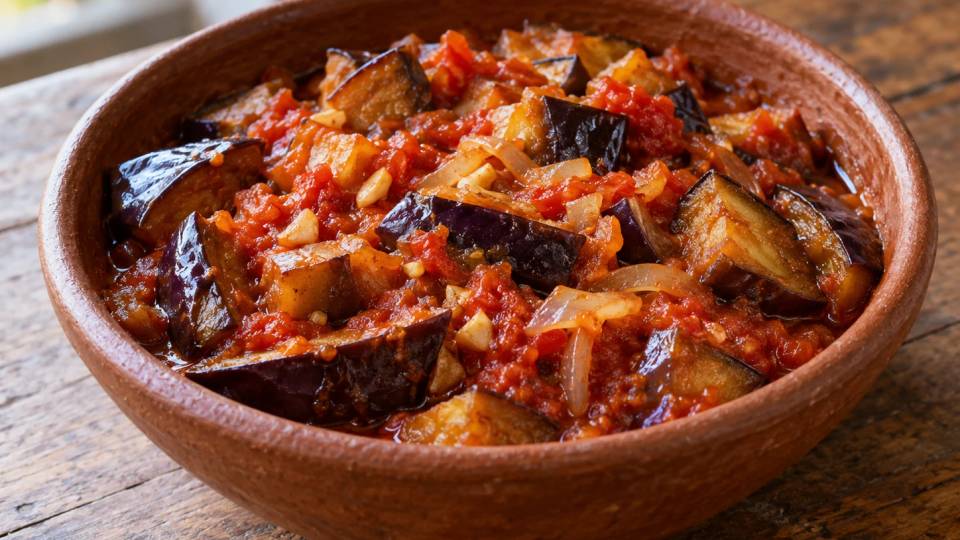
Ingredients
- 800 g aubergines
- 400 g chopped tomatoes
- 150 g onion
- 2 garlic cloves
- 15 g fresh ginger
- 2 tablespoons oil, 30 ml
- 120 ml hot water, plus small additions if necessary
- 1/2 teaspoon salt initially
- 1/4 teaspoon black pepper
- 1 small whole chilli, optional
Preparation
Cut the aubergines into roughly three-centimetre cubes or wedges. Slice the onion, chop the garlic and grate the ginger. Measure the tomatoes and water. Dry the aubergine surfaces with a clean cloth to limit splashing and help browning.
Heat one tablespoon of oil in a wide pan over medium heat. Lightly brown a few faces of the aubergine pieces for six to eight minutes, turning with a spatula rather than stirring constantly. They need not be cooked inside. Transfer to a dish.
Add the remaining tablespoon of oil. Soften the onion for five minutes without deep browning, then cook the garlic and ginger for one minute. If dry, add a spoonful of the measured water rather than more oil. Do not let the aromatics blacken.
Add tomatoes, salt and pepper. Cook uncovered for eight minutes, gently scraping the base, until the raw tomato flavour subsides and the sauce thickens. Salted tomato paste cannot replace the stated tomatoes without adjusting liquid and seasoning.
Return the aubergines with the 120 ml hot water. Add the optional whole chilli without piercing it for milder heat. Bring to a simmer, partially cover and cook gently for fifteen to twenty minutes. Check once or twice that some liquid remains and the base is not catching.
Test a piece with a knife: the flesh should yield without a firm spongy centre and the skin should be soft. Extend cooking with a spoonful of hot water if needed. Uncover and reduce for two to five minutes if watery; vigorous boiling would break the pieces.
Remove the chilli, taste and adjust salt after reduction. Rest off the heat for five minutes, then lift the pieces with a large spoon. The lightly thickened sauce should accompany them without forming a heavy coating.
Introduction
Prepare the measured ingredients and equipment before heating. Follow the product-specific method below; cooked and raw weights are not interchangeable. Maintain the stated cold-chain and cooking precautions.
Cultural context
A measured home preparation for the Ugandan collection. Several dishes and techniques are shared across East Africa; this version does not claim an exclusively Ugandan origin. Side dishes are included only when listed among the ingredients. Cultural overview: https://exploreuganda.com/culinary/
Tips
Measure ingredients in the stated condition: raw, cooked, peeled or drained.
Use equipment sized for the quantity and avoid overcrowding.
Check the actual texture and cooking endpoint rather than time alone.
Prepare serving dishes before the last step and identify allergens.
Planning
Use food-grade products. Observe ingredient weights and preparation conditions.
Serving
Divide the main ingredients evenly between the stated portions.
Storage
Follow product-specific storage directions. Do not infer safe shelf life from appearance alone.
Variations
Keep the main ingredient and cooking method for the first batch. Change optional seasonings in another batch; a different main ingredient needs its own preparation and timing.
Accompaniments
Serve the stated portions. Side dishes and optional condiments are separate unless included in the ingredient list.
Nutrition notes
Values, when provided, are indicative per serving and exclude optional side dishes. Ingredient brands and preparation can change them.